

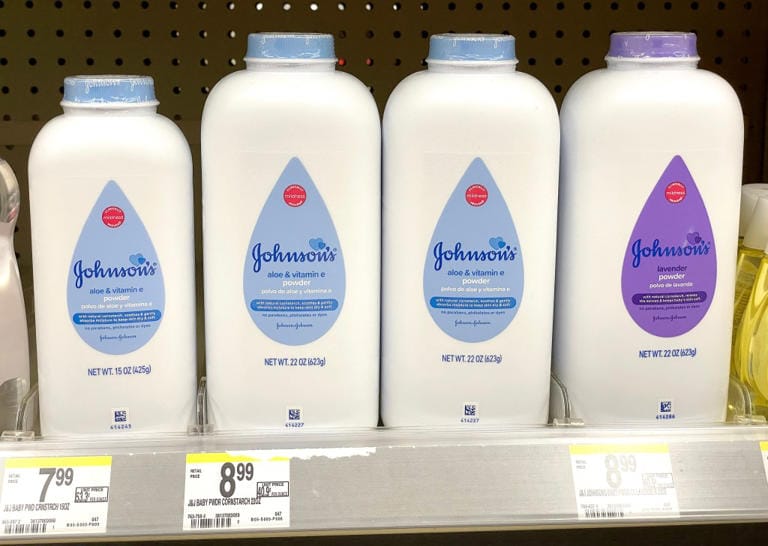
A California jury has delivered another headline-making moment in the long-running fight over talc and cancer: a $40 million award to two women who alleged that long-term use of Johnson & Johnson’s baby powder contributed to ovarian cancer. Johnson & Johnson said it would appeal.
If you’ve only half-followed talc litigation over the years, this kind of verdict can feel like one more data point in a never-ending legal saga. But even a single case like this raises big questions—about science in the courtroom, corporate accountability, how juries think about risk, and what an appeal can (and can’t) change.
Here’s what to know, in plain English, about what a verdict like this signals and what might happen next.
What the jury verdict actually means
A jury award is not the same thing as a final, irreversible outcome. It’s a trial-level decision based on the evidence and testimony presented in that courtroom, under that judge’s rulings, with that specific set of jurors.
In this case, the two plaintiffs alleged that using J&J baby powder caused their ovarian cancer. The jury agreed enough to assign significant damages—$40 million. That number typically reflects some combination of:
- Compensatory damages, meant to cover losses like medical bills, lost income, and pain and suffering.
- Other damages, which can include amounts intended to reflect the severity of the harm as the jury understood it (depending on what claims were tried and what the law allows).
Importantly, a verdict is not a global finding that resolves every talc claim everywhere. It is a single legal decision with a particular evidentiary record. Still, verdicts like this can influence negotiations, shape public perception, and signal how future juries might respond to similar allegations.
Why J&J’s appeal is a big deal (even if it’s expected)
Companies almost always appeal large verdicts in high-stakes product liability cases—especially ones tied to long-running mass litigation. Johnson & Johnson’s statement that it would appeal fits that pattern.
An appeal doesn’t re-try the case from scratch. Appellate courts generally look for legal errors that could have affected the outcome, such as:
- Whether certain expert testimony should (or shouldn’t) have been admitted
- Whether the jury was properly instructed on the law
- Whether key evidence was improperly excluded or included
- Whether the damages were legally excessive under state rules
- Whether there were procedural problems significant enough to undermine the fairness of the trial
Possible outcomes range from:
- Verdict affirmed (the decision stands)
- Damages reduced (sometimes called a remittitur or similar mechanism)
- New trial ordered (if the appellate court finds a serious error)
- Case partially reversed (some claims stand, others don’t)
So the headline number—$40 million—may not be the number that survives the appellate process. But the fact that a jury reached that conclusion in the first place still carries weight.
The core tension: science, uncertainty, and storytelling in court
Talc litigation sits at a complicated intersection: personal tragedy, medical uncertainty, and competing interpretations of scientific evidence.
In a courtroom, jurors aren’t asked to solve the entire scientific debate for all time. They’re asked a narrower question: did the plaintiffs prove, under the legal standard, that the product caused their injuries and that the defendant is legally responsible?
That process has a few real-world implications:
1) Causation is argued case-by-case
In these trials, both sides typically present expert witnesses who interpret studies, biological plausibility, exposure history, and alternative explanations. Jurors then weigh credibility, clarity, and consistency—not just raw data.
2) “Risk” and “cause” get blurred
Many people intuitively think: “If something increases risk, it caused my outcome.” The law often requires more than that, and the defense often emphasizes that difference. Plaintiffs often counter with cumulative exposure narratives and specific pathways that, they argue, connect product use to disease.
3) Corporate conduct matters
Product cases aren’t only about biology. They can also become referendums on internal documents, warnings, marketing choices, and what a company knew or should have known at different points in time. Even when jurors struggle with technical medical testimony, they may form strong views about responsibility based on conduct.

Why California outcomes get watched closely
When a verdict lands in a large state like California, it tends to attract outsized attention for a few reasons:
- California juries are often perceived (rightly or wrongly) as more receptive to consumer and injury claims.
- The state’s legal standards and judge-by-judge evidentiary rulings can shape which experts get heard and how clearly causation theories are presented.
- Big verdicts in major jurisdictions can influence settlement posture across a broader litigation landscape.
But it’s crucial not to overread a single result. A different case, with different facts, different experts, and different jurors can produce a very different outcome—even on the same basic allegations.
What this could mean for the broader talc litigation landscape
A plaintiff verdict of this size can ripple outward in a few ways:
Pressure on settlement dynamics
Large jury awards can strengthen plaintiffs’ bargaining position, especially if the verdict survives post-trial motions. Defendants may become more motivated to narrow uncertainty through settlement—though they may also double down if they believe they have strong appellate arguments.
Momentum and messaging
Plaintiffs’ firms often highlight verdicts to validate claims and encourage additional filings. Defendants often emphasize appeals and prior defense wins to counter the narrative that outcomes are trending one way.
A reminder that “resolved” rarely means resolved
Even when a company says it has changed products, discontinued ingredients, or restructured how it handles claims, litigation can continue for years. Appeals alone can take a long time, and large caseloads move unevenly across jurisdictions.
What readers should take away (without the hype)
If you’re trying to interpret this moment without getting pulled into extremes—“slam dunk” vs. “meaningless”—here are grounded takeaways:
- A jury believed two women proved their case strongly enough to justify a major award. That matters.
- The legal story isn’t finished. An appeal can change the result, reduce damages, or order a new trial.
- These cases are as much about law and persuasion as science. Courts don’t operate like medical journals, and juries aren’t peer reviewers.
- One verdict doesn’t settle the underlying debate. But it can shape how the next case is fought.
Final thought
At the human level, verdicts like this are about people looking for answers—and accountability—after life-altering diagnoses. At the system level, they’re stress tests for how our courts handle scientific uncertainty, corporate decision-making, and the limits of what can be proven in a courtroom.
The appeal will be the next chapter. But the verdict itself is already a signal: talc litigation remains a live wire, and juries are still willing, in at least some cases, to attach a very large number to the story they find most convincing.

