

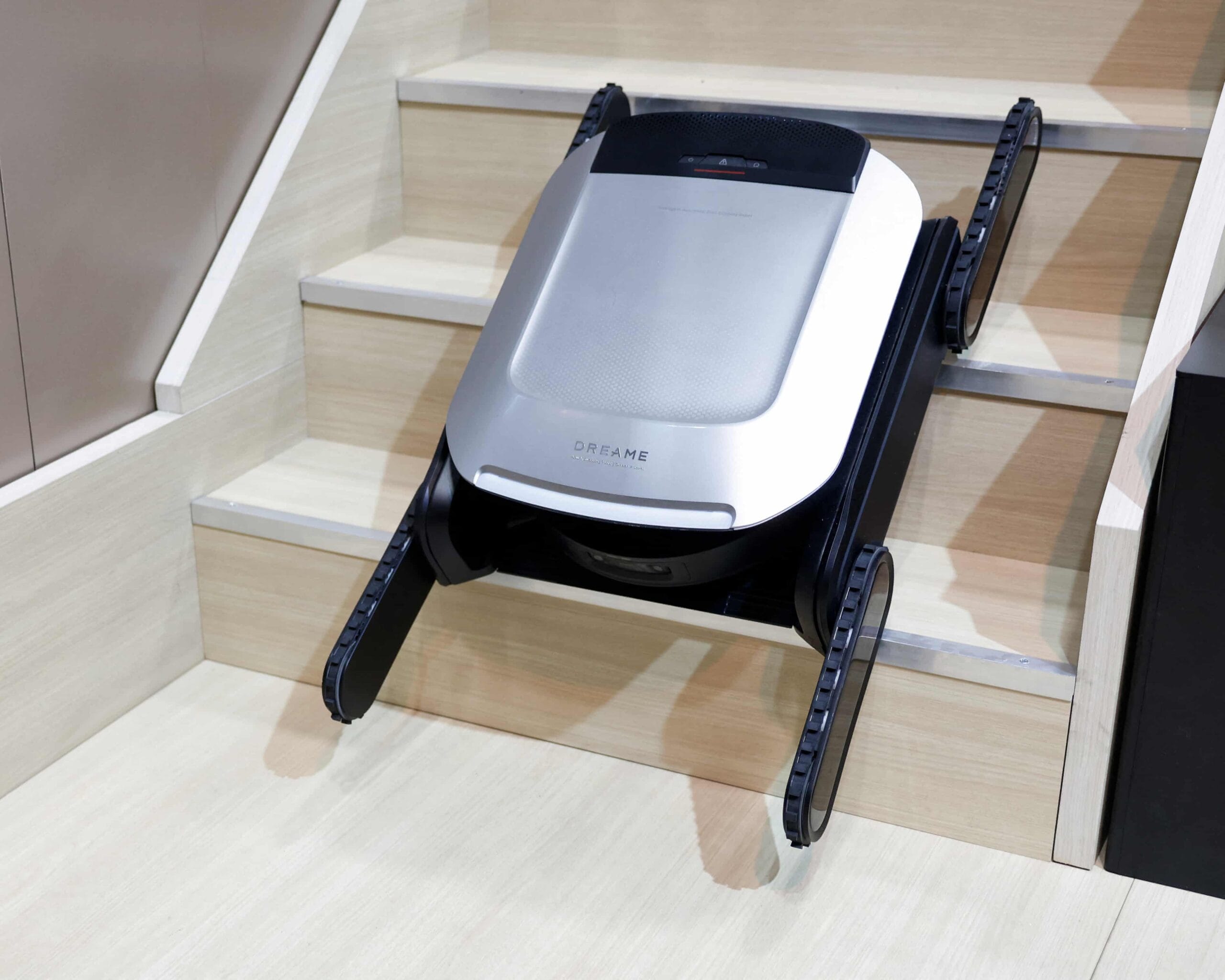
CES 2026 is overflowing with home robots that promise practical help—laundry handling, smarter robot vacuums, and wild laptop form factors that roll or expand. But the most meaningful leap isn’t flashy. It’s functional:
a stair-climbing robot.
For years, “home robotics” has been trapped on flat ground. Robot vacuums got great at mapping rooms, dodging socks, and emptying themselves—but the one everyday obstacle they can’t solve is the one that divides homes into separate worlds: stairs. A robot that can reliably climb steps is less a gadget and more a structural upgrade to what household automation can do.
Why stairs are the real frontier
Stairs aren’t just an obstacle—they’re a safety test:
- uneven heights, different materials (wood, carpet, tile)
- tight corners and narrow landings
- slippery edges and clutter
- the risk of a fall that could injure people, pets, or the device itself
If a robot can climb stairs confidently, it signals something bigger: better balance control, stronger perception, and smarter decision-making under risk.
What a stair-climbing robot could actually change
The immediate use case isn’t “cute robot demo.” It’s everyday labor:
- moving laundry baskets up and down
- carrying small groceries or packages between floors
- cleaning across multi-level spaces without human resets
- assisting mobility-adjacent tasks in homes where stairs are a barrier
It’s the difference between robots as toys and robots as tools.
The key question: can it do it safely, every time?
CES demos are exciting, but stairs punish mistakes. The real benchmarks to watch are simple:
- stability under load (can it climb with weight, not just empty?)
- fail-safes (does it stop before slipping or tipping?)
- edge detection (can it handle weird steps and landings?)
- speed and noise (a robot that sounds like a grinder won’t live in your house)
- battery reality (stairs drain power fast)
Bottom line
CES 2026 is loud with concepts—rollable screens, “AI companions,” and smarter vacuums. But the stair-climbing robot is the kind of breakthrough that matters because it targets the most stubborn, unglamorous problem in home automation.
If robots can master stairs, they stop being floor-bound gadgets—and start becoming true household helpers.