

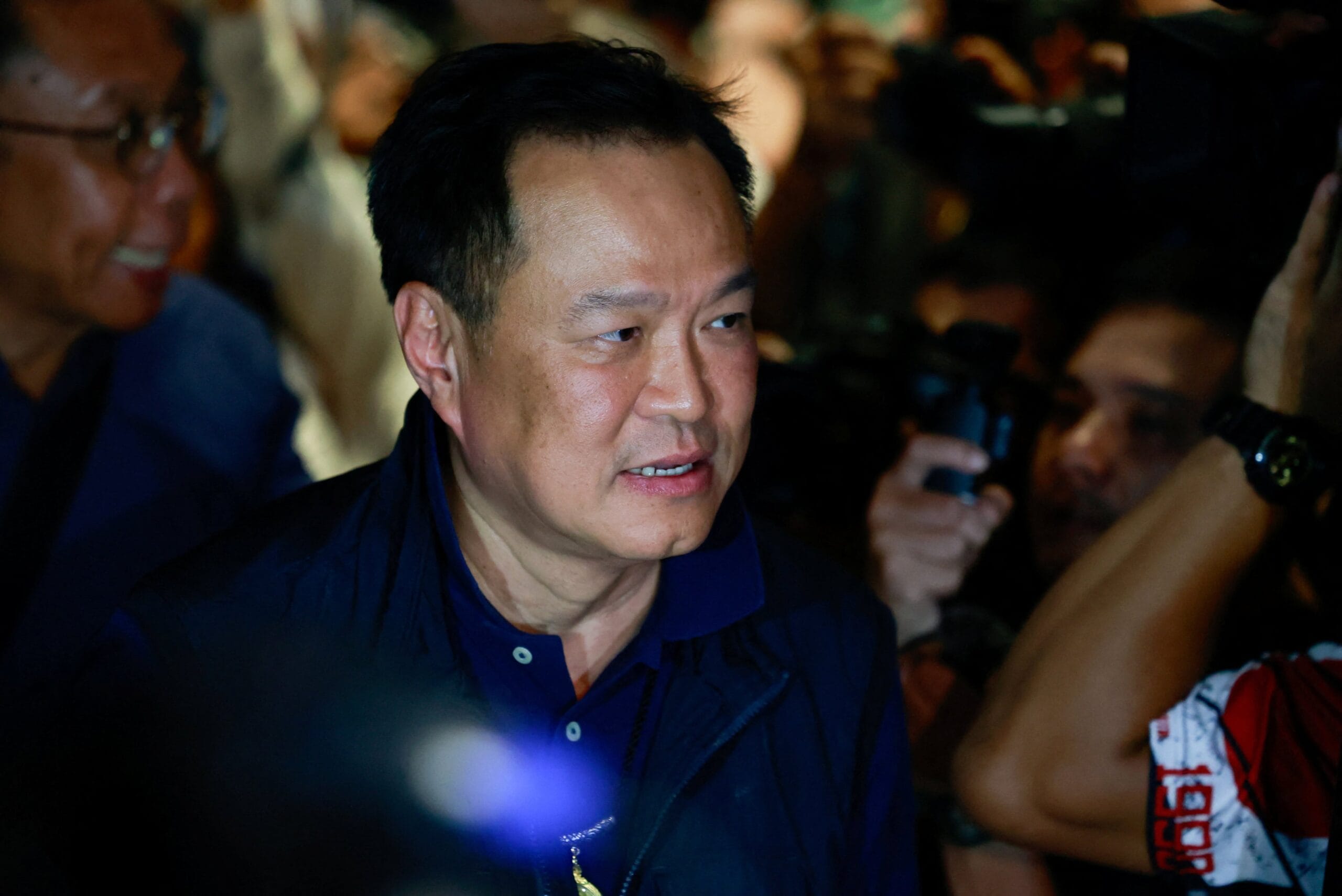
On election night in Bangkok, Anutin Charnvirakul got the result he was betting his career on: a commanding lead for his Bhumjaithai Party in preliminary tallies, ahead of both the progressive People’s Party and the populist Pheu Thai.
His campaign message was blunt and disciplined: in a moment of border tension and national anxiety, vote for the party that “guards the country.” It worked. But winning an election in Thailand is only the first checkpoint. The real test is whether the winner can form a government—and then keep it alive.
The gamble: turn a border crisis into a mandate
Thailand’s election was held under a surge of nationalist feeling sparked by a renewed and intensified border conflict with Cambodia. Anutin leaned into that wave instead of trying to rise above it. His pitch wasn’t complicated: patriotism, sovereignty, stability—delivered by a leader openly aligned with Thailand’s conservative, royalist establishment.
It’s a classic crisis-election strategy: when the public feels threatened, make the choice feel like a loyalty test. For Anutin, it was also a way to draw a bright line between himself and rivals—especially the reform-minded opposition that has momentum with younger voters and urban constituencies.
Why it was a snap election in the first place
Anutin’s win is also inseparable from how quickly he forced the country back to the polls.
He had only been in office for a short stretch—less than 100 days—after maneuvering into the premiership with a minority government in the wake of his predecessor’s removal by a court order. Then, in December, as border tensions escalated and politics tightened, he dissolved parliament after a rupture with the People’s Party (which had initially supported his premiership). His public framing was populist and clean: “returning power to the people.”
In practice, it was a high-stakes move to convert a fragile hold on office into a stronger mandate—before the ground shifted again.
Who is Anutin, really? (Beyond the headlines)
Anutin is not a sudden phenomenon. He’s a veteran operator shaped by Thailand’s recurring cycle of deals, dissolutions, bans, comebacks, and coalition arithmetic.
A few defining threads:
- Money-and-influence pedigree: He comes from a prominent business-political family; his father built a major construction firm and also held senior political roles, including acting prime minister.
- Technocrat + powerbroker hybrid: Anutin has proven able to speak to provincial vote-machines while also recruiting technocrats to look credible in national ministries.
- Political survivor: He entered national politics in the Thaksin era, was later hit by a multi-year political ban after a party dissolution, and returned to rebuild Bhumjaithai from a regional force into a national coalition-maker.
- A “signature” policy past: Internationally, he was once best known for backing Thailand’s cannabis legalization in 2022—evidence of how comfortable he is taking a controversial lane if it builds a durable base.
In short: he’s not a revolutionary, and he’s not a pure ideologue. He’s a coalition engineer who understands that, in Thailand, power is as much about positioning as it is about votes.
The establishment factor: a coalition with a purpose
A key undercurrent in this election is not just “who won,” but who aligned with whom.
Thailand’s conservative-royalist establishment has been locked in a long struggle against two forces:
- the populist network associated with Thaksin and Pheu Thai, and
- the newer progressive movement pressing for deeper democratic reforms.
Anutin’s rise offers the establishment a candidate who can plausibly beat back both—at least for now—through a broad coalition that looks less like a love match and more like a mutual-defense pact.
The problem after the party: governing Thailand is brutal
Even with a strong lead, Anutin’s next months are where Thai prime ministers typically get chewed up.
He faces a stack of problems that don’t care about campaign slogans:
- A sluggish economy, hit by external trade pressures and domestic drag
- Soaring household debt, a long-running constraint on growth and political patience
- A tense neighborhood: Cambodia on edge; Myanmar in civil war—both spilling risk into Thailand’s security and diplomacy
- Thailand’s defining curse: political instability. Winning doesn’t guarantee durability, and modern Thai premiers rarely get to finish what they start.
If Anutin successfully forms a government, the symbolism will be big: it would mark a rare return victory for a Thai prime minister in the modern era. But symbolism won’t protect him from coalition friction, court interventions, street pressure, or the next crisis that reshuffles the board.
What to watch next
Over the next stretch, a few signals will matter more than victory speeches:
- Coalition math: who joins, who refuses, and what concessions are traded
- Border posture: whether nationalism turns into escalation—or controlled stabilization
- Economic realism: whether his government has an actual plan beyond “stability”
- The opposition’s temperature: whether progressives regroup, fracture, or mobilize
Anutin won by making nationalism the ballot question. Now Thailand will ask a harder one: can a crisis-built mandate govern a country where mandates have a habit of expiring early?