

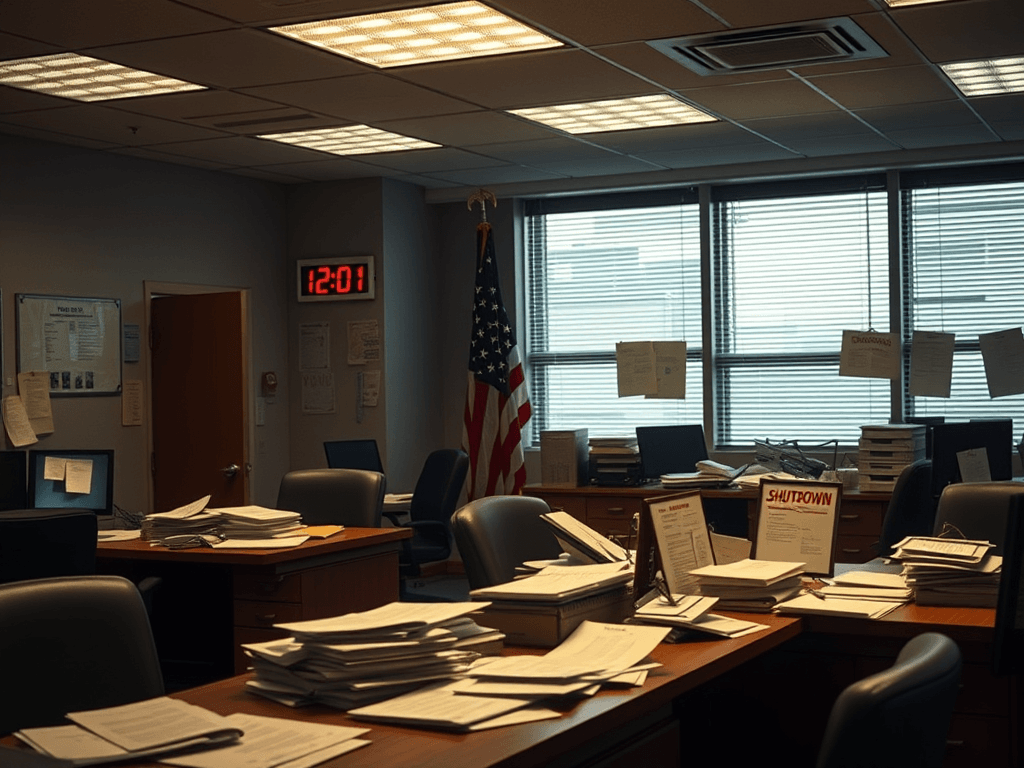
Washington is about to do that thing it does best: stumble into a crisis it scheduled for itself.
The U.S. Department of Homeland Security (DHS) is headed for a partial shutdown starting Saturday, after lawmakers failed to pass a full-year funding bill before the department’s annual appropriations expire late Friday night. Some “non-essential” staff are expected to be furloughed, while most core security functions continue — creating a shutdown that’s politically explosive, operationally messy, and symbolically ugly.
What’s expiring — and what “partial shutdown” really means
DHS’s annual funding clock runs out at 12:01 a.m. Eastern on Saturday. If Congress doesn’t act, DHS must pause certain programs and activities that are not legally considered essential.
But DHS is not like a small agency where a shutdown means the lights go off. In the last major disruption, DHS categorized the vast majority of its workforce as essential, requiring most employees to keep working even during a shutdown. That’s why “partial shutdown” is the key phrase here: it’s a disruption, not a full stop — but it still creates real operational churn, scheduling headaches, and uncertainty across agencies that people depend on daily.
The real cause: immigration enforcement reforms
This isn’t a fight over homeland security in general. It’s a fight over how immigration enforcement is being carried out.
Democrats have refused to support DHS funding unless Republicans agree to a package of reforms aimed at tightening controls over Immigration and Customs Enforcement (ICE) and Customs and Border Protection (CBP) — arguing agents must follow standards similar to local police departments, particularly around use of force, accountability, and due process.
Republicans argue they’re already offering reforms in the funding bill — including provisions tied to oversight, body cameras, and de-escalation training — and accuse Democrats of using funding as leverage to block the administration’s immigration crackdown.
Meanwhile, President Donald Trump has framed the dispute as a fight to “protect law enforcement,” attacking Democrats for trying to constrain agents and claiming new rules would put them in danger.
The twist: ICE and CBP still have massive separate funding
Here’s the part that makes the situation even more politically charged: the deportation operation is unlikely to stop.
Even without a new DHS spending bill, ICE and CBP have a separate, huge funding stream — more than $135 billion — stemming from legislation enacted last year. That means Trump’s deportation and enforcement agenda can keep running at high intensity even as other DHS functions face disruption.
So the shutdown isn’t a clean “pause.” It’s more like a selective squeeze — where the most controversial part of DHS continues, while other parts of the department get dragged into uncertainty.
Who gets pulled into the disruption
The stalled DHS spending bill also covers funding for major domestic security and emergency-response pillars, including:
- the U.S. Secret Service
- the U.S. Coast Guard
- the Federal Emergency Management Agency (FEMA)
FEMA, notably, still has about $7 billion in its disaster relief fund available — an amount experts say could last roughly two months — but the broader funding disruption still complicates planning, staffing, and readiness, especially in an era when disasters don’t wait for Congress to come back from recess.
Minneapolis is the political flashpoint under this fight
The immigration enforcement debate has been supercharged by public outrage over aggressive operations — including controversy tied to agents wearing masks during enforcement actions and broader concerns about heavy-handed tactics.
One of the proposals where lawmakers suggested there was progress: requiring ICE and CBP agents to remove the masks they wear while carrying out arrests and deportations.
This comes after a period of intense backlash tied to enforcement actions in Minneapolis — including the fatal shootings of Renee Good and Alex Pretti, which helped trigger demands for reforms and accountability. DHS also recently announced it was ending its deportation “surge” operation in Minneapolis, but Democrats have warned there’s nothing stopping agents from redeploying to other cities and continuing controversial practices elsewhere.
The timing problem: Congress is leaving town
The political absurdity is that Congress is heading into a 10-day recess. That means even if everyone suddenly “gets serious,” the calendar itself makes a fast resolution harder.
Lawmakers aren’t expected back until February 23, just one day before Trump’s annual State of the Union address. That sets up a perfect storm: a live shutdown fight colliding with the biggest political TV moment of the year.
Bottom line: a shutdown that reveals the real fracture
This isn’t just a budget failure. It’s a clash over what kind of enforcement state the U.S. is becoming — and what guardrails, if any, are supposed to govern it.
DHS can keep running core security operations during a shutdown. But the damage isn’t only operational — it’s institutional. When a department responsible for border security, disaster response, and protective services becomes a hostage in a partisan fight, the message to the public is bleak: