

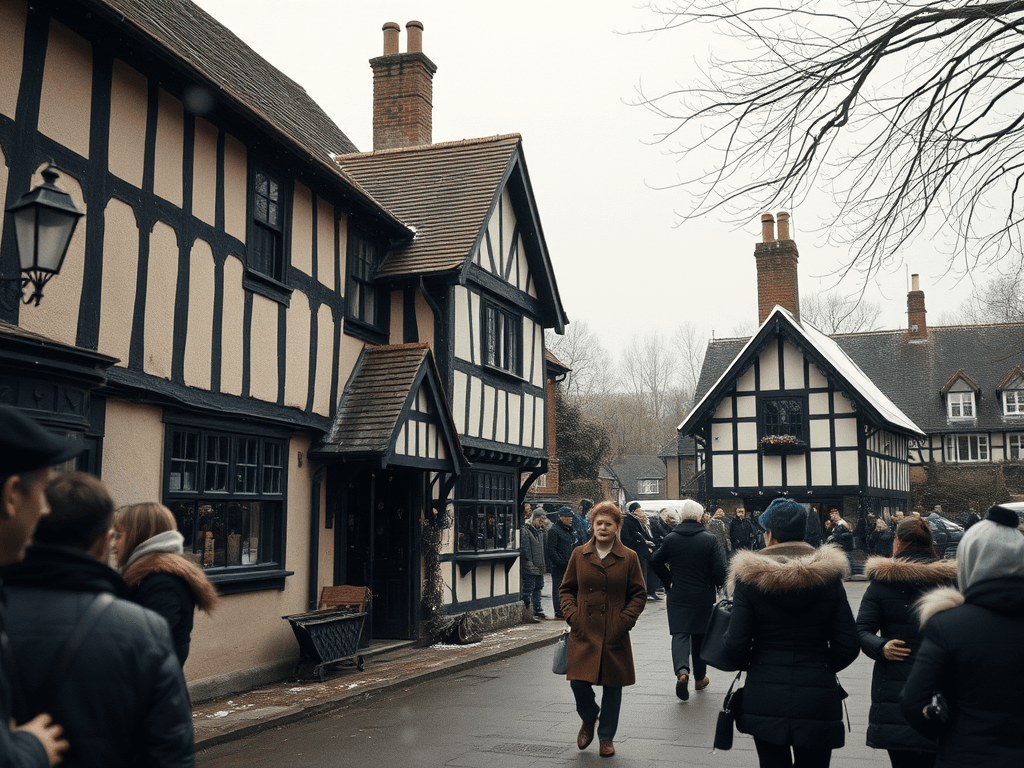
On a grey winter morning in Stratford-upon-Avon, something feels different. The usual pilgrim’s route is still there—Shakespeare’s timber-framed childhood home, the quiet streets, the river calm—but the crowd has a new kind of curiosity. They aren’t only here for the Bard. They’re here for the family.
That shift has a name now: “Hamnet.”
The BAFTA- and Oscar-nominated film Hamnet—adapted from Maggie O’Farrell’s bestselling novel—has ignited a spike in tourism at Shakespeare heritage sites, pulling in people who might never have made the trip for “literature history” alone.
A measurable surge, not just buzz
The Shakespeare Birthplace Trust, which manages major sites tied to William Shakespeare and his family, says visitor numbers have jumped roughly 15% to 20% across its locations since the film’s release in January.
These sites already draw about 250,000 visitors a year, so a double-digit bump isn’t a cute side story—it’s a real tourism swing. And the Trust expects interest to keep building as awards season continues.
Why Hamnet hits differently
For decades, Stratford tourism has been fueled by legacy: Shakespeare as the genius, the playwright, the monument. Hamnet shifts the lens to something more intimate—and for many people, more relatable.
The story focuses on Agnes (Anne Hathaway) and Shakespeare’s family life, centering on the death of their 11-year-old son, Hamnet, in 1596—an event long believed to echo through the creation of Hamlet (and yes, the film acknowledges that “Hamnet” and “Hamlet” were often interchangeable names at the time).
Instead of Shakespeare the global icon, Hamnet offers Shakespeare the human: husband, father, grieving man—seen largely through Agnes’s eyes.
That emotional angle is exactly what’s pulling new visitors in.
The places people are rushing to see
Two locations are getting the most attention:
Shakespeare’s Birthplace
This is the house where the young William lived—also tied to his father’s trade as a glove maker. It’s the origin point of the Stratford myth: ordinary beginnings, extraordinary output.
Anne Hathaway’s Cottage
This one is the magnet right now. Visitors are arriving not just to “see a pretty cottage,” but to imagine the lived reality behind the story: how the family moved through the space, the surrounding landscape, the texture of a rural life that could shape the emotional world of the film.
People aren’t treating it like a postcard. They’re treating it like a set you can walk into—except it’s real.
The Trust also oversees Shakespeare’s New Place—the site of the Stratford home where he lived later in life and died in 1616—adding another chapter to the “start to finish” pilgrimage.
Awards season is amplifying the pull
Hamnet is arriving with serious awards momentum: 11 BAFTA nominations and eight Oscar nominations, with Jessie Buckley’s performance as Agnes drawing major best-actress attention.
That matters because awards are a tourism engine. They don’t just create viewers—they create converts. People who would never pick up Shakespeare in a classroom are suddenly watching a story about love, grief, and family—and thinking, Wait, this happened there?
A new doorway into Shakespeare
One of the most interesting ripple effects is who this is bringing to Stratford.
Not everyone watching Hamnet comes in with Shakespeare devotion. Some come in with none at all—and that’s the point. The film offers a fresh entry to a figure who can feel distant, “schoolish,” or locked behind old language and reputation.
This is Shakespeare without the pedestal: a heart and a household, not just a canon.
And when a story makes a cultural legend feel human, people want to stand where that humanity lived.
The bigger takeaway: film tourism works because emotion works
You can build museums, plaques, and walking tours. But nothing drives travel like story—especially story with emotion. Hamnet isn’t selling “heritage.” It’s selling connection.
Stratford-upon-Avon has always been a destination. But Hamnet is turning it into something slightly different for a new generation: not just a literary shrine, but a place where real people loved, lost, survived—and made art out of it.
That’s the kind of tourism boost that doesn’t fade after the credits roll.