

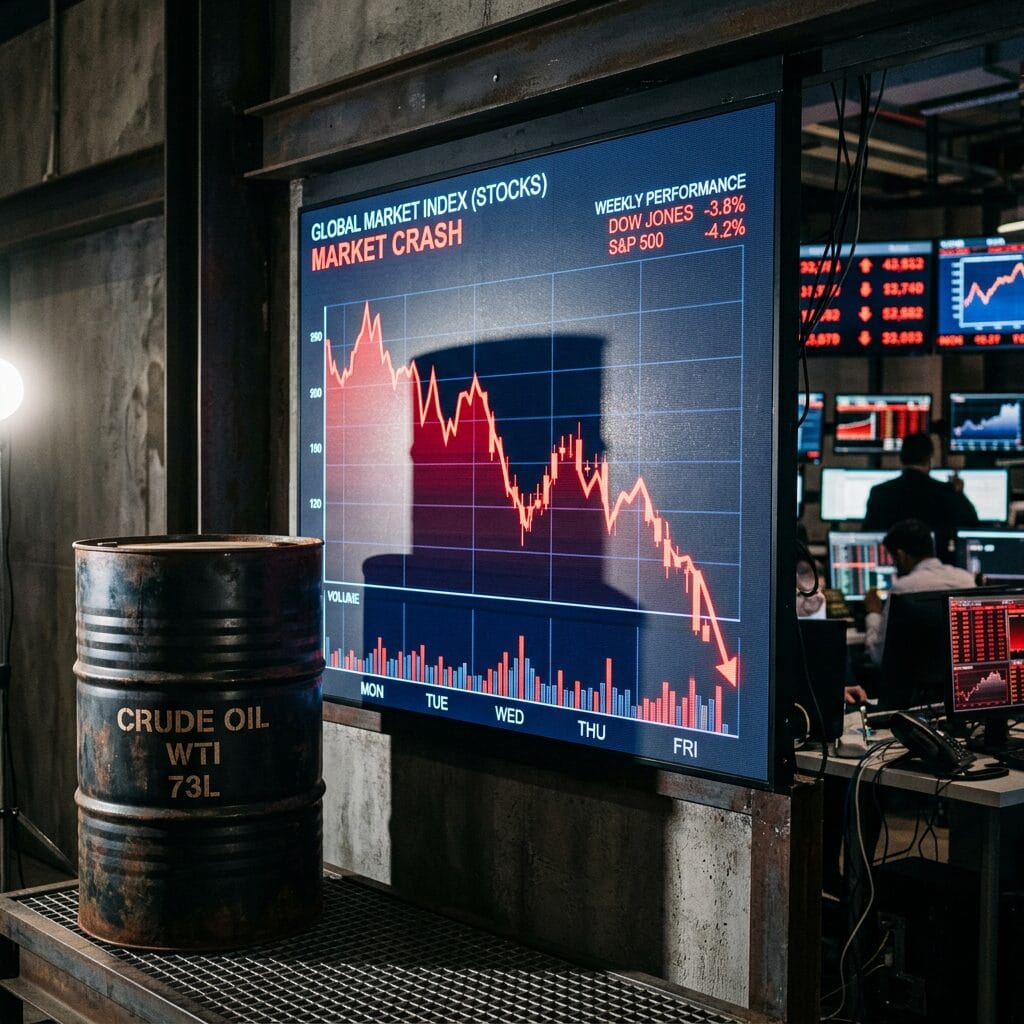
Wall Street does not wait for diplomats to admit a ceasefire is in trouble.
It watches oil. It watches shipping. It watches risk appetite crack around the edges. And when those signals start flashing at once, the market usually sees the truth before the official statements do.
That is what this latest selloff really says. The problem is not just that geopolitics remains tense. The problem is that investors are starting to realize the supposed calm was never really calm at all. It was a pause balanced on nerves, headlines, and wishful thinking.
Oil Is Still the Loudest Truth Teller
Whenever the Middle East moves closer to the edge, oil becomes the market’s blunt instrument of honesty.
Stocks can rationalize. Central banks can reassure. Politicians can dress up uncertainty as progress. Oil usually does not bother with any of that. It reacts to risk in the most primitive way possible: by asking whether supply can move safely and whether the people in charge still look capable of preventing the next escalation.
When crude starts climbing again, it is the market saying the danger is not over. It may not even be properly contained.
A Fragile Truce Is Sometimes Worse Than Open Conflict
That sounds strange, but markets understand it well.
Open conflict is terrible, but at least it is clear. A fragile truce is something else. It invites hope while keeping fear alive. It tells investors to calm down while leaving every major trigger unresolved. And that creates a nastier kind of volatility, because people are forced to trade two realities at once: the dream of stabilization and the constant suspicion that one bad move will blow the whole thing open again.
That is the sort of environment where confidence does not collapse all at once. It erodes.
Earnings Can Only Distract for So Long
Corporate results still matter. They always do.
But when geopolitical risk begins infecting fuel prices, shipping routes, and inflation expectations, even a decent earnings season can start looking secondary. Companies can beat estimates and still sound worried. Executives can post respectable numbers and still warn that the real damage is building beneath the surface.
That is often how market mood changes. Not with one catastrophe, but with a growing sense that the business world is performing normally in public while privately preparing for worse.
The Strait of Hormuz Is Still Setting the Emotional Tone
For all the complexity of modern finance, global markets remain absurdly vulnerable to a few narrow passages on a map.
That is the deeper humiliation here. Algorithms, derivatives, central-bank guidance, AI-driven trading desks, and all the machinery of advanced finance still end up taking emotional instructions from whether ships can safely pass through a strategic chokepoint. That should tell you something about how fragile the global system really is.
We like to imagine markets as sophisticated. In moments like this, they are primal. They smell disruption and they flinch.
Tech Can Soar, but It Cannot Cancel Geography
One of the strange features of this era is that parts of the market can still look strong even while the broader mood darkens.
AI enthusiasm, big-tech strength, and selective earnings resilience may keep certain names elevated. But that does not mean the wider picture is healthy. It just means modern markets are capable of hiding stress behind a handful of powerful winners. Geography still matters. Energy still matters. Shipping lanes still matter. And no amount of digital optimism changes what happens when real-world chokepoints come under pressure.
The market may be futuristic in branding. It is still deeply old-fashioned in what can hurt it.
This Is Also an Inflation Story Again
That may be the part investors hate most.
Just when markets start hoping inflation is becoming manageable, war risk drags the old nightmare back into the room. Higher oil means higher costs. Higher costs mean tighter margins, angrier consumers, and renewed pressure on central banks that were hoping for more breathing space. Suddenly the fantasy of cleaner monetary easing looks less secure.
That is why every jump in crude matters beyond commodities. It is not just a sector move. It is a threat to the whole soft-landing story.
The Real Market Mood Is Not Panic. It Is Distrust.
This is not full-blown financial terror.
It is something quieter and, in some ways, more dangerous: distrust. Distrust in the durability of the truce. Distrust in the idea that shipping disruption will fade quickly. Distrust in the hope that oil can stay contained while politics remains combustible. Distrust in the comforting line that the worst is probably behind us.
Markets do not need apocalypse to sell off. They just need enough doubt to stop believing the official story.
And right now, doubt is winning.
The Bigger Message
The latest market wobble is a reminder that geopolitics still has the power to cut through every other narrative.
It can overpower earnings. It can distort inflation. It can rattle bonds, stocks, currencies, and commodities at the same time. It can make the world’s most sophisticated investors react like traders in an older, harsher era, when the movement of ships and the threat of war mattered more than PowerPoint optimism.
That is where we are again.
The truce may still exist on paper. But markets are starting to trade like they no longer trust the paper.

