

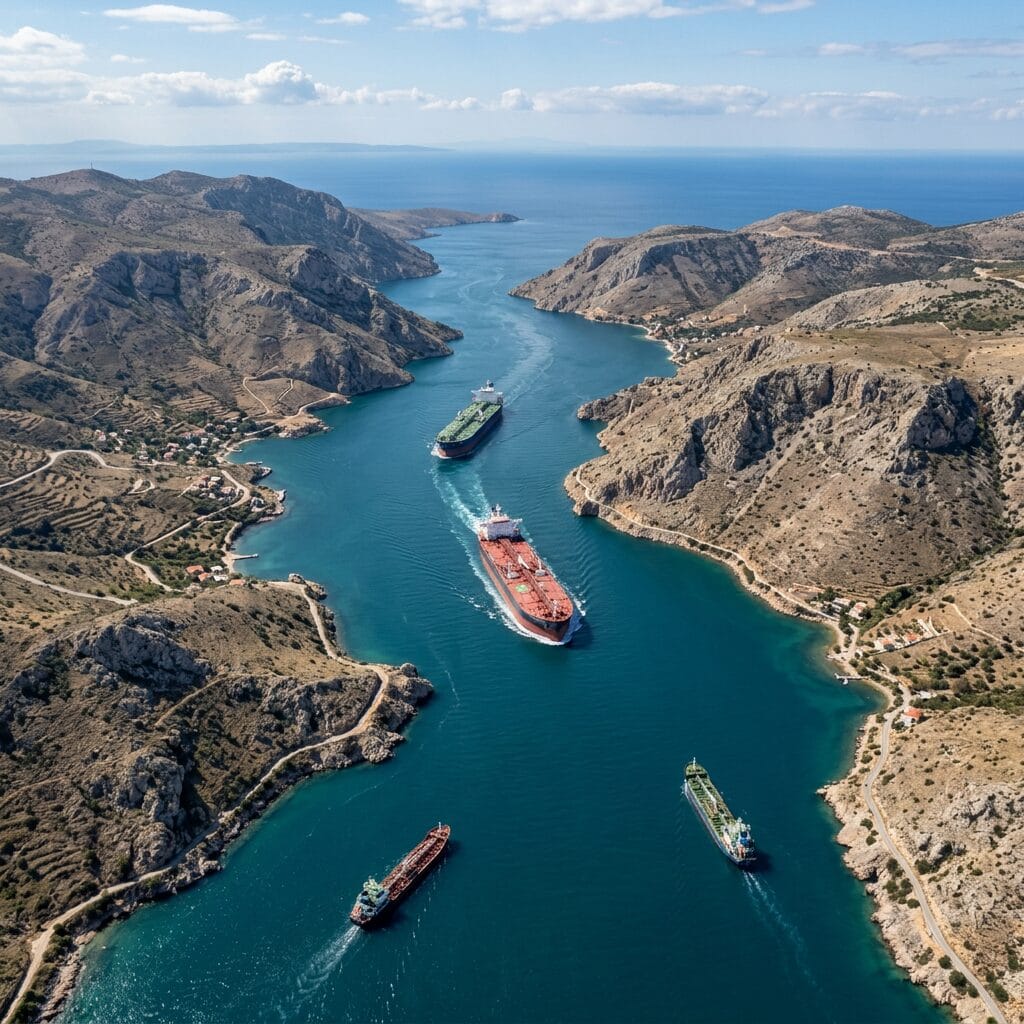
A waterway that normally carries the pulse of global energy is now almost silent.
That silence should worry everyone.
When only a handful of ships pass through the Strait of Hormuz in an entire day, this is no longer just a regional security problem. It is a warning that one of the world’s most vital economic arteries is still effectively under siege, even under the thin cover of a so-called ceasefire. The missiles may have slowed. The formal language may sound calmer. But commerce is telling the truth: the crisis is still alive.
And commerce does not lie out of politeness.
This Is Not Reopening. It Is Paralysis.
Governments love to talk as though partial movement means recovery.
It does not.
A few vessels passing through does not mean confidence has returned. It means fear is still governing the route. It means shipping companies, insurers, traders, and crews do not believe normal passage is safe. It means the world is being asked to mistake a trickle for a reopening.
That is a dangerous illusion.
If the Strait of Hormuz were truly stabilizing, traffic would not look like this. Operators would be preparing to resume normal schedules. Insurers would be lowering their panic premiums. Tankers would be moving with something resembling routine. Instead, the message from the water is brutally clear: the route is still operating under extreme risk.
A Chokepoint This Important Cannot Be Half-Functional
The world economy is absurdly dependent on narrow corridors, and Hormuz is one of the most important of all.
That is what makes this situation so serious. You cannot leave a passage this critical in a state of semi-closure and pretend the damage is contained. Oil exporters get squeezed. importers get nervous. Shipping markets tighten. Insurance costs surge. Energy prices stay jumpy. Governments begin calculating how much pain their economies can absorb if this drags on longer.
And it never stays just about oil.
What begins as tanker anxiety spreads into freight, inflation, food systems, industrial costs, and political pressure far from the Gulf. A choked Hormuz does not remain a Middle East problem for very long. It becomes everybody’s problem.
The Ceasefire Exists on Paper. The Risk Exists in Reality.
This is the ugliest truth of the moment.
A ceasefire that does not restore basic commercial confidence is not a real peace. It is a pause with guns still pointed nearby. If shipping firms still fear seizure, attack, miscalculation, or political entrapment, then all the diplomatic language in the world changes very little. The market listens to behavior, not speeches.
And behavior says the strait is still dangerous.
That matters because real peace is measured in restored function, not just reduced firing. Ships moving normally. Insurers relaxing. Companies planning forward. Trade routes reopening with confidence. Until that happens, the ceasefire is less a settlement than a fragile intermission.
The Human Cost Is Being Hidden Inside Shipping Data
People see numbers about vessel traffic and often miss what sits beneath them.
Crews are stranded. Ships are delayed. Schedules are broken. Cargo sits in limbo. Families wait for sailors who cannot move safely. Supply chains are disrupted by risks they did not create and cannot control. The technical language of shipping tends to make all this sound abstract, but it is not abstract at all.
A frozen chokepoint means real people are trapped inside geopolitical games being played by states that will never personally bear the same risk.
“Open” Does Not Mean Safe
That may be the single most important lesson here.
A route can be technically passable and still be practically unusable. That is exactly what happens when armed seizures, blockades, and military brinkmanship contaminate a waterway. On paper, the strait may not be fully shut. In reality, it is functioning under fear so intense that normal trade cannot resume.
That distinction matters because some governments will try to exploit it.
They will say the strait is not closed. They will say ships are still moving. They will say commerce continues. But if traffic has collapsed and operators are staying away, those talking points are just semantic camouflage over a crisis.
This Is Economic Warfare by Other Means
The battle over Hormuz is not just about military signaling. It is about leverage.
Control the risk in the water, and you control the nerves of the market. You control shipping behavior. You influence oil prices. You force distant governments to react. You turn geography into pressure. That is why the situation is so dangerous. It allows regional conflict to infect the wider global system without requiring full-scale war at every moment.
The world is learning again that a chokepoint does not have to be physically sealed to become economically weaponized.
The Longer This Lasts, the More Damage Hardens
Short disruptions create panic. Prolonged disruptions change behavior.
That is where the real danger lies now. If traffic remains a fraction of normal, companies begin redrawing plans. Insurers build in new assumptions. Importers pay more. Exporters lose flexibility. Central banks face renewed inflation headaches. Governments begin preparing for a world where instability in Hormuz is not a shock but a condition.
That is much harder to reverse.
Because once the global economy starts adapting to dysfunction, the cost of “normal” returning gets higher, not lower.
The Real Measure of Stability
The world should stop pretending that a ceasefire is enough.
The real measure of stability is simple: can ships move through Hormuz in normal numbers, under normal conditions, without being treated like hostages to the next escalation? Right now, the answer appears to be no.
And that is a crisis by any honest definition.
If one of the planet’s most important trade arteries is still barely functioning, then the war has not truly ended. It has just changed form. From missiles and threats into paralysis, fear, and a slow bleed into the global economy.