

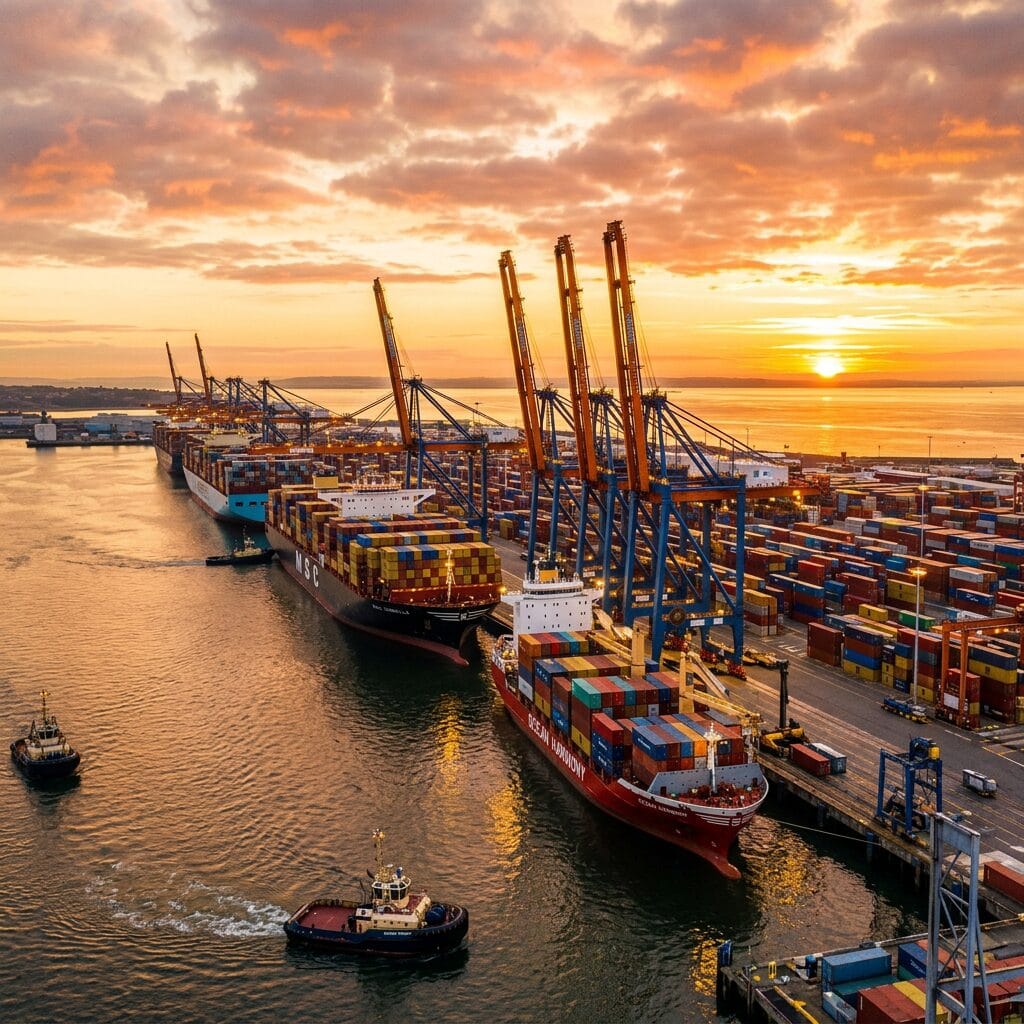
For years, the world has waited for China’s export engine to finally lose steam.
It has not happened.
Instead, China has delivered another reminder that even in a fragile global economy, even with war distorting energy costs, and even with weak consumption at home, its factories are still capable of overwhelming force. The latest trade numbers do not just show resilience. They show that China remains frighteningly effective at turning global anxiety into manufacturing demand.
That matters because Donald Trump is heading to Beijing at exactly the wrong time for anyone hoping China would arrive at the table looking weak.
China Is Selling Into Fear
One of the most revealing parts of this moment is why exports are strong.
This is not just a story about healthy global demand. It is a story about buyers getting nervous. Companies around the world appear to be rushing to secure components and equipment before conflict-driven costs rise further. In other words, China is benefiting not only from industrial strength, but from the fear now spreading through global supply chains.
That is a powerful position to occupy.
When the world starts stockpiling, the country with the deepest manufacturing capacity becomes more than a supplier. It becomes a kind of economic shock absorber, even if its dominance also creates its own tensions.
The AI Boom Is Giving China’s Factories New Oxygen
There is another force behind this export surge that should not be ignored: artificial intelligence.
The AI buildout is not just a software story. It is a manufacturing story. Chips, components, equipment, wiring, industrial hardware, cooling systems, and the broader machinery of high-tech production all have to come from somewhere. China is clearly positioning itself to capture as much of that wave as possible.
That gives the export strength a deeper significance.
This is not merely a rebound fueled by cheap goods. It suggests China is still deeply embedded in the next industrial cycle, not just the last one.
The Trade Surplus Is Becoming a Political Weapon Again
Whenever China’s surplus starts swelling, the economic story quickly becomes a political one.
That is especially true in the United States.
A growing trade gap feeds exactly the kind of narrative Trump thrives on: America buys, China sells, and Washington looks unable to fundamentally change the balance. That makes these numbers awkward ahead of a summit that will almost certainly feature strong rhetoric about fairness, leverage, and American interests. Trump may arrive promising toughness, but the data is arriving first, and the data says China still knows how to win this game.
That is not a small problem for the White House.
Beijing Is Walking Into the Summit With More Confidence Than Expected
This is what the April data really changes.
Instead of entering the Trump-Xi meeting under obvious economic pressure, China can point to export momentum, a widening surplus, and a manufacturing sector still feeding on global demand. That does not mean Beijing holds every advantage. It does mean it has more room to resist than many critics might have hoped.
And in negotiations, confidence matters.
A country that feels cornered bargains differently from a country that thinks its industrial model is still delivering results.
Domestic Weakness Still Haunts the Picture
None of this means China’s economy is healthy in every direction.
That would be too simple.
The same story that shows export strength also reveals a familiar weakness: domestic demand still looks too soft to carry the economy on its own. Consumption remains underwhelming, unemployment has edged higher, and China continues to depend heavily on making and shipping rather than spending and absorbing internally. That imbalance has defined the economy for years, and it still has not been solved.
So the latest data is both impressive and revealing.
China remains very good at producing strength externally while struggling to generate enough confidence at home.
This Is the Kind of Growth That Frightens Trading Partners
The reason China’s export success keeps causing friction is not just scale. It is structure.
Trading partners have long argued that China’s industrial model, backed by subsidies, scale, and aggressive pricing, allows it to flood markets in ways others cannot easily match. When export numbers like these land, they reinforce every one of those complaints. The message is not simply that China is competitive. It is that China can still out-manufacture much of the world even when conditions are messy.
That is exactly why the next phase of trade diplomacy will be so tense.
Because strength on this scale does not calm foreign governments. It alarms them.
Trump Wants Concessions. China Sees Momentum.
That is the core tension heading into Beijing.
Trump will want to show American voters that he can extract something tangible, especially in a midterm year when economic symbolism matters. China, meanwhile, can look at the latest numbers and argue that its model is still working well enough to avoid major capitulation. Those are not conditions that usually produce a dramatic breakthrough.
They are conditions that produce hard bargaining, public posturing, and carefully managed ambiguity.
The Meaning of the Moment
China’s April trade surge matters because it destroys a convenient fantasy.
The fantasy was that rising geopolitical tension, war-driven cost pressure, and soft global demand would finally slow China’s export machine enough to weaken its hand. Instead, the opposite has happened. China is still selling at scale, still widening its surplus, and still turning industrial capacity into geopolitical leverage.
That changes the backdrop for Trump’s trip in a very simple way.
He may arrive in Beijing talking like the stronger side. But the trade numbers suggest China is not walking into this summit on its knees.

