

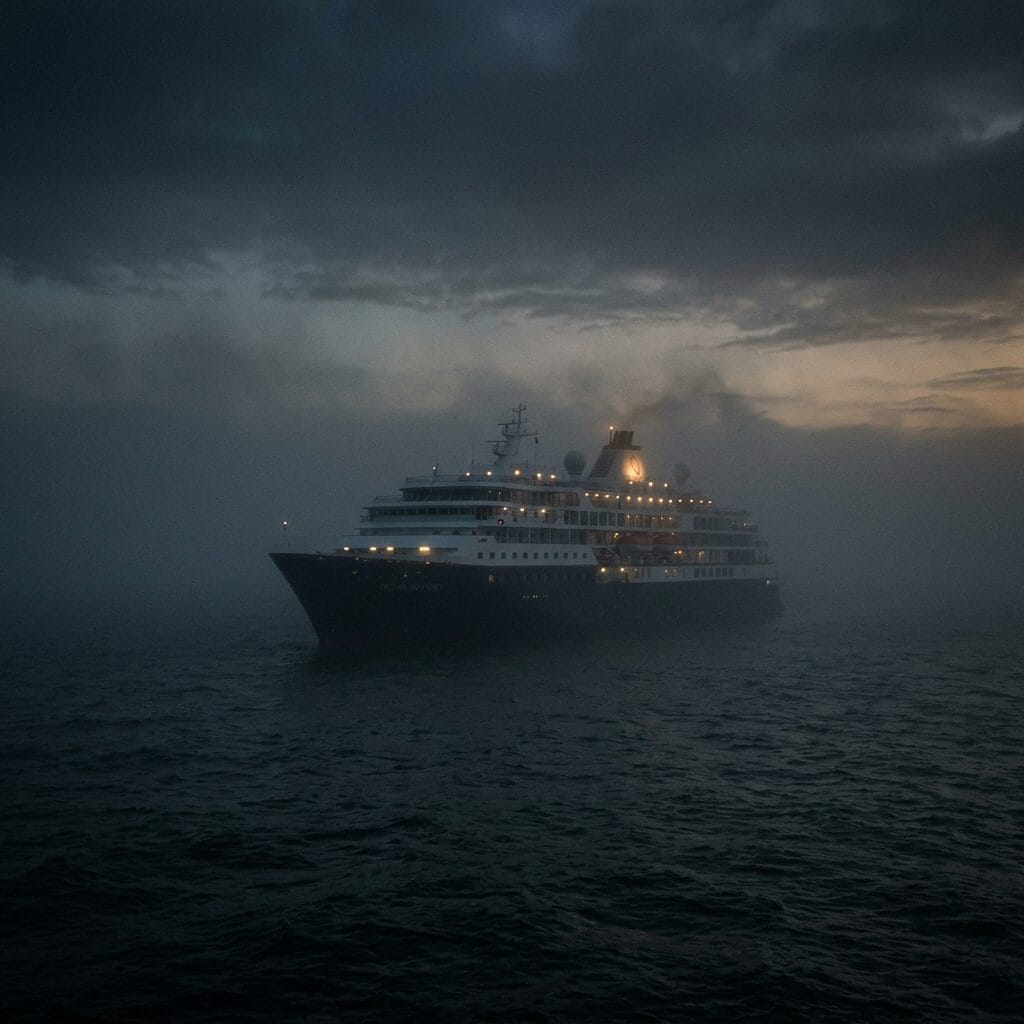
Cruise ships are designed to sell control.
The cabins are organized, the routes are scheduled, the staff is trained, and the experience is packaged to feel sealed off from the chaos of the world. That is why the hantavirus outbreak linked to the Hondius feels so unsettling. It breaks the illusion in the worst possible way. A ship that was supposed to offer adventure became a floating symbol of how quickly order can turn into fear.
And in the post-pandemic world, fear travels even faster than disease.
The Story Is No Longer Just Medical
Outbreaks are never only about infection anymore.
They are about memory. They are about what people learned to fear during COVID and what they no longer trust institutions to manage smoothly. A virus on a ship now triggers more than health concern. It triggers an emotional flashback. Quarantines, protective gear, patients flown home, hospitals on alert, public reassurances from global health officials — all of it lands in a world already trained to expect escalation.
That changes everything.
Because even when the medical facts are more limited, the public reaction is shaped by a much larger trauma.
Cruise Ships Have Become Symbols of Contained Vulnerability
A cruise ship looks luxurious until something goes wrong.
Then it suddenly becomes what it always was underneath the marketing: a dense, enclosed system where people eat together, move together, sleep close together, and depend completely on organized logistics to stay safe. That makes ships uniquely powerful symbols during health scares. They compress modern life into one visible, floating space.
When disease appears there, the public sees not just one outbreak, but a miniature model of global fragility.
The Human Cost Is Getting Harder to Ignore
This story also feels heavier because the toll is no longer abstract.
Deaths linked to the outbreak, critically ill passengers, hospital isolation, and long quarantines strip away any temptation to treat the situation like a strange travel footnote. Behind every official number is a person who boarded expecting scenery and returned to a medical emergency. Behind every update is a family waiting for news, wondering whether the worst is over or still unfolding.
That is what gives outbreaks their real emotional force.
They turn ordinary plans into a chain of fear, waiting, and uncertainty.
Public Health Is Also a Communication Test
One of the hardest parts of any event like this is not just treatment. It is credibility.
Authorities can say the public risk is low. They can explain that transmission is limited. They can lay out quarantine guidance and medical procedures. But if people no longer fully trust institutional calm, every reassurance can sound partial, delayed, or defensive. The science may be sound, yet the social atmosphere remains unstable.
That is the cruel legacy of recent years.
Public health now has to fight two battles at once: the pathogen itself and the collapse of easy public confidence.
The Outbreak Also Exposes the Limits of Preparedness
Modern systems love the language of preparedness.
There are protocols, containment plans, evacuation procedures, specialized hospitals, and international coordination. All of that matters. But outbreaks like this still reveal how thin the margin can be between preparedness and improvisation. Once illness begins moving across borders and patients start landing in multiple countries, even well-designed systems begin operating under stress.
Preparedness, in real life, often means trying to stay one step ahead of a situation that is changing faster than comfort allows.
Post-Pandemic Anxiety Has Changed the Meaning of Risk
That may be the deepest lesson here.
The world no longer hears outbreak news the way it once did. Risk is not interpreted in a neutral environment. It is filtered through years of fear, disruption, and institutional strain. So even when officials are right to discourage panic, they are speaking to a public that has learned the hard way that “manageable” can still become tragic, and that “contained” can still feel terrifying.
That is why the Hondius story matters beyond the ship itself.
It reveals how much the emotional landscape of public health has changed.
The Meaning of the Moment
The Hondius outbreak is not just a story about one virus on one vessel.
It is a story about how fragile safety feels in a world that no longer assumes outbreaks stay small, institutions stay ahead, or reassurance comes with immediate trust. It is a reminder that public calm has become much harder to restore once an invisible threat enters a confined space and starts crossing borders.
In that sense, the ship is more than a setting.
It is a symbol of the age we are living in: highly connected, tightly managed, and always one breach away from panic.

