


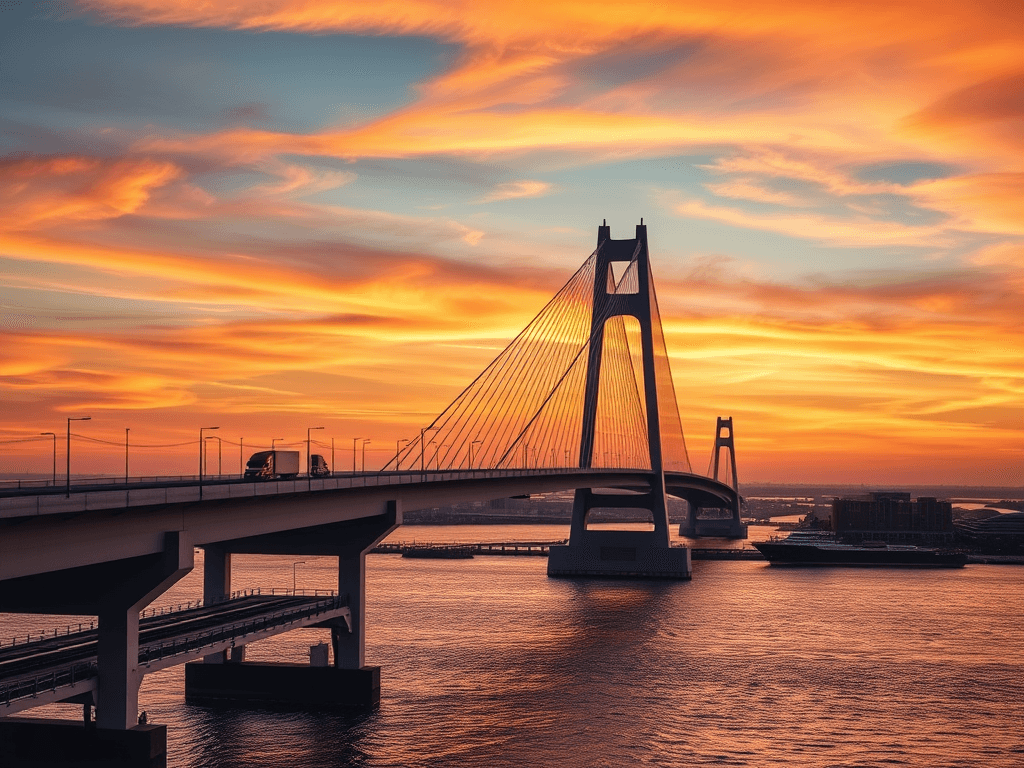
A bridge that’s supposed to ease one of North America’s busiest trade corridors just got dragged into political theatre.
Prime Minister Mark Carney says he spoke with U.S. President Donald Trump about the Gordie Howe International Bridge after Trump threatened to prevent the bridge from opening unless the United States is “compensated.” The threat landed as a late-night social media blast — and instantly turned a long-planned infrastructure project into a cross-border dispute.
What Trump is saying
Trump’s claim is blunt: before the bridge opens, the U.S. should be paid back — and he argues the project was built with “virtually no U.S. content.”
That framing matters because it tries to turn the bridge into a fairness fight: Canada built it, Canada benefits, America gets shorted.
It’s also a classic move: take a complex binational project, reduce it to a simple grievance, and demand leverage at the finish line.
Carney’s response: Canada paid — and the project is shared
Carney says he told Trump three key things:
- Canada paid for the bridge.
- Ownership is shared between the government of Michigan and the government of Canada.
- Steel from both countries was used in construction.
In other words: the “U.S. got nothing” narrative doesn’t hold.
Carney’s message is basically: this isn’t a one-sided Canadian asset being imposed on America — it’s a joint project meant to serve both sides of the border.
Why this bridge matters so much
The Gordie Howe International Bridge links Windsor, Ontario and Detroit, Michigan — a crossing that sits at the heart of the Canada–U.S. manufacturing supply chain, especially autos.
Even without numbers, the stakes are obvious:
- Trucks and trade: Anything that reduces bottlenecks matters for factories, logistics, and just-in-time production.
- Border resilience: A new crossing reduces reliance on older infrastructure and provides redundancy.
- Local economies: Construction jobs are one thing; the real payoff is long-term flow — freight, commuters, and commerce.
That’s why a last-minute political blockade threat hits like a hammer: it risks turning a practical economic upgrade into a bargaining chip.
The awkward detail: Trump once endorsed the project
Here’s the twist that makes the threat even more surreal: the Trump administration endorsed the bridge project in 2017, during Trump’s first term.
So this isn’t a project he’s “discovering” now. It’s one his own government previously backed — which makes the compensation demand feel less like a policy correction and more like a pressure tactic.
Timing: the bridge is supposed to open this winter
The bridge is expected to open sometime this winter, after delays. That means the dispute is happening at the exact worst moment: right before the payoff phase, when politics can do maximum damage with minimum effort.
What happens next
A few things to watch:
- Whether the U.S. actually tries to formalize the threat (there’s a big difference between a post and an enforceable action).
- How Canada and Michigan coordinate to defend the project as a shared asset.
- Whether this becomes a template — if one side can demand last-minute concessions on a nearly-complete binational project, it sets an ugly precedent for future infrastructure cooperation.
Bottom line
This isn’t really a story about steel content. It’s a story about leverage.
Carney’s call signals Canada is treating the threat seriously — not because the bridge isn’t ready, but because politics can try to rewrite reality at the finish line. And when the world’s most important cross-border trading relationship gets tangled in last-minute brinkmanship, everyone who depends on smooth movement of goods ends up paying the price.