


The AI race is no longer just about who has the smartest model.
It is about who can afford to keep feeding the machine.
Google’s planned investment in Anthropic is not simply another tech deal between powerful companies with overlapping ambitions. It is a signal that artificial intelligence has entered a harsher phase, where the decisive advantage may come less from clever demos and more from access to staggering amounts of capital, compute, and infrastructure.
That changes the meaning of the whole contest.
This Is Bigger Than a Strategic Partnership
Big tech companies often call these arrangements partnerships, collaborations, or ecosystem plays. Those labels are polite, but they hide the real story.
This is about power.
When a company like Google commits tens of billions to an AI startup that is also, in some sense, a rival, it tells you the industry has become too important to leave to ordinary market logic. The companies at the top are no longer merely buying services, backing suppliers, or making optional bets. They are positioning themselves inside the future command structure of AI.
That is what makes this moment so revealing. Google is not just supporting Anthropic. It is helping shape the infrastructure of a company that could become one of the most important AI platforms on Earth.
AI Has Become a Hunger for Compute
The romantic phase of AI was always about ideas.
Bigger models. Smarter assistants. Revolutionary productivity. Machines that can write, code, reason, and automate whole categories of work.
But behind all that sits a much uglier reality: AI is ravenous.
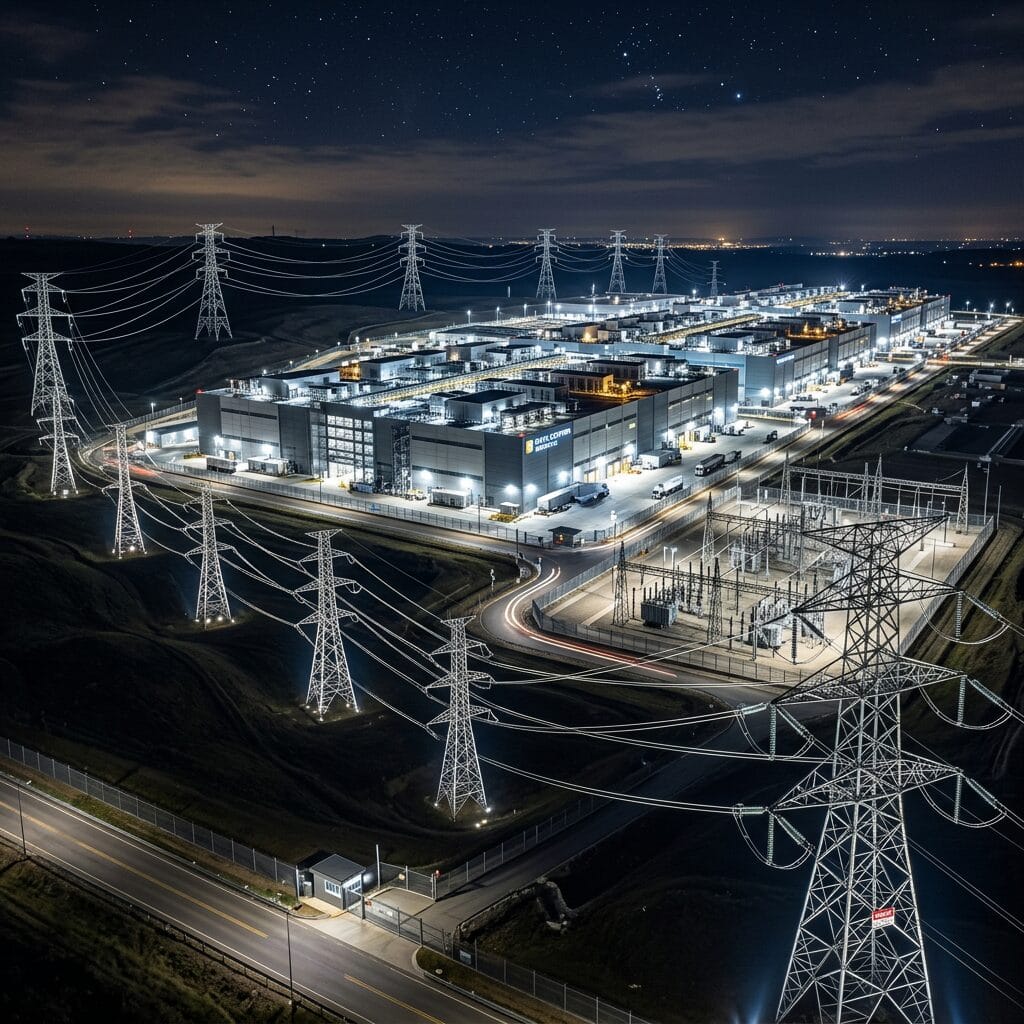
It consumes chips, data centers, electricity, cloud capacity, engineering talent, and money at a scale that starts to resemble national infrastructure more than normal software development. That is why these giant investments keep arriving. Not because the industry is merely optimistic, but because the cost of staying competitive has become enormous.
The companies that win may not simply be the most innovative. They may be the ones with the deepest reservoirs of capital and the strongest pipeline to computing power.
Rivals Are Funding Rivals Because the Market Is Still Being Built
There is something striking about the structure of the current AI economy.
The biggest cloud and platform companies are often funding firms that could later threaten them. That sounds irrational until you realize the market is still being carved up. Nobody wants to be locked out of the next dominant model platform, the next enterprise standard, or the next layer of developer dependence. So the giants invest, partner, host, and hedge all at once.
That is not confusion. It is strategy.
They are trying to make sure they sit close enough to the center of the coming AI order that, whoever wins, they still collect rent somewhere in the system.
Anthropic Is Becoming Too Big to Ignore
This deal also says something important about Anthropic itself.
The company is no longer being treated as a promising side player or a boutique safety-focused lab with strong branding. It is being treated like a major force that requires extraordinary funding because its scale ambitions are now industrial. That means more compute, more customers, more infrastructure, and more pressure to prove it can convert explosive growth into durable dominance.
That is a very different level of seriousness.
In the AI market, once a startup starts attracting money on this scale, it is no longer just a startup. It becomes part of the strategic landscape.
The Real Scarcity Is Not Talent. It Is Infrastructure.
People often talk as though the main race is for engineers, researchers, and product brilliance. Those matter, of course. But the more decisive scarcity now looks like infrastructure.
Can you secure enough chips? Can you guarantee enough power? Can you line up enough cloud capacity? Can you serve enterprise demand without collapsing under your own popularity? Can you train and deploy advanced models faster than competitors while keeping costs from exploding?
That is the battlefield now.
AI is turning from a software story into an infrastructure story, and infrastructure always favors the players with the deepest balance sheets and the broadest industrial reach.
This Is What an Arms Race Looks Like in Corporate Form
The word “race” gets used so casually in tech that people sometimes miss what it actually implies.
A race of this kind does not just reward speed. It punishes anyone who slows down.
That is why these funding numbers keep getting more absurd. Once one company raises or commits at this scale, everyone else is forced to think bigger too. More spending. More chips. More data centers. More partnerships. More defensive deals. More fear of being left behind.
At that point, the logic becomes self-reinforcing. Nobody wants to be the one that underinvested in the most important platform shift of the era.
The Risk Is That AI Becomes an Oligopoly Built on Cash Burn
There is also a darker side to this.
If the cost of building frontier AI remains this high, then the industry may become even more concentrated than many people expected. Instead of a wide-open technological revolution, we may end up with a tiny number of firms powerful enough to sustain the spending required to compete seriously at the top.
That would shape everything.
It would shape innovation, pricing, enterprise access, developer dependence, and the distribution of power across the digital economy. It could also mean that the future of AI is decided less by open competition and more by which companies can survive the longest in a capital-intensive war of attrition.
The Meaning of the Moment
Google’s Anthropic investment matters because it reveals what the AI boom is becoming.
Not just a battle of models, but a battle of financing. Not just a contest of ideas, but a contest of industrial endurance. The companies at the front are no longer simply trying to impress users. They are trying to secure enough money and machinery to dominate the next layer of the digital economy.
That is a much harder, colder story than the usual AI hype.
And it may be the truest one.