


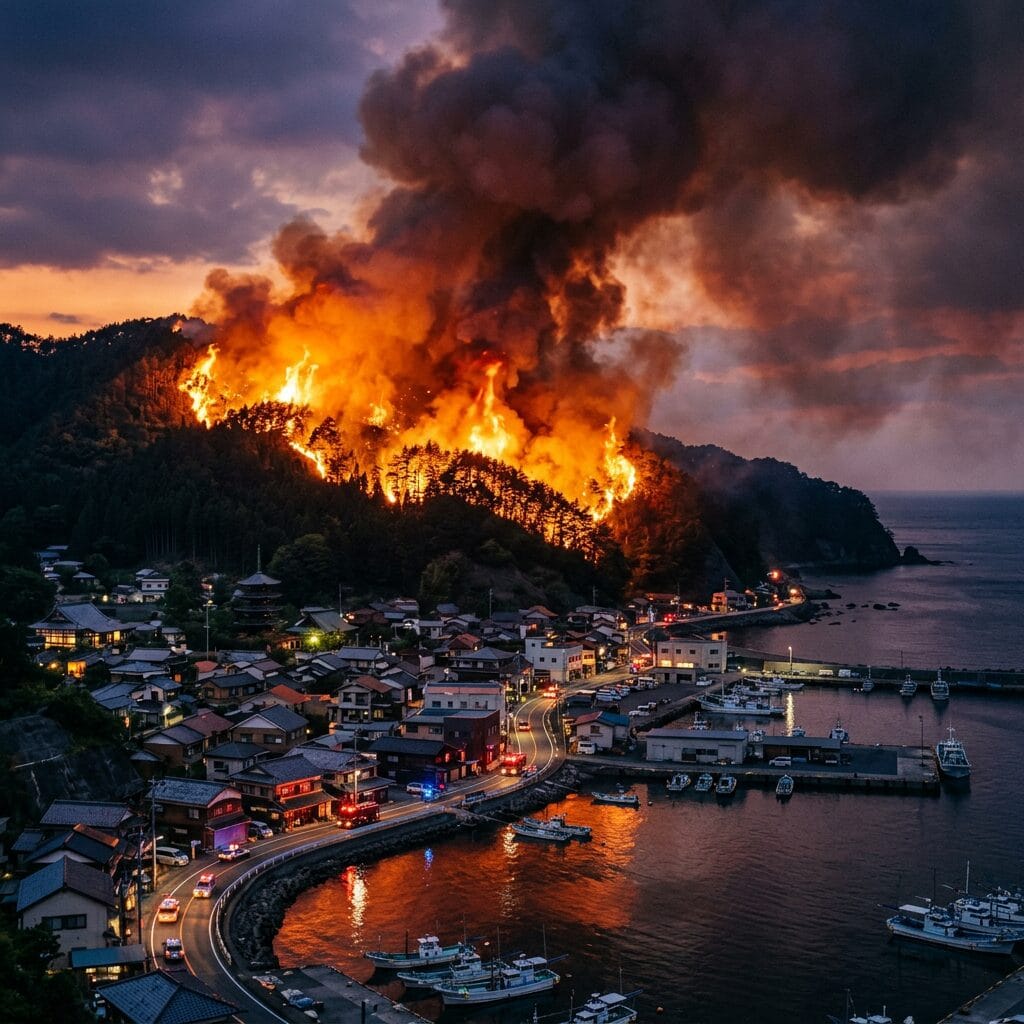
Disaster does not always arrive as a single historic event.
Sometimes it comes back in different forms, again and again, until a community that already knows loss is forced to relive fear from a new direction. That is what makes the wildfires in Iwate feel so heavy. This is not just a story about flames in a remote landscape. It is a story about a town already marked by catastrophe now facing another kind of emergency, driven by dry land, wind, and the growing instability of the climate itself.
Fire Is Becoming Harder to Treat as an Exception
Japan has never been the country most people imagine when they think of major wildfire zones.
That is exactly why this matters.
When a place not historically defined by frequent, massive fires starts seeing bigger blazes that are harder to contain, it becomes harder to dismiss them as freak incidents. The pattern starts to look like something else: a warning that climate stress is widening the map of vulnerability. More heat, more dryness, stronger winds, and more unstable seasonal conditions can turn landscapes once seen as relatively safe into places of sudden danger.
That is how the climate crisis works in real life. It expands the boundaries of what communities thought they had to fear.
Small Towns Carry Big Disasters Differently
There is something especially painful about a fire closing in on a place like Otsuchi.
In a major city, disaster is still terrifying, but scale can create a certain anonymity. In a smaller town, the threat feels more intimate. People know the roads, the hills, the houses, the names. They know exactly what is at risk because it is not abstract. It is their neighbor’s roof, their friend’s family documents, their street, their local memory.
That makes evacuation more than a technical response. It becomes emotional dislocation.
And when a town has already lived through profound trauma before, the psychological weight is even heavier.
Disaster Memory Never Really Leaves
The cruel thing about communities that have survived catastrophe is that new danger rarely arrives alone.
It awakens old fear.
A wildfire pushing toward homes in a town that still remembers the 2011 tsunami is not just another emergency. It lands inside a deeper emotional landscape shaped by grief, survival, and memory. People are not only responding to flames in the present. They are also reliving what it means to lose safety all over again.
That is why repeated disaster changes a place in ways statistics never fully capture.
Firefighters Are Being Asked to Fight Geography and Climate at the Same Time
Wildfire response is always difficult. Terrain, wind, and dryness make it worse.
But underneath the tactical struggle sits a larger truth: firefighters are increasingly being forced to battle conditions that are becoming more favorable to fire itself. When the land is dry enough to reignite repeatedly, when wind keeps helping flames move, and when rain does not come, response becomes a race against an environment that is no longer cooperating with containment.
That is the deeper warning in events like this.
The challenge is not only whether enough firefighters or helicopters are deployed. It is whether communities are entering an era where the natural conditions around them are becoming more hostile more often.
Climate Change Makes Even “Unusual” Fires More Plausible
One of the most dangerous instincts in public debate is to wait until a place looks like California, Australia, or southern Europe before taking fire risk seriously.
That is too late.
Climate change does not move in neat stereotypes. It shows up by making old assumptions unreliable. It makes once-rare events less rare. It turns strange weather into a pattern. It stretches dry periods, sharpens winds, and loads landscapes with more risk than people are used to imagining.
That is why Japan’s wildfire story matters beyond Japan.
It is another reminder that climate disruption does not need to make every country identical. It only needs to make more places less predictable and more exposed.
The Human Story Is Always Bigger Than the Acre Count
People often follow wildfire news through hectares burned, buildings damaged, or numbers evacuated.
Those figures matter. But they can flatten the human reality.
Behind every evacuation order is a family deciding what to carry, what to leave, what matters most, and what they may never see the same way again. Behind every “no fatalities reported” line is still a town under stress, elderly residents displaced, volunteers exhausted, and households waiting to learn whether fear will become loss.
Disasters do not need a body count to leave scars.
This Is What the Front Line of Climate Adaptation Looks Like
The phrase “climate adaptation” can sound abstract, bureaucratic, and bloodless.
In reality, it looks like firefighters working over multiple days on hilly terrain. It looks like helicopters dropping water over advancing flames. It looks like evacuation centers, emergency orders, volunteer crews, and mayors trying to calm a frightened population. It looks like ordinary people packing bankbooks, medicine, pets, and documents because the weather no longer feels trustworthy.
That is adaptation in real life: communities improvising resilience while the conditions around them grow more volatile.
The Meaning of the Moment
The Iwate wildfires are not just a local emergency. They are part of a much larger story about how climate stress is changing the emotional and physical geography of risk.
Places that once worried more about one form of disaster are now facing several. Towns with long memories of loss are being tested again. Fire seasons are becoming less predictable. And the burden of response keeps falling first on local people, local firefighters, and communities that did not create the broader forces making these events more likely.
That is why this story matters.