


Diplomacy has not failed because the two sides merely disagreed. It has failed, at least for now, because the gap between what Washington wants and what Tehran is willing to give remains far wider than hopeful headlines could hide.
The latest U.S.-Iran talks ended without a deal, and that matters for one simple reason: when direct negotiations collapse in the middle of a fragile ceasefire, the silence left behind is not neutral. It is dangerous.
This was supposed to be the moment where both sides tested whether the war could be contained by bargaining rather than widened by force. Instead, the meeting appears to have confirmed what many already suspected. The United States and Iran are not just arguing over terms. They are arguing over power, humiliation, leverage, and the shape of the region after the guns quiet down.
A Meeting Meant to Calm the Region Did the Opposite
Whenever high-level talks end without agreement, diplomats try to soften the blow. They talk about progress, channels staying open, documents being exchanged, technical contacts continuing.
But the core truth is harder and uglier.
If both sides walk away still locked in fundamental disagreement, then the meeting did not stabilize the situation. It merely exposed how unstable it still is. And in this case, the stakes are not abstract. They involve a ceasefire that already looks fragile, a region still on edge, and a global economy watching the Strait of Hormuz like a heartbeat monitor.
That is not the setting for a polite diplomatic pause. That is the setting for renewed danger.
The U.S. Wants Submission. Iran Wants Concessions.
At the center of the deadlock is a brutal mismatch in expectations.
Washington wants Iran to make an unmistakable commitment not to pursue nuclear weapons or the tools that could quickly produce one. That is not a small ask. It goes to the core of American leverage and long-term strategic goals.
Tehran, meanwhile, is not approaching these talks like a defeated side ready to sign whatever is placed in front of it. Iran wants a broader deal shaped around its own demands, including regional ceasefire issues, financial relief, and leverage over one of the world’s most important shipping chokepoints.
That is why this blew up.
The Americans came in trying to lock down hard red lines. The Iranians came in trying to extract a wider political and strategic price. Those are not two positions that naturally meet in the middle.
This Is Not Just About Nuclear Terms
The easiest mistake would be to treat this as another sterile nonproliferation dispute.
It is bigger than that.
The talks are also entangled with war damage, regional bargaining, maritime power, and the question of who gets to define the terms of “peace” after months of bloodshed. Iran does not want an agreement that simply neutralizes its leverage while leaving wider grievances untouched. The United States does not want a deal that rewards escalation or allows Tehran to convert battlefield pressure into political gain.
So both sides keep talking about peace while negotiating from the logic of coercion.
That is not diplomacy at its strongest. That is diplomacy under duress.
Hormuz Is the Shadow Hanging Over Everything
Even when it is not the headline, the Strait of Hormuz is sitting behind every major move.
That narrow waterway is not just a maritime passage. It is one of the world’s pressure valves. If it stays blocked, threatened, mined, or politically weaponized, the consequences do not stop with Iran or the Gulf. They hit oil markets, shipping lanes, inflation, insurance, and the wider global economy.
That is why this deadlock matters so much.
The talks were not only about reducing tensions between two hostile states. They were also about whether one of the most critical arteries of global commerce could move back toward stability. With no deal, that question remains open, and markets hate open questions sitting on top of strategic chokepoints.
Mutual Distrust Is Still the Main Negotiator
People often speak about countries negotiating as if governments alone are sitting at the table.
That is never fully true.
History sits there too. So does pride. So does recent war. So do dead civilians, bombing campaigns, sanctions, threats, and years of competing lies about intent. By the time officials sit down across from each other, they are not just discussing clauses. They are carrying accumulated distrust so heavy that every proposal sounds like a trap.
That appears to be exactly what happened here.
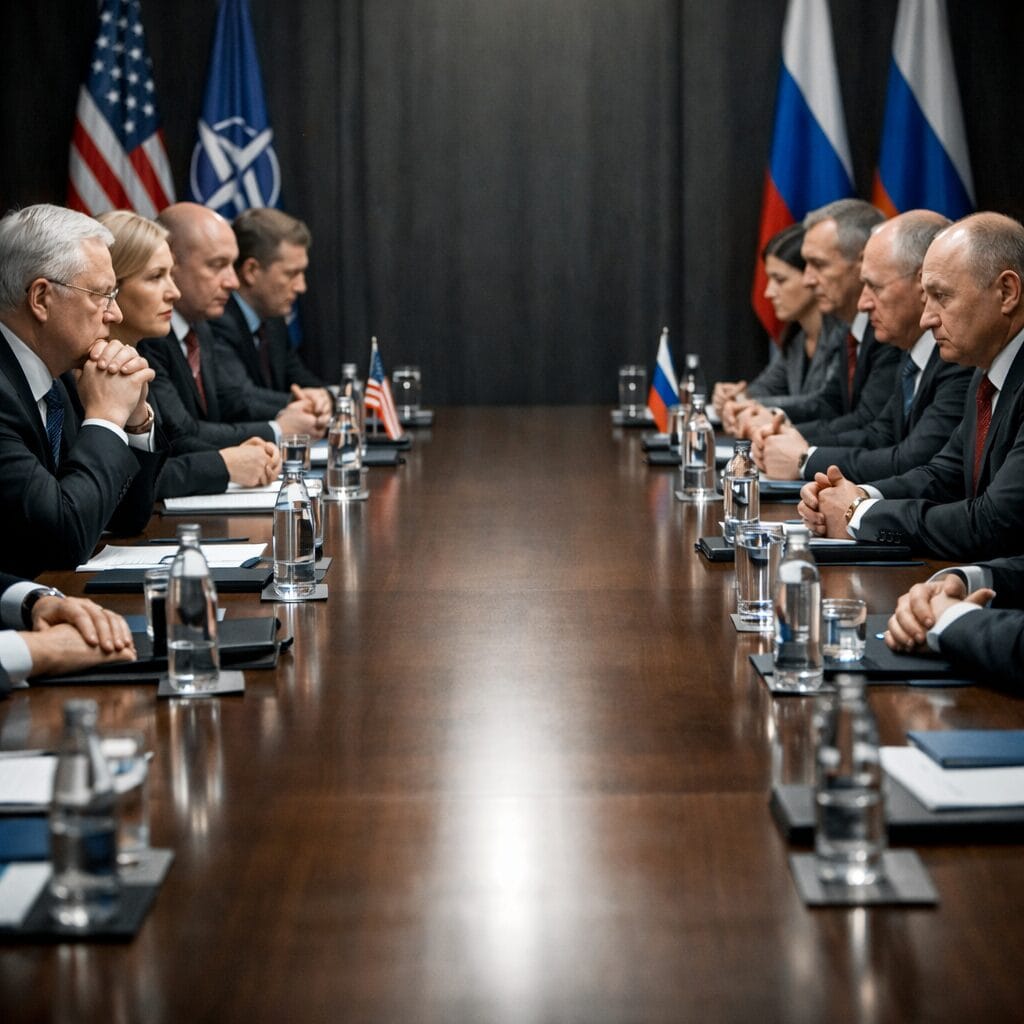
Even the optics suggested there was no real atmosphere of trust, only a tense effort to test whether pressure could produce movement. It did not.
A Failed Deal Does Not Mean a Stable Standoff
This is where people get complacent.
They hear that talks ended without agreement and assume the situation has simply returned to where it was before. But failed negotiations rarely leave things unchanged. They usually harden positions, deepen suspicion, and increase the temptation for each side to regain leverage outside the conference room.
That is the real danger now.
Washington may conclude that Iran only understands more pressure. Tehran may conclude that the United States entered the talks demanding capitulation, not compromise. And once both sides leave with that interpretation, the next chapter is less likely to be written by diplomats than by military planners and political hardliners.
The Region Still Has No Real Exit Ramp
That may be the bleakest part of all.
There is still no clear path that satisfies the minimum demands of both sides without looking like surrender to one of them. The United States wants strategic guarantees. Iran wants strategic relief. The United States wants open shipping and nuclear restraint. Iran wants broader concessions, recognition of regional realities, and leverage preserved. Those aims are not impossible to bridge in theory, but in the middle of war and mutual fury, theory is cheap.
Reality is much harsher.
Right now, reality says the talks ended, the disagreements remain, and the ceasefire sits on shakier ground than before.