


Introduction
Art is not only a reflection of beauty but also a record of civilization’s soul. In South India, the Dravidian temple tradition offers one of humanity’s most intricate and enduring forms of sacred art. Its architecture, sculpture, and symbolism continue to inspire artists and cultural historians worldwide.

Origins of Dravidian Temple Art
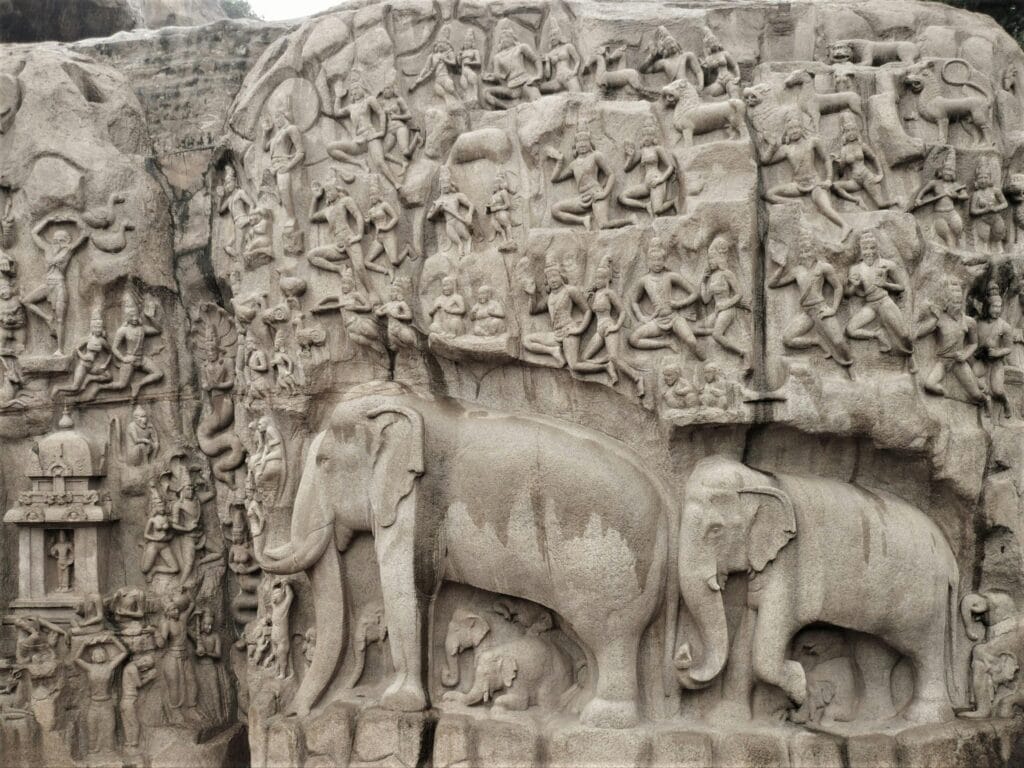
- Emerged between the 6th and 9th centuries CE, reaching its zenith under the Cholas.
- Rooted in stone architecture, unlike the earlier wooden shrines.
- Richly integrated myth, cosmology, and daily life into carvings.
Distinctive Features
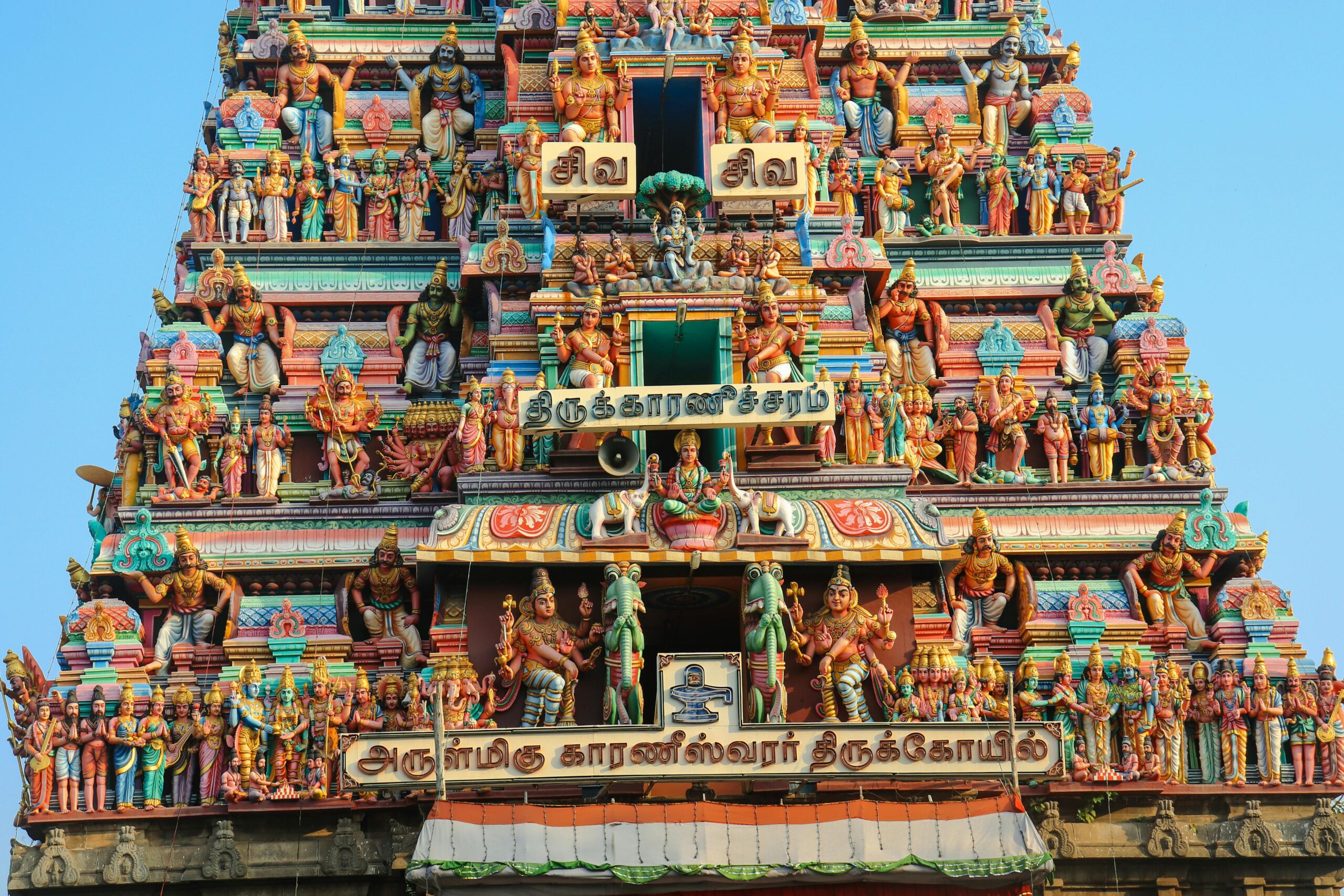
- Gopurams (Gateway Towers): Massive, ornamented entrances visible from miles away.
- Sculptures: Detailed depictions of deities, dancers, animals, and folklore.
- Symbolism: Every pillar and carving has spiritual meaning, from lotus motifs to guardian lions.


Influence Beyond Temples
- Inspired Bharatanatyam dance postures and Carnatic music halls.
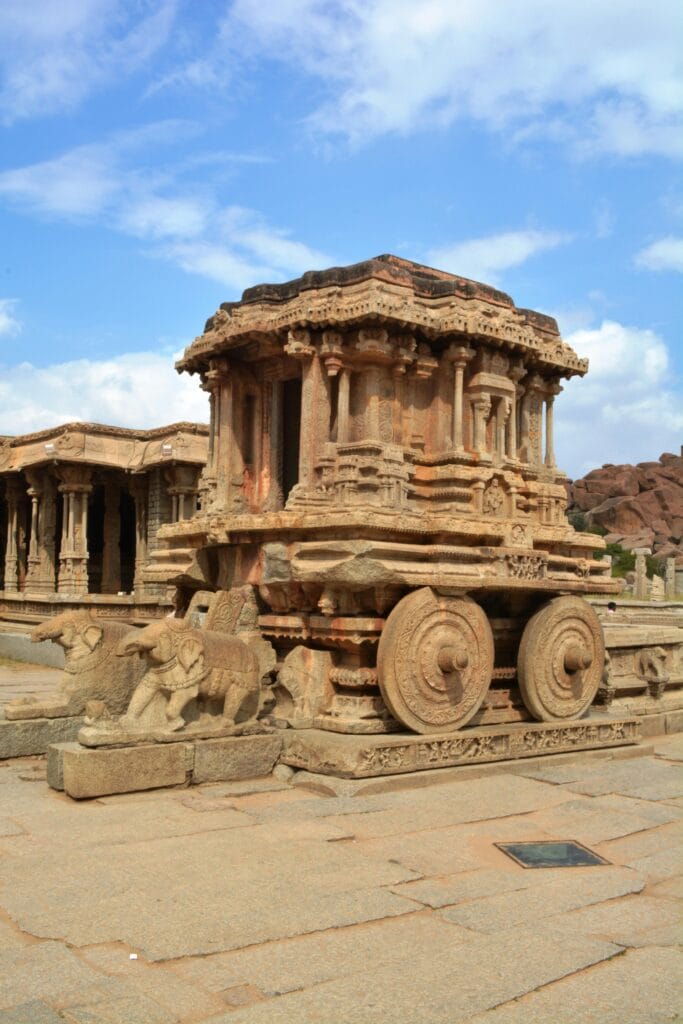
- Adopted as motifs in textiles, jewelry, and even modern cinema.
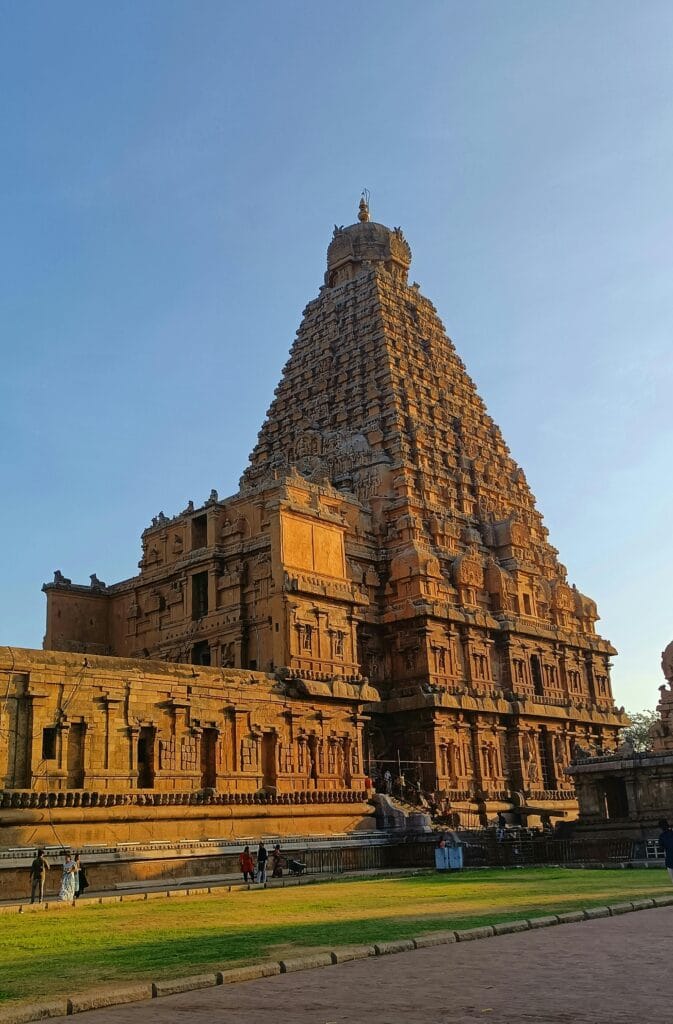
- UNESCO recognizes many Dravidian temples (like Brihadisvara at Thanjavur) as World Heritage Sites.
Conclusion
Dravidian temple art is not just an ancient relic; it is a living tradition. Its blend of sacred geometry, cultural storytelling, and artistic mastery makes it one of the world’s most enduring styles, linking India’s past to its creative present.