

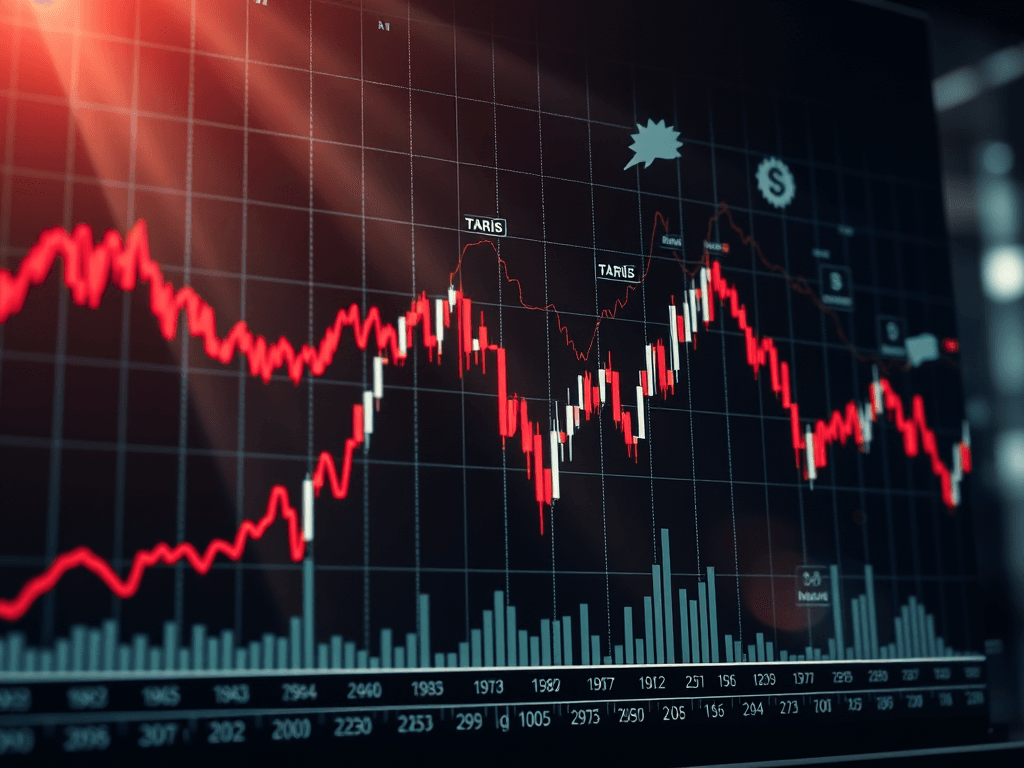
Markets had one of those sessions where everything feels connected — and nothing feels stable. Stocks slid, volatility ticked up, and investors rotated into a more defensive posture as fresh tariff threats collided with a deeper anxiety already running through the system: rate and bond-market jitters.
In plain terms, traders aren’t just reacting to one headline. They’re reacting to a stack of risks landing at the same time — trade shock risk, inflation uncertainty, and the uneasy question of what central banks do next.
The immediate trigger: tariff threat anxiety
Tariff threats punch markets fast because they hit multiple nerves at once:
- they can raise costs for companies and consumers
- they threaten earnings margins
- they complicate supply chains and business planning
- they increase the chance of retaliation and a wider trade fight
Even if tariffs don’t happen immediately, the possibility is enough to make investors step back. Markets price uncertainty before they price outcomes.
The deeper pressure: the bond market is restless
The more structural problem is that investors are already hypersensitive to bonds. When Treasury yields jump or move unpredictably, it hits stocks through the simplest equation in finance: higher rates make future earnings worth less today.
That’s why you can have a day where stocks fall even without obvious recession news. It’s not always about growth collapsing — it’s about the “price of money” becoming unstable.
A shaky bond market also sends a message: inflation expectations and policy confidence are not fully settled.
Inflation is the next fuse
With inflation data in focus, investors are watching for any sign that price pressures are cooling—or re-accelerating.
That matters because inflation drives:
- how long rates stay high
- whether rate cuts become realistic
- whether borrowing costs ease for households and businesses
- whether risk assets can justify their valuations
A cooler inflation print can spark relief rallies. A hotter print can trigger repricing across everything: stocks, bonds, the dollar, and commodities.
Why volatility rises in this environment
Volatility isn’t just fear. It’s uncertainty + leverage + fast repositioning.
When markets face both policy headlines (tariffs) and macro instability (rates/inflation), traders start moving quickly:
- cutting exposure in high-valuation sectors
- shifting toward defensives
- seeking safe havens
- hedging aggressively
That creates sharp intraday swings and the feeling that the market can flip direction on one sentence.
What investors are watching next
This kind of market doesn’t reward guessing. It rewards reading the next few signposts:
- Inflation reports and what they imply for rate cuts
- Central-bank messaging (dovish patience vs. hawkish caution)
- Bond yield direction and stability
- Whether tariff threats are walked back or escalate into policy
Bottom line
Stocks are sliding and volatility is rising because traders are being hit from two angles at once: trade-policy shock risk and rate-market instability. Add inflation uncertainty on top, and investors default to the oldest rule in markets:
When the rules feel unstable, reduce risk first — and ask questions later.

