

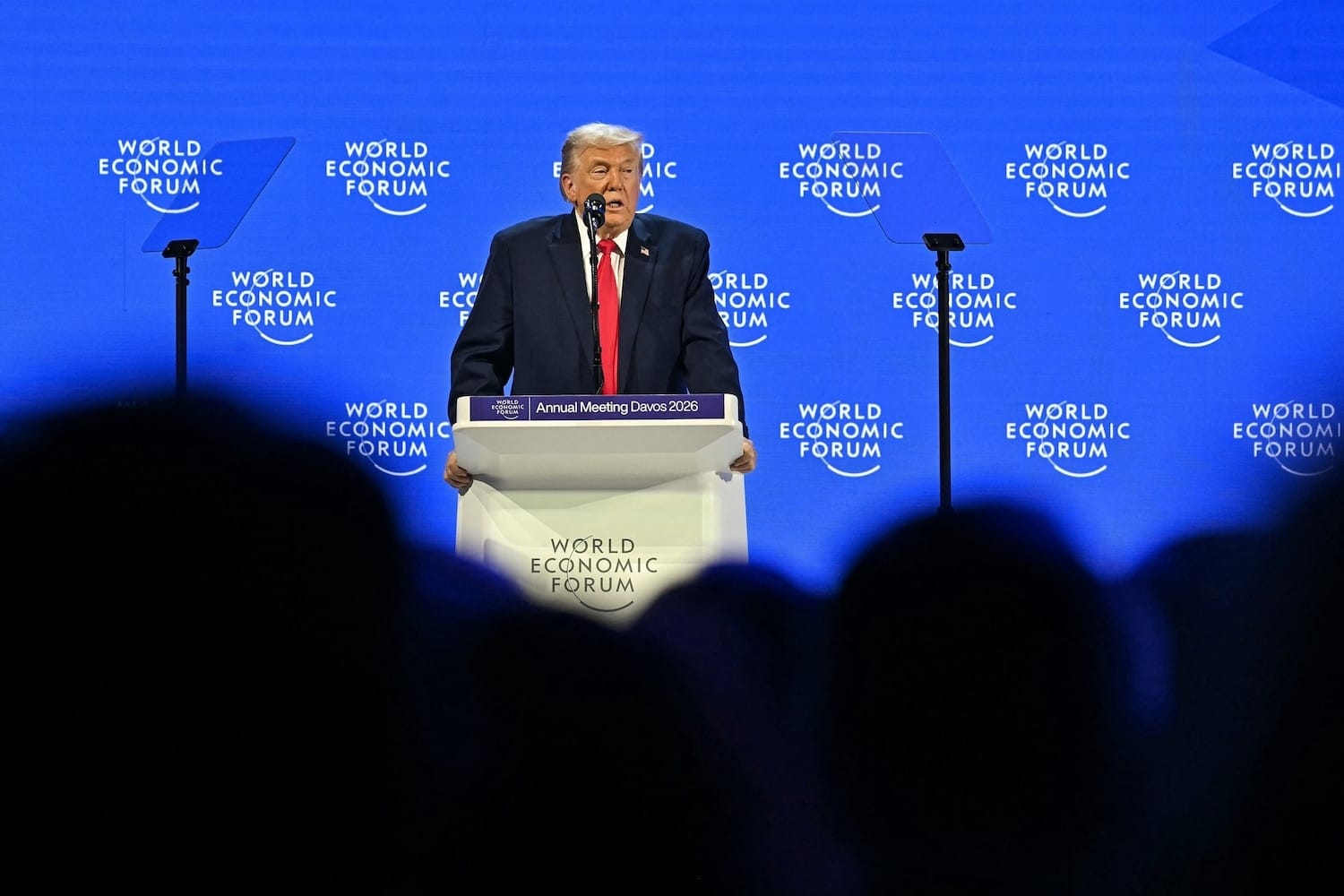
Davos is supposed to be the world’s big stage for markets, tech, and macro forecasts. But this week, a different storyline is dominating the political oxygen: Greenland — and the rising friction between the U.S. and its allies ahead of President Donald Trump’s remarks.
The tension escalated after Trump made an unusually blunt statement about what it would take for the U.S. to get what it wants.
“We probably won’t get anything unless I decide to use excessive strength and force where we would be, frankly, unstoppable. But I won’t do that,” Trump said.
“I don’t have to use force. I don’t want to use force. I won’t use force,” he added.
Even with the reassurance, the framing alone landed like a thunderclap — because in allied politics, hinting at force is already a rupture, even if it’s immediately walked back.
Why Greenland is suddenly global
Greenland isn’t just a cold island with big maps around it. It’s a strategic hinge point:
- the Arctic’s military and surveillance geography
- future shipping routes and logistics corridors
- critical minerals and resource access
- NATO’s northern posture and defense planning
That’s why leaders don’t treat this as a side issue. They treat it as sovereignty and alliance credibility.
Why allies are pushing back so hard
Denmark is a NATO ally. Greenland is tied to the Danish realm and has its own democratic political identity. So when the U.S. president talks about “getting” Greenland in the language of leverage — even hypothetically — it triggers a predictable reaction: Europe closes ranks.
The fear isn’t only about Greenland. It’s about precedent.
If trade pressure or geopolitical intimidation becomes normal inside the alliance, then NATO’s foundation shifts from trust to transactional bargaining — and that’s the kind of fracture that adversaries love to exploit.
Davos turns it into a signal to the world
What makes this moment sharper is the timing. Davos isn’t where treaties are signed — it’s where global signals are broadcast. A single line from a Davos podium can move:
- diplomatic posture
- markets and risk appetite
- defense planning priorities
- public opinion across allied countries
So the world is watching not just what Trump says, but how far he goes — and how quickly allies push back.
What happens next
The next phase is less about the headline and more about the response:
- do European leaders treat this as a misunderstanding, or as a red line?
- does the U.S. dial down the rhetoric, or escalate leverage talk?
- does Greenland’s leadership respond more forcefully as public anger grows?
Because once sovereignty becomes a bargaining chip, politics stops being polite — and starts becoming a contest of pressure.
Bottom line
Trump’s “unstoppable” remark — even paired with “I won’t use force” — has already changed the atmosphere. It turned Greenland from a geopolitical curiosity into a frontline test of alliance cohesion.
And Davos, of all places, is where the world will decide whether this is a momentary shock… or the start of a deeper rupture.