

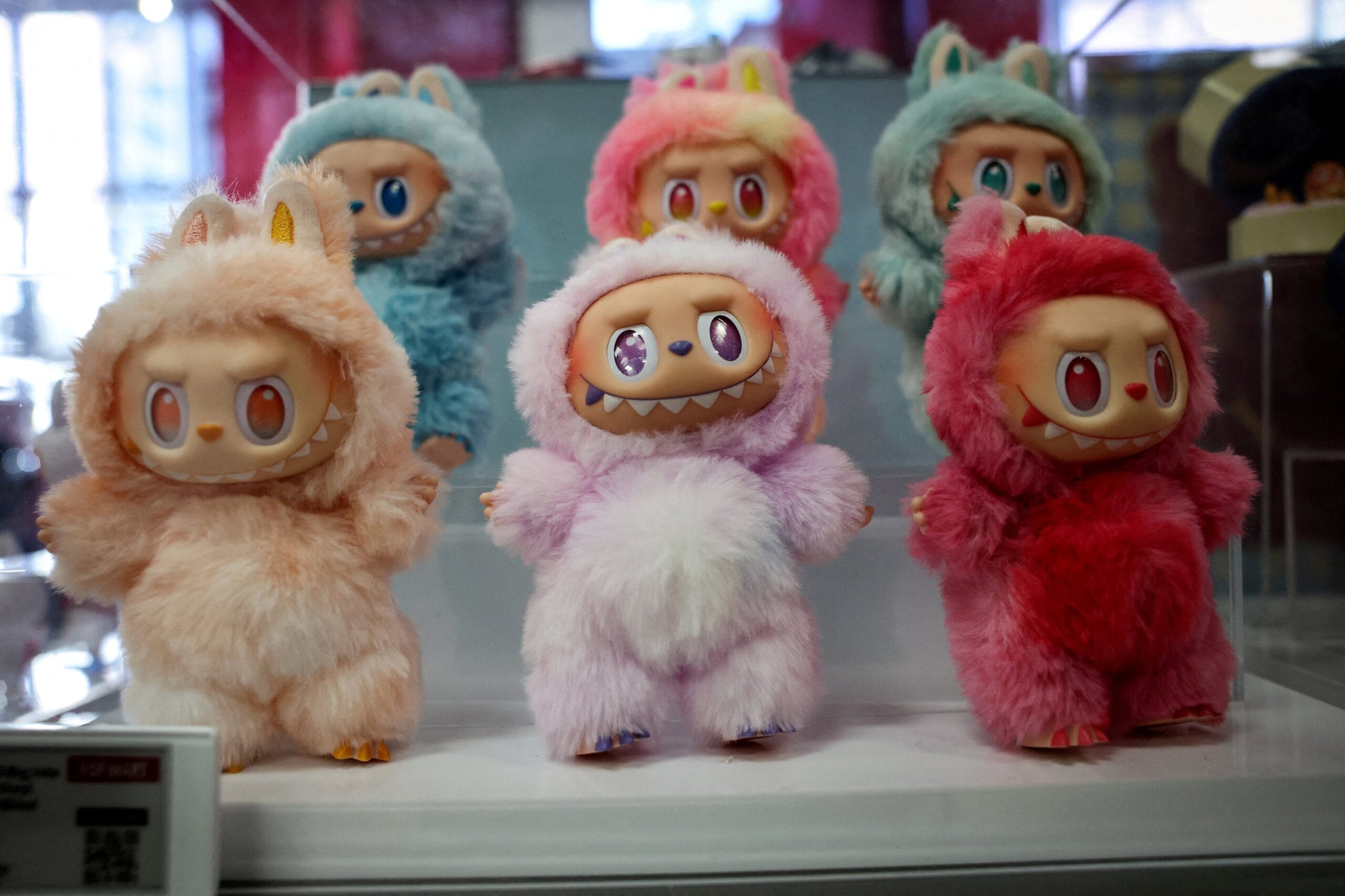
Labubu — the ugly-cute little monster with the toothy grin that went from “collector niche” to global obsession — is officially making the jump from blind boxes to the big screen.
Chinese toy powerhouse Pop Mart has partnered with Sony Pictures Entertainment to develop a feature film based on Labubu, marking Pop Mart’s most ambitious move yet to turn a viral toy into a long-lasting entertainment franchise.
This isn’t a small licensing deal or a quick animated short. It’s a full cinematic push — and it signals something bigger: Pop Mart wants to become an IP machine, not just a toy company.
Why this is a big deal for Pop Mart
Pop Mart has already proven it can manufacture hype. The company’s “designer toy” model — collectibles, limited drops, and blind-box suspense — is built to generate obsession. But virality is a fragile asset. A character can peak fast and fade just as quickly.
A film changes the equation.
Movies do what toys can’t:
- build story
- deepen character identity
- create emotional attachment
- expand audiences beyond collectors
- open the door to licensing, games, theme experiences, and long-tail merchandise
In other words, Pop Mart isn’t trying to sell more Labubus next month. It’s trying to make Labubu matter five years from now.
The creative team: a “prestige family hit” kind of choice
Pop Mart and Sony aren’t treating this like a cheap cash-in. The project has Paul King attached to direct and produce — best known for Paddington, Paddington 2, and Wonka.
That’s a very telling choice. King’s signature is warm, whimsical storytelling that can play to both kids and adults. It suggests the Labubu film could aim for something more than meme comedy — more “heart + charm + weirdness,” less “toy commercial.”
The screenplay will be co-written by Paul King and Steven Levenson, an award-winning writer best known for Dear Evan Hansen.
The film is currently described as being in early development, and it’s planned as a live-action + CGI hybrid.
Who created Labubu, and what “The Monsters” really is
Labubu didn’t start as a marketing invention. The character comes from Kasing Lung, a Hong Kong-born artist and writer who grew up in the Netherlands.
He created Labubu and The Monsters in a series of picture books called “The Monsters Trilogy” back in 2015. Lung will serve as an executive producer on the film — a key detail, because it signals some respect for the original creative roots.
Pop Mart is currently celebrating The Monsters’ 10th anniversary with a global tour, with a recent stop in Paris.
The real strategy: Pop Mart wants the “Disney playbook”
Pop Mart has been blunt about its long-term ambition: turn characters like Labubu into durable IP that can live across:
- movies and series
- theme attractions
- collaborations and luxury merch
- new product categories
- global licensing revenue
It’s basically the “build worlds, not products” strategy — and it’s the same reason Disney’s characters remain valuable for generations.
Pop Mart has even made structural moves to support that global push, including elevating London as its European headquarters — a signal it’s thinking like a global entertainment brand, not just an Asia-first retailer.
Why Sony would want this
Sony Pictures gets a ready-made global phenomenon with a built-in fan culture and product ecosystem. That’s valuable in a world where original IP is hard and marketing is expensive.
A Labubu film can come with:
- instant recognition in key online culture circles
- a merch engine that already exists
- international interest (especially across Asia, Europe, and North America)
- a character design that’s inherently “collectible”
If it lands, Sony doesn’t just get a movie — it gets a franchise platform.
The “viral toy” problem: hype fades unless you build meaning
Labubu’s popularity has been enormous — big enough to turn Pop Mart into a cultural export story and lift its profile against the biggest legacy toy brands on earth.
But that same popularity also creates a risk: scarcity-driven hype can collapse if the aura of “rare” disappears or if people move on to the next trend.
That’s why entertainment is the logical next step. A story gives a character durability. It makes the toy feel like a piece of a universe, not just a lucky pull from a blind box.
What the movie could look like (and why the hybrid format matters)
A live-action/CGI hybrid opens up a lot of possibilities:
- Labubu remains stylized and fantastical (CGI)
- the human world feels grounded (live action)
- the tone can land somewhere between whimsical and surreal
- merchandising stays faithful to the original design language
The best versions of these projects don’t try to “realistic-ify” the character. They lean into the charm, the weirdness, and the emotional hook.
And with Paul King involved, the odds tilt toward that kind of approach.
Bottom line
Pop Mart isn’t just making a movie. It’s making a statement:
Labubu is not a fad — it’s a franchise.