

There are escalations that raise the temperature.
Then there are escalations that should terrify everyone with a functioning brain.
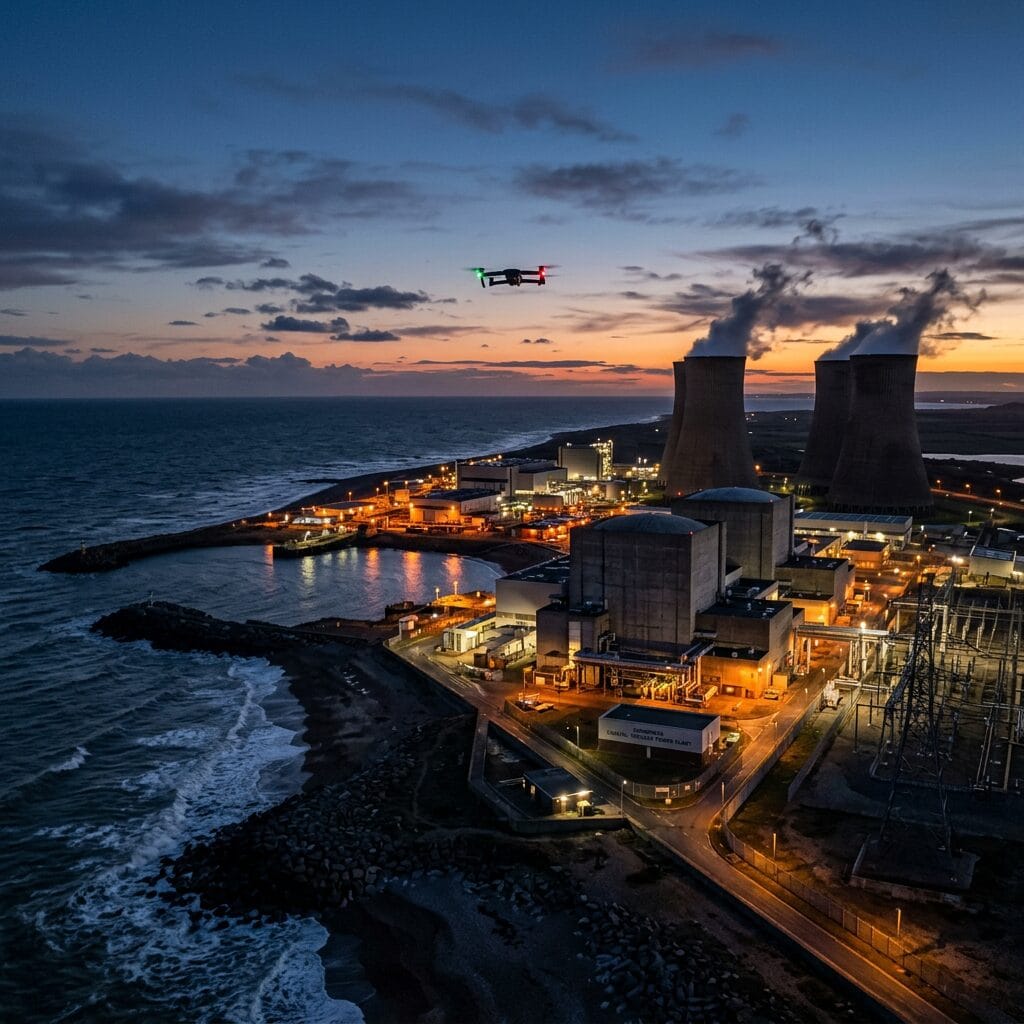
A drone strike near the UAE’s Barakah nuclear power plant belongs in the second category. Even without reported injuries or a radiological release, the attack crossed into a far more dangerous psychological and strategic zone. It showed that this war is no longer only threatening soldiers, ships, oil markets, and border towns. It is now brushing against nuclear infrastructure.
That should be treated as a red line by the entire world.
Nuclear Sites Are Not Normal Targets
A nuclear power plant is not just another piece of infrastructure.
It is not a warehouse, a port, a highway, or a radar station. It is a facility where even a limited strike can create panic far beyond the physical damage. The danger is not only what happens in the moment, but what the attack suggests: that nuclear infrastructure can become part of the battlefield logic.
That is grotesquely reckless.
Even if the strike only caused a perimeter fire, the message is still chilling. Once nuclear sites enter the target map, every actor involved is gambling with consequences larger than any one state can control.
The UAE Is No Longer Watching From the Side
The UAE has tried to position itself as a modern energy hub, a logistics power, a financial center, and a state that can balance security partnerships with economic ambition.
But geography does not care about branding.
The drone strike shows that the UAE is deeply exposed in this widening regional crisis. It has hosted military infrastructure, worked closely with the United States and Israel, and sits inside a Gulf security environment now shaped by Iran, proxies, drones, maritime pressure, and the threat of renewed war. That makes it both strategically important and vulnerable.
The attack near Barakah is a warning that no Gulf state can assume it will remain safely outside the blast radius.
This Is What Drone Warfare Has Made Possible
One of the ugliest features of modern conflict is how easily drones can turn distant facilities into reachable targets.
They are cheaper than missiles, harder to attribute cleanly, and perfectly suited for deniable escalation. A drone does not need to destroy a nuclear plant to create strategic shock. It only needs to get close enough to prove the site can be touched.
That is the new danger.
Drone warfare lets states and armed groups send messages through fear without always triggering the full consequences of a declared attack. It makes escalation easier to start and harder to contain.
The Ceasefire Is Looking More Like Theater
The broader ceasefire around the Iran war already looked weak. This incident makes it look even weaker.
A ceasefire that still allows nuclear plants, shipping routes, Gulf airspace, Lebanon, and energy corridors to remain under threat is not a serious peace. It is a pause with weapons still moving in the background. Diplomats may keep talking, but the battlefield is delivering its own verdict.
And that verdict is ugly: the war has not really stopped. It has simply shifted form.
The Barakah Plant Carries Huge Symbolic Weight
Barakah is not just any facility. It is the Arab world’s only nuclear power plant and a central part of the UAE’s energy strategy.
That matters because the attack was not only about physical risk. It was also about symbolism. Targeting or threatening Barakah sends a message that even the UAE’s most advanced national projects can be pulled into regional confrontation. It strikes at the image of technological confidence and national modernity the UAE has carefully built.
That is why this incident will land so heavily in Abu Dhabi.
It is not just about a fire. It is about vulnerability.
Nuclear Energy Cannot Become Another Battlefield Bargaining Chip
The world has already seen the danger of nuclear facilities becoming entangled in war, including in Ukraine. The lesson should have been obvious: nuclear infrastructure must be kept outside the logic of military escalation.
If that principle weakens, the consequences will spread far beyond the Middle East.
Every future conflict involving nuclear infrastructure becomes more dangerous. Every power plant in a tense region becomes a possible pressure point. Every drone incident creates panic about radiation, sabotage, emergency power systems, and whether the next strike might be worse.
That is not a world anyone should accept as normal.
Trump and Iran Are Playing With Matches Around Gasoline
The political rhetoric around this conflict is also growing more dangerous.
When Washington threatens Tehran, Tehran says its forces are ready, Israel signals it is prepared for any scenario, and armed factions keep testing the edges of the ceasefire, the whole region starts looking like a powder keg with too many people waving flames nearby.
This is how wars restart.
Not always through one grand decision, but through repeated provocations, threats, retaliatory logic, and the constant belief that the other side will blink first.
The Gulf Is Becoming the War’s Pressure Chamber
The Gulf is now absorbing the economic, military, and psychological pressure of the wider conflict.
Hormuz remains unstable. Energy markets remain nervous. Gulf states are trying to protect infrastructure while avoiding being dragged deeper into direct confrontation. Iran and its allied networks have shown they can threaten more than one front. The United States and Israel are still signaling force.
That combination is not stability.
It is containment under stress.
The Meaning of the Moment
The drone strike near the UAE’s nuclear plant should be seen for what it is: a warning that the war is becoming dangerously unrestrained.
No radiological release does not mean no danger. No mass casualties does not mean no escalation. No confirmed perpetrator does not mean no message. The message is obvious enough: the conflict is now reaching places that should never be touched by war.
And once nuclear infrastructure becomes part of the battlefield’s shadow, the stakes change completely.
The world should not wait for a worse incident before treating this as a line that cannot be crossed again.