

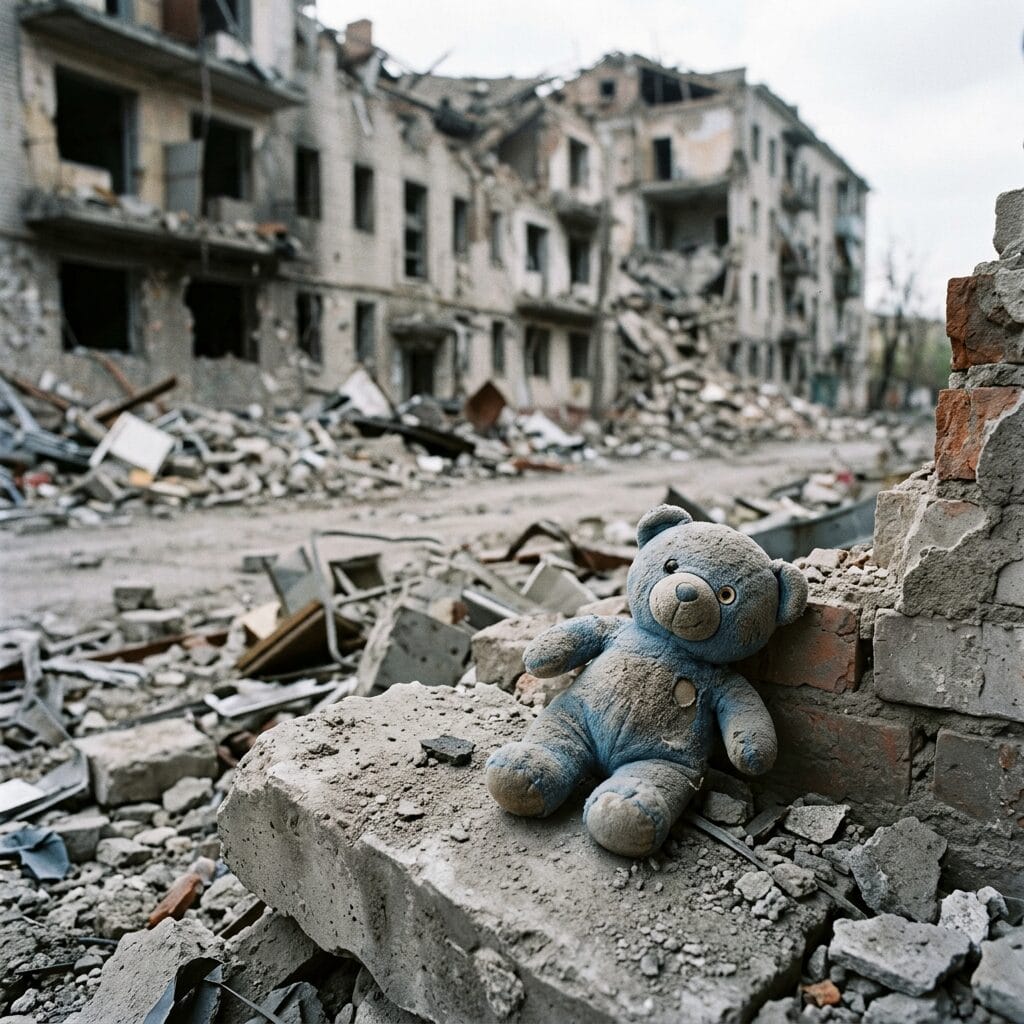
War is usually described in the language of strategy.
Leaders speak of deterrence, security, national interest, red lines, retaliation, and necessity. They wrap destruction in sober vocabulary and present violence as if it were a difficult but respectable instrument of statecraft. That is why Pope Leo’s words matter so much. He cut through all of that polished language and called the thing by its moral name.
Those who wage war are not guardians of order. They are thieves.
They Do Not Only Steal Land. They Steal Time.
The most immediate victims of war are the dead, the wounded, and the displaced. But war steals far more than territory or buildings. It steals time that families were supposed to have together. It steals childhood from the young and dignity from the old. It steals the ordinary rhythm of life that makes a future possible.
That is what makes the Pope’s framing so powerful.
A thief takes what does not belong to him. And war takes everything it can reach: homes, memory, trust, stability, hope.
The Theft Is Also Generational
War is often sold to the public as temporary pain for long-term gain.
But the damage rarely stays temporary. It sinks deep into generations. Children grow up under fear. Towns are rebuilt with scars. Economies lose years. Communities inherit grief as if it were family property. And nations that survive war often spend decades living inside its aftershocks.
That is why the phrase “stealing the future” is not poetic exaggeration. It is literal.
War robs people not only of what they have today, but of what they were supposed to become tomorrow.
Resource Plunder and Bloodshed Belong to the Same Moral World
One of the sharpest parts of Pope Leo’s message is that he linked war with the plundering of the earth’s resources.
That connection matters.
Too often, public debate separates environmental destruction from military aggression, as if one were economic and the other political. In reality, they often belong to the same moral disorder: a willingness to consume what is shared, destroy what sustains life, and call the result progress or necessity. Whether it is land stripped bare, people driven from their homes, or entire regions turned into sacrifice zones for power, the logic is the same.
Take now. Leave ruin later.
That is theft on a civilizational scale.
Technology Without Wisdom Is Just More Efficient Destruction
The warning tied to Chornobyl deepens the message even further.
Human beings keep building more powerful systems, more powerful weapons, more powerful machines, and more powerful ways to alter the world. But power without wisdom does not become greatness. It becomes danger with better engineering. A civilization can be technologically brilliant and morally childish at the same time.
That may be one of the hardest truths of the modern age.
We have learned how to magnify force faster than we have learned how to restrain it.
Modern Leaders Prefer the Language of Necessity Because It Hides Responsibility
This is why moral language still matters.
Political elites often speak as though war simply happens. As though events leave no choice. As though bombing, invasion, escalation, and devastation emerge from history like weather. But they do not. Human beings decide them. Governments fund them. Armies execute them. Ideologues justify them. Profiteers feed on them.
When Pope Leo calls war-makers thieves, he is refusing to let them hide behind bureaucracy, flags, or abstract language. He is dragging the act back into moral daylight.
Peace Is Not Softness
There is also a deeper challenge in his words.
Many political cultures now treat peace language as weakness, caution as naivety, and restraint as a lack of seriousness. But peace is not passivity. Peace is the refusal to let ambition feed on human lives. Peace is the discipline of refusing destruction even when destruction can be made to sound righteous. Peace is the courage to protect a future instead of sacrificing it for pride.
That is not softness.
That is civilization at its strongest.
The World Is in Danger of Becoming Morally Used to Theft
Perhaps the most unsettling thing is how normal all this has become.
War after war, crisis after crisis, the public is asked to adjust. To absorb fresh death counts, new ruins, new displacements, new warnings about escalation, and new justifications for why another generation must pay the price. The machinery of destruction becomes background noise. The theft becomes routine.
That numbness is part of the crime.
Because once people stop recognizing war as theft, the thieves no longer need to hide.
The Meaning of the Moment
Pope Leo’s statement matters because it rejects the false dignity that war-makers claim for themselves.
It says plainly that those who destroy peace are not shaping history in some noble way. They are robbing humanity. They are stealing from children not yet grown, from families not yet broken, from societies not yet burned hollow, and from a future that belongs to all of us.