

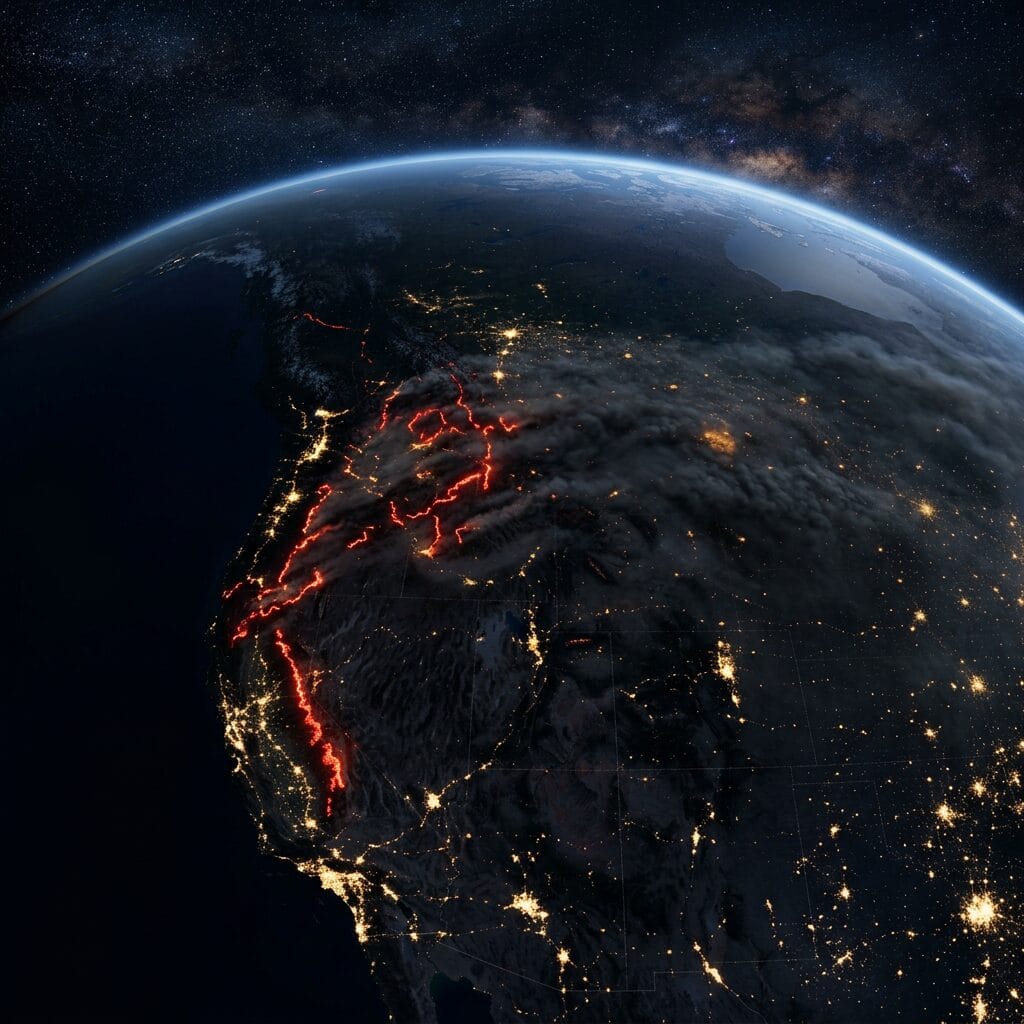
The world is not waiting for summer to become dangerous.
Fires have already torn through record amounts of land across Africa, Asia, and other regions, and scientists are warning that the worst may still be ahead. That is the frightening part. This is not a late-season disaster after months of accumulated heat. This is a brutal opening act before the northern hemisphere’s fire season fully intensifies.
The message is simple: climate change is no longer producing occasional extremes. It is reshaping the baseline of danger.
Fire Is Becoming a Global Condition
Wildfires used to be treated as regional disasters.
California. Australia. Southern Europe. The Amazon. Canada. Specific places carried specific fears. But that old map is becoming less useful. Fire risk is expanding, intensifying, and appearing in patterns that make more of the world vulnerable at once.
That is what makes the latest numbers so alarming.
When fires burn record levels of land across continents before the year is even halfway through, this is not just weather behaving badly. It is a planetary warning that the conditions feeding fire are becoming more widespread and more severe.
Climate Change Is Loading the Dice
No single fire can be reduced to one cause. But the larger pattern is obvious.
A warmer world dries landscapes faster, intensifies heat, stretches drought conditions, and makes vegetation more flammable. Then, when wind, ignition, and fuel line up, fires move with terrifying speed. Climate change does not need to light every match. It just makes the world easier to burn.
That is the brutal mechanics of the crisis.
More heat means more evaporation. More dryness means more fuel. More fuel means bigger fires. Bigger fires mean more smoke, destruction, displacement, and carbon released back into the atmosphere.
It is a vicious loop.
Wet Years Can Create the Next Fire Disaster
One of the most important lessons from the current fire outbreaks is that rain does not always protect a region in the long term.
Heavy rainfall can grow more grass and vegetation. Then, when conditions suddenly turn hot and dry, that extra growth becomes fuel. A landscape that looked lush one season can become a tinderbox the next. That rapid swing from wet to dry is exactly the kind of climate instability that makes fire behavior harder to predict and harder to control.
This is what climate disruption looks like in practice.
Not just heat. Not just drought. Extremes feeding into other extremes.
Africa and Asia Are Carrying the Warning
The scale of burning in Africa and Asia should stop people cold.
These are not isolated fires scattered across a few hotspots. The land burned so far this year points to a much wider and more dangerous pattern. In Africa, unusually high fire activity is being linked to rapid shifts from wet conditions to dry ones. In Asia, countries including India, Myanmar, Thailand, Laos, and China have been among the hardest hit.
That matters because fire is not only an environmental story.
It is a health story, a food story, an economic story, and a human displacement story. Crops are damaged. air quality collapses. homes are threatened. emergency services are strained. ecosystems are destabilized.
The flames are only the most visible part of the crisis.
El Niño Could Make a Bad Year Worse
The danger now is that El Niño may intensify what is already a record-breaking fire year.
El Niño can shift rainfall patterns, worsen drought in some regions, and drive global temperatures even higher. If that combines with the background heat of human-driven climate change, the result could be a year of extreme weather that pushes communities, governments, and emergency systems beyond their limits.
That is the part policymakers should be taking seriously.
This is not a normal fire year with bad luck. It may become a compound climate year, where one stress feeds another until disaster risk multiplies.
Fire Seasons Are Becoming Harder to Define
The phrase “fire season” itself is starting to feel outdated.
In many regions, the danger window is stretching. Fires are starting earlier, burning longer, and appearing under conditions that strain old assumptions. Emergency planning built for the climate of the past is increasingly mismatched with the fire behavior of the present.
That is a serious governance failure waiting to happen.
If governments still plan around older seasonal patterns, they will keep arriving late to disasters that now begin earlier and escalate faster.
The Smoke Does Not Respect Borders
One of the cruel truths about fire is that its effects travel.
Smoke can cross countries. Carbon emissions enter the global atmosphere. Food supply disruptions ripple through markets. Insurance losses reshape economies. Heat and drought damage regions far from the original flames. A wildfire may begin locally, but the consequences are increasingly global.
That is why treating wildfires as isolated national emergencies is no longer enough.
The fire crisis is now part of the climate crisis, the health crisis, the biodiversity crisis, and the economic resilience crisis all at once.
The World Is Still Responding Like This Is Temporary
That may be the most dangerous part.
Governments still behave as though each disaster is an exception. They send crews, issue evacuation orders, promise recovery funds, and move on when the headlines fade. But if fire outbreaks are becoming more frequent, larger, and more intense, then emergency response alone is not enough.
The world needs prevention, land management, emissions cuts, early-warning systems, stronger building codes, better evacuation planning, and serious investment in climate adaptation.
Anything less is just waiting for the next record to break.
The Meaning of the Moment
The record fire outbreaks of 2026 should be treated as a warning from the future arriving early.
The planet is hotter. Extremes are sharper. Wet seasons can feed dry-season infernos. El Niño may amplify the danger. And fire is increasingly becoming one of the clearest ways climate change announces itself: not as an abstract graph, but as smoke, heat, ash, evacuation, and loss.
This is not normal.
And if the world keeps treating it as normal, then record fire seasons will stop feeling like shocks.
They will become the new rhythm of a planet pushed too far.

