

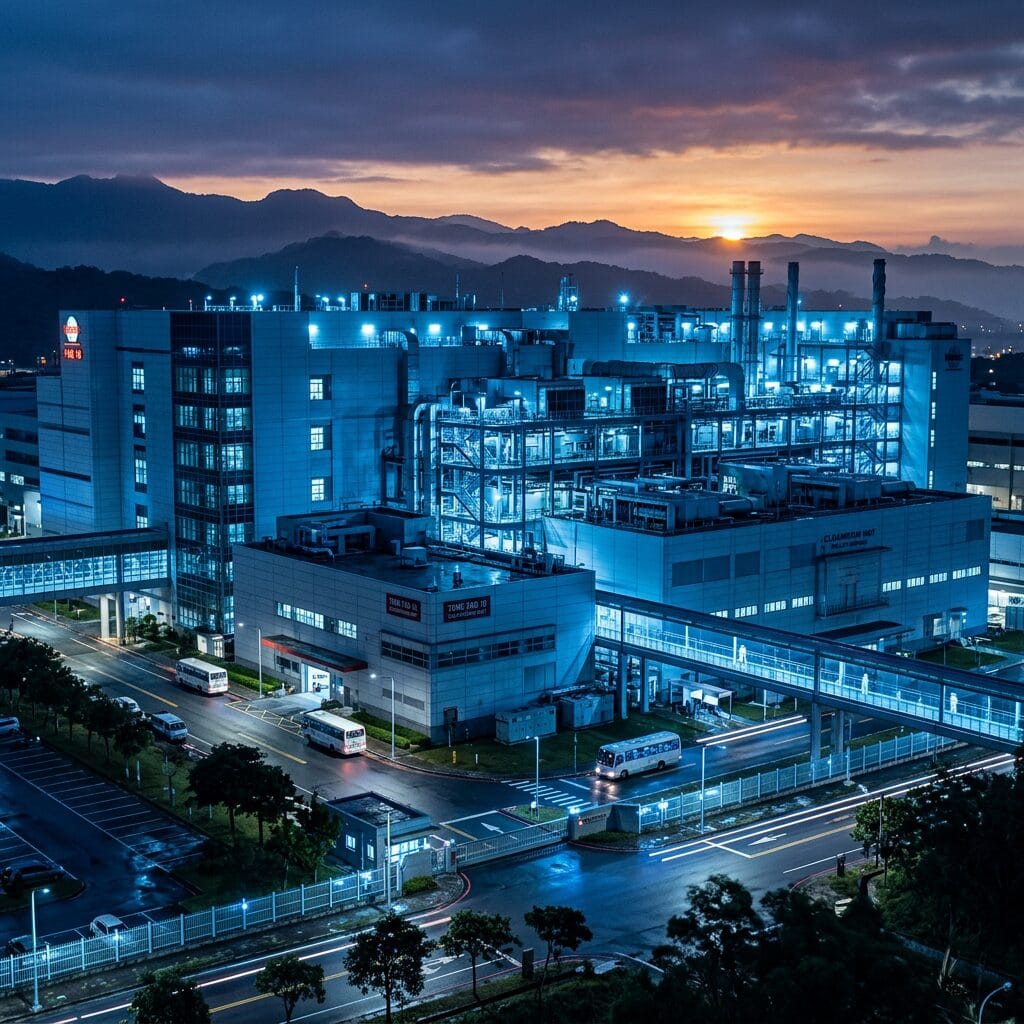
South Korea is not treating the threat of a Samsung strike like an ordinary labour dispute.
It cannot afford to.
When the country’s biggest employer, largest memory chipmaker, and one of its most important export engines faces a possible work stoppage, the issue stops being only about wages. It becomes a national economic risk. That is why the government is now preparing every available option, including emergency arbitration, to prevent a strike from shutting down parts of Samsung Electronics.
This is not just a company problem.
It is a South Korea problem.
Samsung Is Too Big to Be Treated Like Any Other Employer
In most countries, a labour dispute at one company would be handled as a negotiation between workers and management.
Samsung is different.
The company sits at the center of South Korea’s economy. It accounts for a massive share of exports, dominates the stock market, employs tens of thousands of workers, and supports a huge supplier network. When Samsung stumbles, the ripple effects do not stay inside one factory or one balance sheet. They move through suppliers, investors, trade data, currency sentiment, and national growth expectations.
That is why the government is stepping in so aggressively.
Samsung is not just a corporation. It is part of South Korea’s economic spine.
The Chip Lines Cannot Simply Stop and Restart
The government’s alarm is easy to understand when you look at semiconductor manufacturing.
A chip factory is not like a retail store that can close for a day and reopen the next morning. Semiconductor production is delicate, continuous, and brutally expensive to interrupt. A temporary halt can damage materials, disrupt processes, delay shipments, and create cascading losses that stretch far beyond the original shutdown.
That is what makes a strike threat so explosive.
Even one day of disruption can carry enormous direct costs. A longer disruption could become a supply-chain and national-export crisis.
Labour Power Is Rising Inside a Company Built on Discipline
Samsung has long been known for corporate discipline, technical ambition, and a culture that did not historically give unions the kind of power seen in some other industrial economies.
That is changing.
The fact that Samsung’s union can create this level of national concern shows that labour relations inside South Korea’s corporate giants are entering a new phase. Workers are no longer invisible inside the export machine. They are asserting leverage in one of the most strategic industries on earth.
That is significant.
The AI boom has made chips more valuable than ever. Workers know that. Management knows that. The government knows that.
The Government Is Walking a Dangerous Line
South Korea’s government says it wants to avoid economic damage. That is reasonable.
But emergency arbitration would be an extraordinary move, especially under an administration considered more labour-friendly. Invoking it would immediately halt industrial action for 30 days while formal mediation continues. That may protect the economy in the short term, but it also risks inflaming workers who believe their bargaining power is being neutralized by the state.
That is the political danger.
If the government appears to side too heavily with Samsung, it may be accused of protecting corporate power over labour rights. If it does too little and a strike causes major damage, it may be blamed for failing to protect the national economy.
There is no easy path here.
The AI Boom Has Made Samsung Even More Strategic
This dispute is happening at a terrible time.
The global AI race has turned advanced semiconductors into one of the most important resources in the world economy. Memory chips, high-bandwidth memory, data centers, cloud infrastructure, and AI hardware demand are all tied together. Samsung is not just making consumer electronics. It is competing in the infrastructure layer of the AI age.
That makes any disruption more serious.
A strike would not only hurt Samsung’s quarterly numbers. It could undermine confidence in South Korea’s role in the global chip supply chain at a moment when reliability matters as much as production capacity.
Workers Want Their Share of the Boom
There is also a blunt fairness issue here.
If Samsung is central to the AI supply chain, if chip demand is surging, and if the company’s role in the global economy is this important, workers will naturally ask why they should not receive a stronger share of the gains. That is the tension at the heart of many modern labour disputes: companies talk about national importance when they need protection, but workers want that importance reflected in pay, security, and respect.
That argument is not going away.
The more strategic an industry becomes, the more strategic its workforce becomes too.
A Strike Would Send a Message Far Beyond Seoul
Global markets would watch any Samsung stoppage closely.
Chip buyers would worry about supply. Investors would worry about earnings. Competitors would look for openings. Governments would see another reminder that the semiconductor supply chain remains fragile, even in advanced economies with world-class manufacturing capacity.
That is the bigger lesson.
The world talks constantly about chip shortages, China risk, Taiwan risk, and U.S. industrial policy. But labour risk is part of the picture too. The most advanced factories in the world still depend on human workers, human negotiations, and human grievances.
The Real Meaning of the Moment
South Korea’s attempt to prevent a Samsung strike shows just how much power now sits inside the semiconductor industry.
This is not only about one union, one pay negotiation, or one company. It is about the collision between labour rights, national economic security, corporate dominance, and the global AI supply chain. Samsung is too important for the government to ignore, but its workers are too important to be treated as replaceable background machinery.
That is the tension South Korea now has to manage.
Because if Samsung’s chip lines stop, the damage will not stay inside Samsung.
It will hit the country’s economy at its core.