


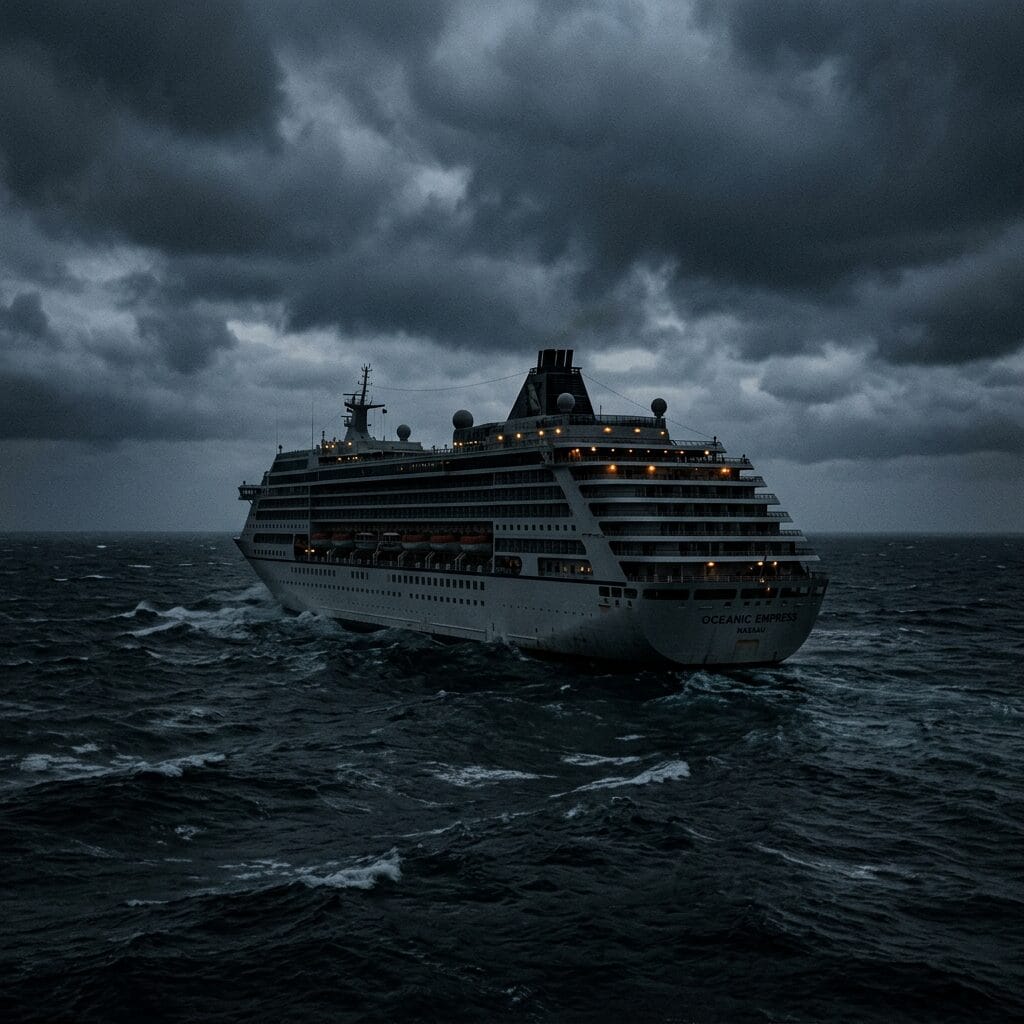
Cruise ships are supposed to sell escape.
Ocean views. Remote destinations. Controlled luxury. The promise that for a while, the world’s chaos is somewhere else.
But when a serious infectious disease appears onboard, that illusion collapses fast. A ship becomes something else entirely: an isolated system under pressure, cut off by geography, slowed by bureaucracy, and suddenly dependent on international coordination that may not move quickly enough. That is what makes this suspected hantavirus outbreak so disturbing. It is not just a tragic medical story. It is a reminder of how exposed modern travel still is when serious illness appears far from shore.
The Ocean Turns Delay Into Danger
A medical emergency on land is bad enough.
A medical emergency at sea is a different kind of threat.
Everything takes longer. Diagnosis takes longer. Evacuation takes longer. Decisions about jurisdiction, ports, and disembarkation become tangled. Even basic clarity about who is responsible can slow down at the exact moment speed matters most. That is what makes cruise outbreaks so frightening. The ship may look self-contained, but it is actually dependent on a chain of outside authorities that can hesitate, dispute, or simply fail to act quickly.
And disease does not wait for paperwork.
This Is What Happens When Global Travel Meets Biological Reality
The modern cruise industry thrives on the fantasy of seamless movement.
A ship leaves one continent, touches another, crosses ecosystems, ports, and national boundaries, all while promising comfort and order to passengers. But biology does not care about the itinerary. A serious illness can move through that system with brutal indifference, and once it does, the very features that make cruise travel appealing also become liabilities.
Shared spaces. Enclosed environments. Distance from advanced care. Complex border issues.
Suddenly the luxury model starts looking a lot more fragile.
Hantavirus Carries a Different Kind of Fear
Part of what makes this story especially unsettling is the nature of the illness itself.
People are familiar with the names of many infectious threats. Hantavirus is different. It sounds obscure, which often makes it feel even more alarming. It evokes something primal: rodents, contamination, remote exposure, the kind of disease that seems to arrive from the edges of control rather than from ordinary daily life. That gives the story a special intensity.
And when a disease already associated with severe outcomes appears on a ship far from easy evacuation, fear grows quickly.
Public Health Is Still Only as Strong as Coordination
One of the most sobering lessons here is how much depends on cooperation between states, operators, and health agencies.
A ship can have doctors. It can have protocols. It can have emergency plans. But if local authorities do not allow medical disembarkation, or if evacuation becomes entangled in diplomatic and logistical obstacles, then the effectiveness of the response is only as strong as the weakest link in the chain.
That should worry everyone.
Because global travel has become incredibly sophisticated in commercial terms, but moments like this remind us that health response can still become clumsy, fragmented, and painfully slow when multiple jurisdictions get involved.
The Cruise Industry’s Vulnerability Never Really Went Away
The cruise business has worked hard to project recovery, resilience, and renewed confidence after earlier public-health crises.
But the underlying vulnerability never disappeared.
Ships remain highly managed environments where any serious illness can escalate into something more politically and commercially dangerous than a normal outbreak on land. The reason is obvious: when passengers are effectively trapped inside the system, every medical event becomes a test not only of healthcare, but of trust.
Can the company act fast enough? Can governments cooperate? Can people get off the ship when they need care? Can the truth reach the public quickly enough to prevent rumor from outrunning fact?
Those are existential questions for the industry.
The Human Story Is Bigger Than the Disease Label
It is easy for headlines like this to become dominated by the unusual pathogen.
But the real tragedy is human.
Passengers boarded expecting a journey, not an intensive care crisis. Families are now dealing with death, uncertainty, and the surreal horror of serious illness unfolding in the middle of an expedition far from home. Other passengers are left in limbo, not knowing what risks remain, what authorities will decide, or how quickly help will come.
That human uncertainty is part of the emergency too.
This Is a Warning About the Limits of Distance
There is also something larger here.
Global tourism loves remoteness. Polar routes, expedition cruising, extreme destinations, exotic passages. The farther and more unusual the journey, the more exclusive the experience can seem. But distance is never neutral. Distance means less redundancy, fewer immediate options, and higher consequences when something goes wrong.
That does not mean such travel should not exist.
It does mean the public should stop imagining that premium travel automatically equals safety from systemic failure.
The Meaning of the Moment
This outbreak matters because it shows how quickly a modern travel experience can become a public-health stress test.
A ship far from shore, multiple deaths, limited confirmed answers, a dangerous virus, passengers needing evacuation, and authorities still coordinating in real time. That combination reveals something uncomfortable but important: global mobility has become easy, but global medical response in complex travel settings is still far less reliable than people assume.
And when the setting is a ship at sea, that gap becomes terrifyingly visible.