



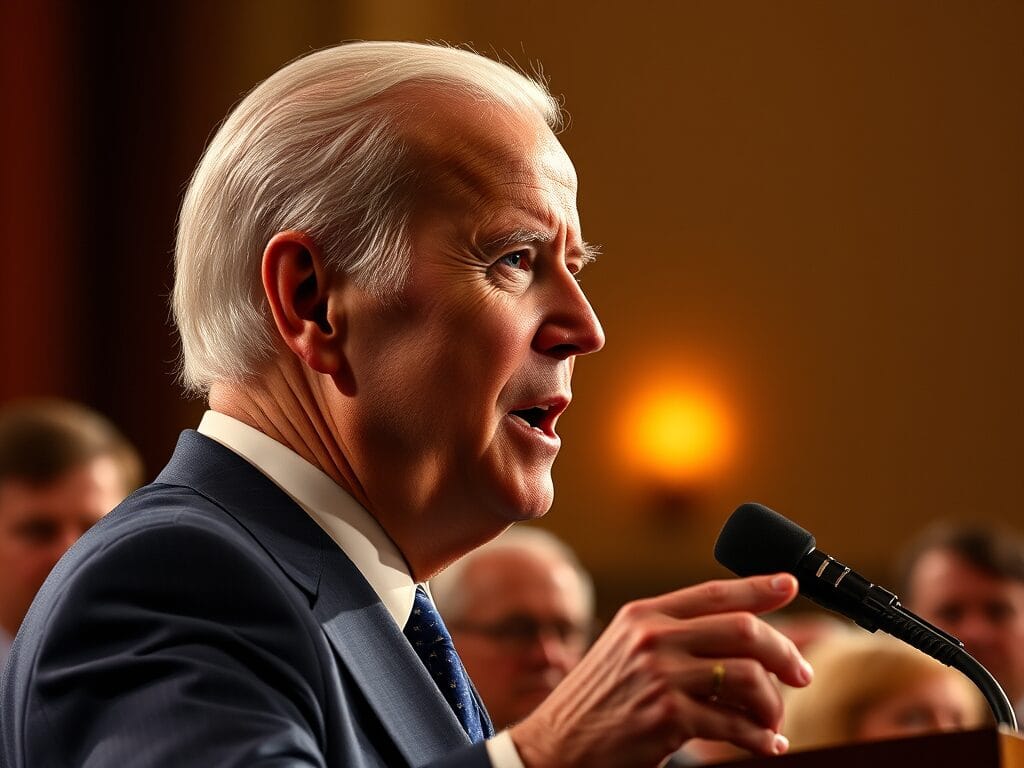
In a rare public appearance, former President Joe Biden stepped back into the spotlight in Columbia, South Carolina, delivering a blunt warning about the next major political showdown: the 2026 midterm elections.
Biden’s message was unmistakable: he believes Donald Trump will try to tilt — or outright “steal” — the midterms by making it harder for Americans to vote, and he urged people to treat turnout as the country’s last line of defense.
“Dark days,” and a familiar theme: democracy as a recurring fight
Speaking at the Columbia Museum of Art, where he was being honored for lifetime political achievement, Biden described the country as living through “dark days.” He returned to a theme he’s used before — that the fight over the nation’s identity and democracy is never fully settled.
Instead of focusing on policy details, Biden framed the moment as a test of whether Americans will still be able to exercise power through the ballot.
The core accusation: barriers to voting are the point
Biden argued that Trump’s political strategy depends on restricting participation — not winning persuasion. He pointed to expected new voting requirements and warned that the goal is to discourage turnout, especially among people more likely to vote against Trump.
His call to action was simple: show up and vote, because, in his framing, participation itself is what Trump fears most.
A sharper attack: Trump’s speech omissions and a Minneapolis tragedy
Biden also used the speech to criticize Trump’s leadership style and priorities, including how the administration talks about violence and accountability.
He singled out Trump for not acknowledging the January Minneapolis incident in which federal agents killed Renee Good and Alex Pretti, saying the president offered no public comfort to the families. Biden also criticized Trump for not offering support or recognition to victims connected to the Jeffrey Epstein scandal during a major address, despite Epstein’s connections to powerful figures.
In other words: Biden cast Trump’s presidency as not just hard-edged, but emotionally absent — a leader who uses force and spectacle while skipping empathy.
Why this appearance matters
Biden has largely stayed out of public view since leaving office, and the speech comes as he undergoes treatment for an aggressive form of prostate cancer (which he did not address during the event). That makes his decision to deliver a pointed political warning more significant: it wasn’t routine. It was a deliberate re-entry.
It also comes at a moment when Trump’s approval numbers are widely described as weak, creating an opening for Democrats who see the midterms as a possible check on Trump’s agenda.
The political subtext: 2026 is the firewall election
Biden’s speech wasn’t a policy rollout. It was a warning siren.
He’s essentially framing the midterms as a firewall election: if voter participation holds, Trump’s grip weakens; if access and turnout shrink, Trump’s power consolidates. Whether you agree with him or not, it’s a stark way to define the stakes — and it signals Democrats are likely to campaign as much on democracy and election rules as on bread-and-butter issues.
Bottom line
Biden didn’t return to the stage to reminisce. He returned to sound an alarm.
His argument is that the midterms won’t only decide who controls Congress — they’ll test whether voting remains the simplest, most powerful tool Americans have to push back against a presidency he says is actively trying to narrow the electorate.


