


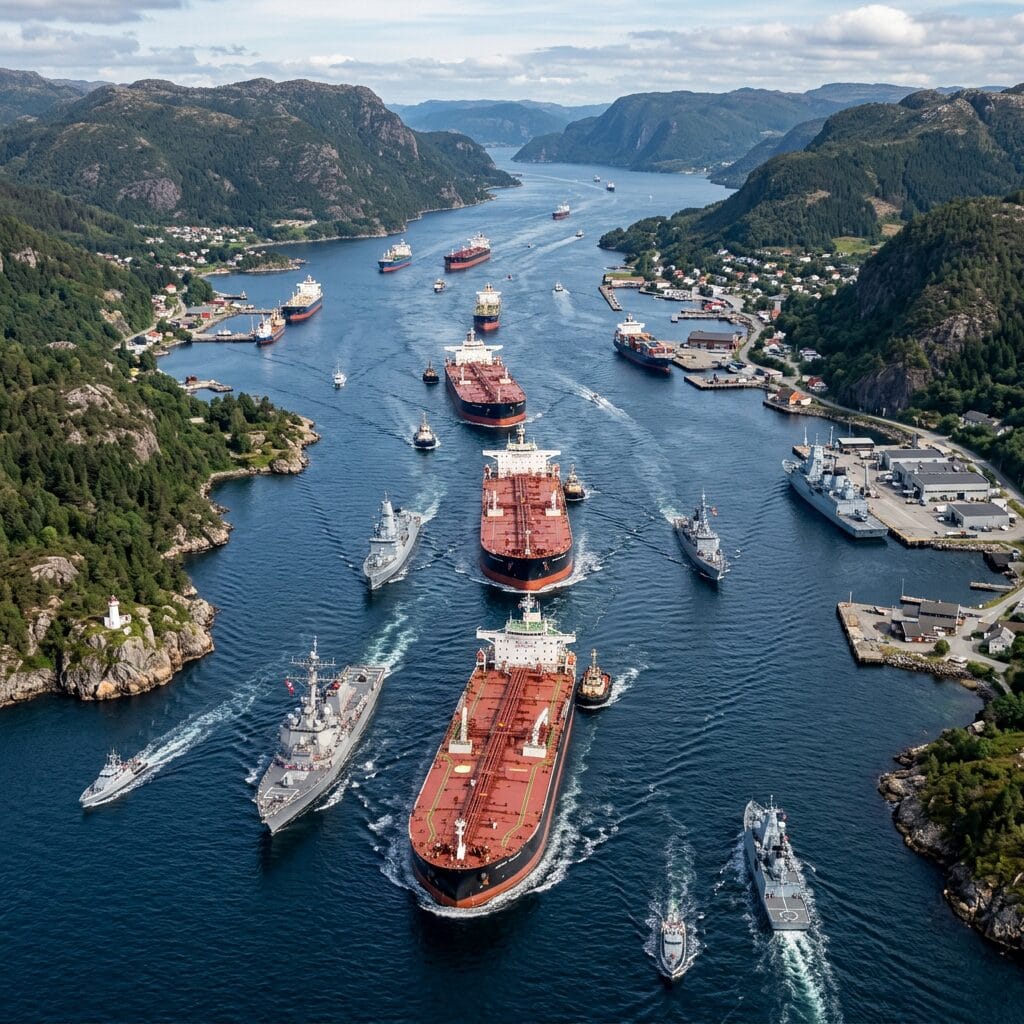
A ceasefire can stop missiles and still leave the world choking.
That is the reality around the Strait of Hormuz right now. The shooting may have slowed, the diplomacy may have created a pause, and politicians may be eager to present the situation as stabilizing. But if one of the most critical shipping arteries on earth is still not functioning normally, then the crisis has not truly ended. It has simply changed shape.
And that shape is economic.
The Strait Is Not a Side Issue
Too many people talk about Hormuz like it is just another regional flashpoint. It is not.
This is one of the narrow waterways through which a huge share of global energy trade moves. When passage there becomes uncertain, the consequences do not remain local. They hit freight, fuel, insurance, inflation, and the political nerves of governments far from the Gulf. A war can pause, but if the shipping lane remains constrained, the global economy keeps paying war prices.
That is why reopening the strait fully is not some technical afterthought. It is the real test of whether the crisis is de-escalating or merely pretending to.
Managed Passage Is Not Normalcy
One of the most dangerous habits in diplomacy is dressing partial relief up as full recovery.
A few ships moving again does not mean the system is healthy. Limited passage under heavy control is not the same thing as free navigation. It means uncertainty remains. It means leverage remains. It means the threat has not disappeared; it has simply been repackaged.
Markets understand this immediately, even when politicians try to soften it. Traders, insurers, and shipping operators do not care about rhetorical progress. They care about whether vessels can move safely, consistently, and without being held hostage to the next political demand.
That is the difference between a symbolic opening and an actual return to stability.
The World Economy Cannot Be Held at Gunpoint Forever
What is happening around Hormuz is not just a regional dispute over power. It is a test of whether the global economy can be treated like collateral in geopolitical bargaining.
That is why calls for full reopening matter.
When a strategic chokepoint becomes a tool of pressure, it sends a message far beyond the immediate conflict. It tells the world that energy flows, supply chains, and commercial navigation can all be turned into bargaining chips whenever military or political tensions peak. That is not just dangerous. It is corrosive.
Because once major powers and regional actors normalize that logic, every future crisis becomes more expensive, more unstable, and more globally contagious.
Ceasefire Diplomacy Means Nothing Without Maritime Reality
Diplomacy always sounds cleaner in conference halls than it does on the water.
Leaders can speak of restraint, de-escalation, and peace frameworks. But if tankers are still moving under fear, if commercial vessels still face uncertainty, and if insurers still price the route like a live hazard zone, then the ceasefire is incomplete in every way that matters economically.
This is where the real credibility test begins.
A lasting peace is not just about silencing weapons. It is about restoring ordinary function to the systems war disrupted. If ships cannot move freely, then normal life has not returned. The world is simply being asked to pretend that abnormal has become acceptable.
Freedom of Navigation Is Not Abstract Language
People hear the phrase “freedom of navigation” and sometimes treat it like sterile diplomatic jargon.
It is not.
It means whether the modern world can still rely on open maritime arteries without political blackmail. It means whether global trade moves by predictable rules or by coercive pressure. It means whether countries far from the battlefield will be forced to absorb the costs of brinkmanship by actors seeking leverage.
In plain terms, it means whether basic economic order still holds.
That is why restoring open passage through Hormuz matters so much. The issue is bigger than one ceasefire or one round of talks. It touches the credibility of the entire system that underpins global trade.
The Next Phase Will Be Economic, Not Just Military
Even if the worst fighting is paused, the next chapter of this crisis will be decided by commerce as much as by diplomacy.
If the strait remains only partially functional, the pressure continues. Oil stays nervous. Shipping remains exposed. Costs stay elevated. Governments keep scrambling. Consumers eventually feel the damage in prices they never voted for and conflicts they never chose.
That is how modern wars linger.
Not always through explosions, but through economic strangulation that survives long after the headlines shift tone.
The Real Measure of Peace
The easiest mistake now is to confuse a ceasefire with resolution.
Resolution would mean the waterway is fully open, shipping has genuinely normalized, and the world no longer has to wonder whether one of its most vital arteries can be squeezed shut again on political whim. Until then, the crisis remains alive, just in a more polished form.