


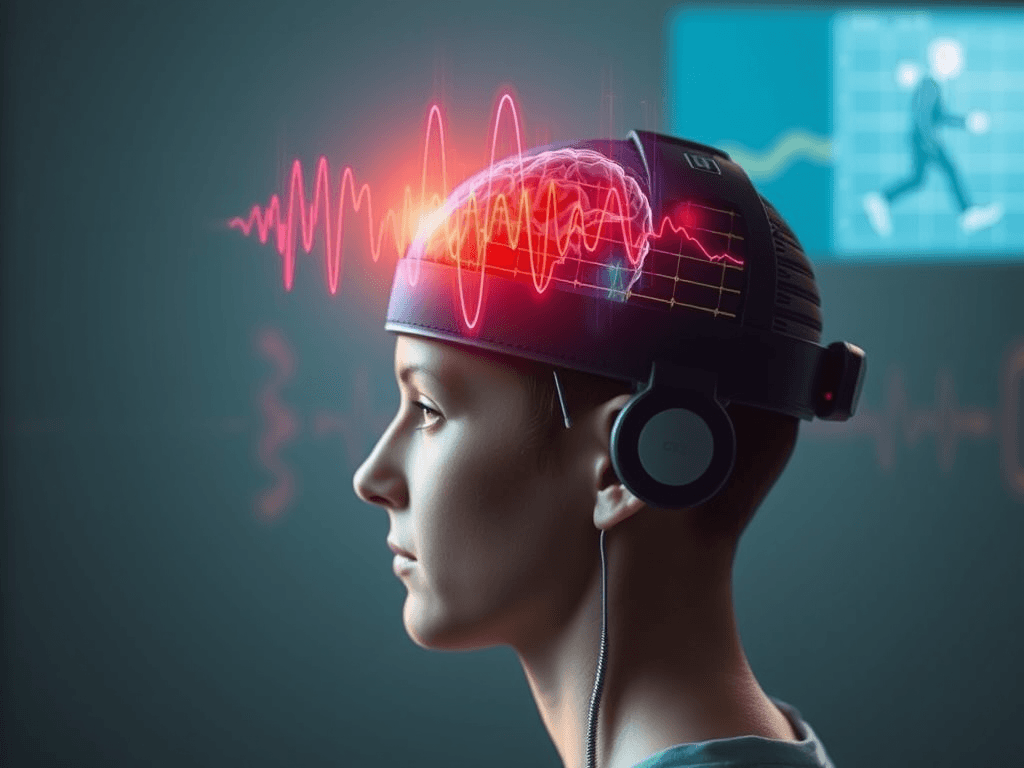
A new research update points to a promising idea for restoring movement after spinal cord injury: listening to the brain’s “move” signals and rerouting them back to the body.
Even when paralysis blocks the spinal cord’s pathways, the brain often still produces electrical activity when a person tries to move. Researchers tested whether a noninvasive EEG cap (brainwave sensors on the scalp) can detect those movement-intention signals and potentially send them to a spinal stimulator that activates the nerves needed for motion.
The early results are encouraging: the system could reliably tell when someone is trying to move versus staying still. The harder challenge is precision — EEG struggles to distinguish different types of movement (like walking vs. standing), especially for lower-limb signals that originate deeper in the brain and are harder to capture from the scalp.
Bottom line: This is a step toward future “intention-to-action” systems where brainwaves help trigger movement again — and it could do it without invasive brain implants, though finer control is still the next big hurdle.