



For decades, Canada’s Arctic defense posture rested on an uncomfortable assumption: when things became truly serious, the United States would be there.
That assumption no longer feels as safe.
After Trump’s threats about Greenland and his repeated talk of making Canada the “51st state,” Ottawa is beginning to act like a country that finally understands the danger of relying too heavily on one ally, even a powerful one. Canada’s deeper defense ties with Nordic countries are not just a regional security adjustment. They are a political signal that the Arctic is entering a new era — and Canada does not want to face it as a junior partner waiting for Washington’s mood to change.
The Arctic Is No Longer a Frozen Backwater
The Arctic used to be treated as remote, symbolic, and difficult to access.
That world is disappearing.
Climate change is opening routes, exposing resources, and making the region more militarily and commercially important. Russia has built up a major Arctic military presence. China is pushing deeper into the region through partnerships, investment, and strategic interest. The north is no longer just ice and distance. It is becoming a contested frontier.
Canada has one of the largest Arctic territories on earth. Pretending geography alone protects it is no longer a serious policy.
Trump’s Threats Forced a Reality Check
The shock is not only that Trump made aggressive comments about Greenland or Canada.
The deeper shock is that those comments exposed how fragile old assumptions have become. If the United States can sound less like a predictable protector and more like a power willing to pressure its own neighbors, then Canada has to rethink what sovereignty really requires.
That does not mean Canada can cut itself off from the U.S. military. It cannot. NORAD remains critical. American capability remains unmatched. But it does mean Canada must stop behaving as if dependence is the same thing as security.
Dependence is comfortable until the stronger partner becomes unpredictable.
The Nordics Make Strategic Sense
Canada’s turn toward Denmark, Finland, Iceland, Norway, and Sweden is not random.
These countries understand cold-weather defense, Arctic logistics, Russia’s northern threat, maritime surveillance, and the hard reality of defending sparsely populated territory. They also share a worldview that increasingly fits Canada’s situation: middle powers must cooperate more seriously because the old great-power order is less stable than before.
This is why Nordic-Canadian cooperation matters.
It is not just about exercises or procurement. It is about building a northern security community that does not rely entirely on Washington’s permission or attention.
Greenland Is Becoming Central to the Arctic Chessboard
Greenland’s role is especially important.
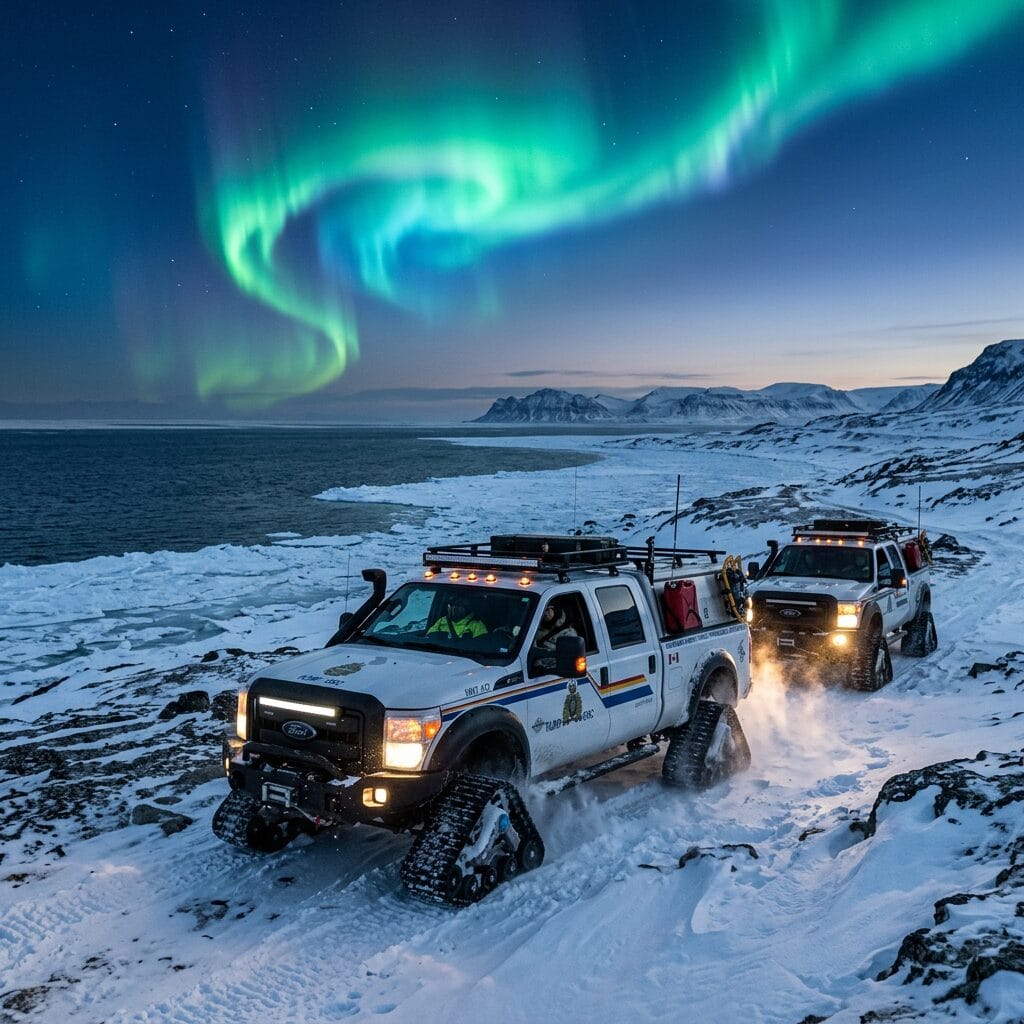
Its location makes it strategically valuable, and Trump’s fixation on it has only made that more obvious. Greenland and Denmark looking to Canada’s Ranger model shows something important: Arctic defense cannot be imported wholesale from southern capitals. It has to be rooted in local knowledge, year-round presence, and communities that understand the terrain because they live there.
Canada’s Rangers are not a flashy military asset.
But in the Arctic, presence is power. Local knowledge is power. Being there when nobody else can easily operate is power.
Canada Has Underinvested for Too Long
This is the uncomfortable part.
Canada talks a lot about Arctic sovereignty, but for years it has not backed that language with enough military investment, infrastructure, or operational seriousness. The gap between rhetoric and capability has been too wide. That weakness becomes more dangerous as the Arctic becomes more contested.
Ottawa now seems to understand that sovereignty cannot just be declared.
It has to be defended, supplied, monitored, and practiced.
“Middle Powers” Are Building Their Own Insurance Policy
Mark Carney’s language about middle powers is more than diplomatic branding.
It reflects a real shift. Countries like Canada and the Nordics are recognizing that they cannot simply outsource stability to Washington. The U.S. remains essential, but it is no longer enough. A world shaped by Trump-style unpredictability, Russian aggression, Chinese ambition, and climate-driven Arctic access requires more self-reliance and more regional cooperation.
This is not anti-Americanism.
It is insurance against American instability.
The U.S. Still Matters, but Canada Needs More Options
There is no fantasy version of this where Canada replaces the United States militarily.
Experts are right to warn that Canada remains deeply dependent on U.S. capability for high-end defense. War-fighting in the Arctic without U.S. support would be extremely difficult. But that does not mean Canada should do nothing. It means Canada should build more layers of strength around the partnership.
More Nordic cooperation.
More Arctic infrastructure.
More procurement coordination.
More surveillance.
More local presence.
More independent capacity.
That is how a serious country behaves when the strategic environment changes.
The Real Message to Russia and China
Canada’s Arctic pivot also sends a message beyond Washington.
It tells Russia and China that the Arctic is not an empty prize waiting to be exploited by whoever moves fastest. It tells hostile powers that Canada is trying to harden its northern posture with partners who understand the region. It also tells allies that Canada may finally be taking its own Arctic responsibilities more seriously.
That message matters because deterrence is not built only through weapons.
It is built through seriousness.
The Meaning of the Moment
Canada’s deeper Arctic ties with the Nordics are a sign that the old security map is changing.
The United States is still vital, but it is no longer treated with the same automatic trust. Russia is more aggressive. China is more active. Greenland is more central. Climate change is making the north more accessible. And Canada is finally realizing that Arctic sovereignty cannot survive on slogans.
The north is becoming a frontline.
Canada is late to that realization, but not too late.
If Ottawa is serious, this pivot could mark the beginning of a more mature Arctic strategy — one built not on blind faith in Washington, but on stronger partnerships, real investment, and the hard truth that sovereignty means very little unless a country is prepared to defend it.


