


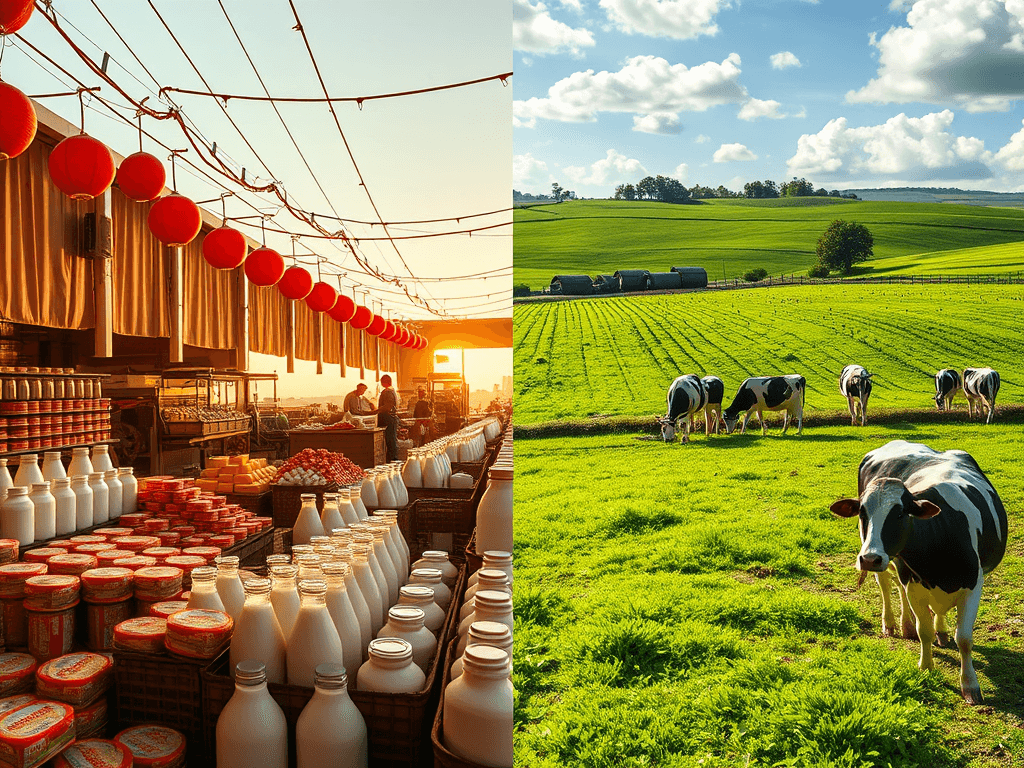
China has announced provisional duties of up to 42.7% on some EU dairy imports—a move widely seen as retaliation tied to the EU’s dispute over tariffs on Chinese electric vehicles.
On paper, this is “just” a trade measure. In reality, it’s a reminder of how modern trade fights work: when two big economies clash in one sector (EVs), the pressure often shows up somewhere else (food).
Why dairy?
Dairy is a strategically convenient target:
- It hits real exporters and supply chains fast.
- It’s politically sensitive—farmers and rural economies matter everywhere.
- It sends a loud signal without immediately choking off critical industrial inputs.
In other words, it’s a lever that hurts, but doesn’t instantly break the machine.
What “provisional duties” signal
“Provisional” measures are often the opening move, not the endgame. They create uncertainty—companies hesitate on contracts, shipment planning gets messy, and prices can start wobbling long before anything is finalized.
For EU dairy producers, higher duties can mean lost competitiveness overnight. For Chinese importers and buyers, it can mean fewer choices or higher costs, depending on whether alternatives can fill the gap quickly.
The bigger message
This isn’t only about milk, cheese, or powder. It’s about leverage.
When tariffs turn into tit-for-tat escalation, the risk isn’t just higher prices—it’s a slow shift toward economic fragmentation, where trade becomes more about geopolitics than efficiency.
What to watch next
- Whether the measures expand beyond “some” dairy categories
- If negotiations in the EV dispute cool tensions—or harden positions
- How quickly companies reroute supply chains to avoid getting caught in the crossfire
Trade fights rarely stay neatly contained. Today it’s dairy. Tomorrow it could be something else entirely.