



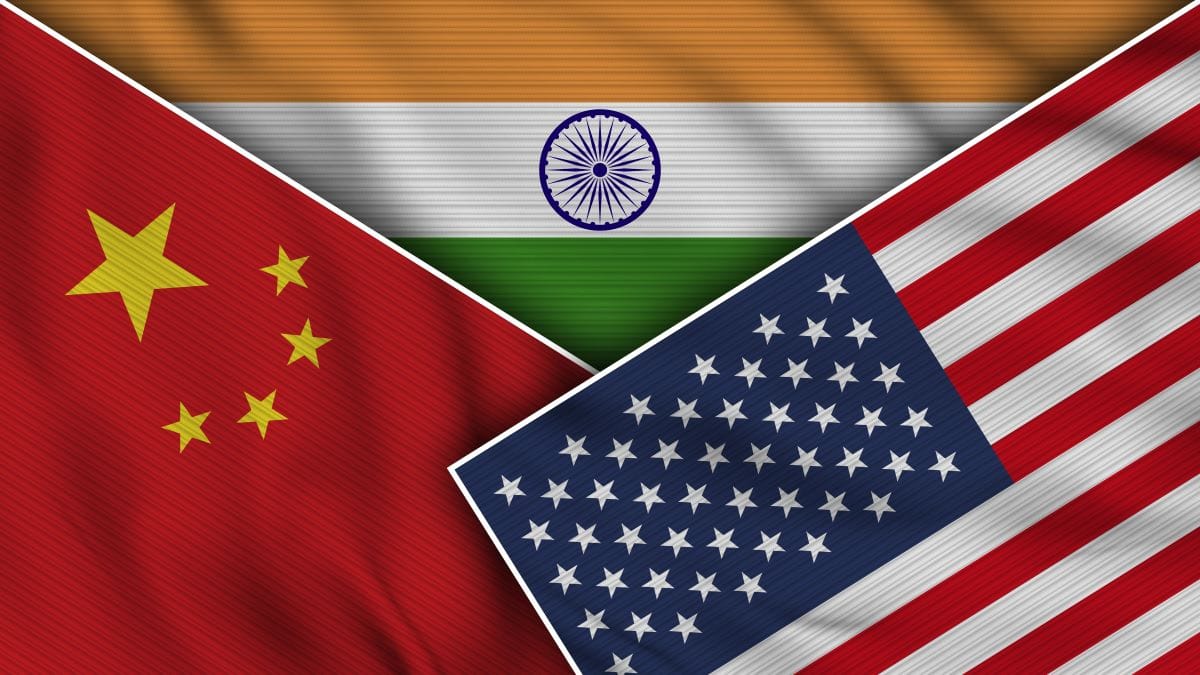
China says the U.S. is distorting China’s defense policy to undermine improving China–India relations, framing it as outside interference meant to stir suspicion and slow any thaw between the two Asian powers.
China is accusing the United States of distorting China’s defense policy in order to undermine improving China–India ties—essentially arguing that Washington is trying to wedge itself into a relationship that’s been showing signs of gradual stabilization.
This is classic triangle diplomacy. When two rivals (China and India) show even a small reduction in tension, a third power (the U.S.) has incentives to interpret it strategically: Is this a genuine thaw, a tactical pause, or a move to weaken alliances? China’s accusation flips that logic on its head: it casts the U.S. as the actor “politicizing” the situation to keep India aligned against Beijing.
What’s really at stake
This isn’t just about messaging—it’s about influence.
- China wants to prevent India from drifting deeper into U.S.-led security alignment and prefers disputes—especially border issues—to be treated as strictly bilateral.
- India wants flexibility: reduce friction with China when possible, while still strengthening partnerships that boost its leverage.
- The U.S. views India as a central partner in balancing China’s regional power, so any China–India warming gets read through a strategic lens.
Why this matters now
Accusations like this usually pop up when:
- diplomatic channels between China and India are active,
- military tensions have eased enough to talk about “improvement,” and
- narrative control becomes part of the contest—who’s the stabilizer, who’s the spoiler.
The takeaway: even a modest China–India thaw can trigger wider geopolitical friction, because in a multipolar rivalry, better relations between two players always change the math for the third.
- China wants India to manage disputes (especially security and border tensions) bilaterally—and to avoid India drifting deeper into U.S.-aligned security cooperation.
- India wants flexibility: reduce friction with China when possible, while still strengthening partnerships that improve its leverage.
- The U.S. views India as a key strategic partner in balancing China, so any warming in China–India ties can be read as strategically significant.
The bigger point: even small improvements between China and India can trigger broader geopolitical sparring, because in a rivalry-heavy environment, narratives about who is stabilizing—and who is meddling—become part of the contest.


