



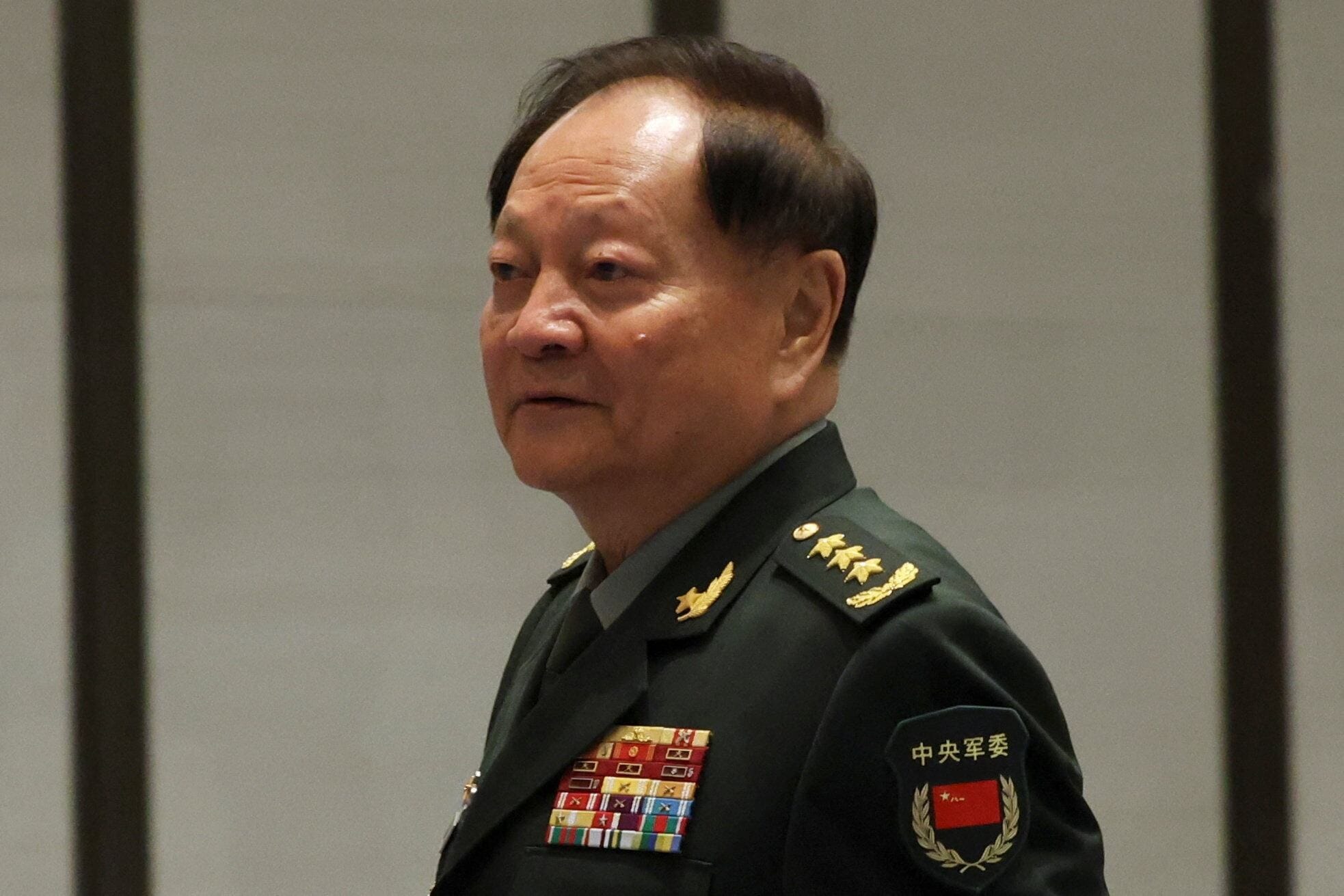
China’s military leadership just took a major public hit: Beijing confirmed it is investigating two of the country’s most senior uniformed figures for suspected “serious violations” of discipline and law. The names alone make this extraordinary — including Zhang Youxia, the vice-chair of the Central Military Commission (CMC) and widely seen as one of President Xi Jinping’s closest allies inside the People’s Liberation Army.
For outside observers, this isn’t just another anti-corruption headline. It’s a rare shakeup at the very top of the command chain — arriving at the exact moment China is accelerating its military modernization and tightening its posture around Taiwan and regional waters.
Who’s being investigated?
The defense ministry said the probe involves Zhang Youxia, the second-in-command of the CMC, and Liu Zhenli, the CMC Joint Staff Department chief of staff. In practical terms, these are not “mid-level” officers. This is the core of the machinery that oversees strategy, command readiness, and operational planning.
Zhang’s role is particularly sensitive. He isn’t just a senior general — he’s a political heavyweight inside the system, also sitting in the elite Party leadership circle. Removing or sidelining someone at that level is extremely uncommon in modern China.
Why this is a big deal
China has run anti-corruption drives for years, including inside the PLA. But investigations this high up are rare — and carry a simple message: no one is untouchable, not even the people closest to the top.
This also undercuts a common assumption in foreign capitals: that Xi’s closest internal allies would remain insulated while the crackdown focused on convenient targets. If Zhang is truly in the blast radius, the crackdown isn’t just “cleaning up corruption.” It’s also enforcing discipline, loyalty, and total control over the institution most capable of becoming politically dangerous.
The backdrop: a military purge that keeps climbing
The PLA has been a major target of anti-graft campaigns for years, but the purge has intensified since 2023, when the Rocket Force (China’s strategic missile arm) was hit hard. Since then, multiple senior figures have been removed, expelled, or disappeared from public view.
This new development pushes the story to a new tier — closer to the system’s nerve center. When senior command figures are investigated, it can signal either:
- a genuine corruption problem at the highest levels, or
- a deeper political tightening, where “discipline violations” becomes the all-purpose language for removal, deterrence, and reorganization.
In China’s system, those two things can overlap.
Why the timing matters (Taiwan, regional posture, global power)
This comes as China continues projecting a more muscular posture in the region — in contested waters and around Taiwan — while trying to hit long-term modernization targets. Beijing’s goal is not subtle: build a force able to operate as a world-class military within set timelines.
A leadership probe at this altitude creates two competing effects:
- Short-term disruption risk: uncertainty in command networks, internal caution, slowed decisions.
- Long-term tightening effect: higher compliance, sharper control, more centralized execution.
In some systems, top-level purges weaken operational readiness. In China’s system, they can also become a form of “forced alignment,” ensuring the military moves in lockstep with central political direction.
What it could mean inside the PLA
When top officers are investigated, everyone below them adjusts instantly. Procurement slows. Promotions freeze. Senior commanders avoid risk. Nobody wants to sign off on major programs if a rival faction can later call it misconduct.
That matters because China is in the middle of expensive, complex modernization: new ships, missiles, aircraft, space and cyber capabilities, and upgraded command-and-control infrastructure. Even small delays can ripple into timelines.
And it impacts morale: officers start watching not just external threats — but internal survival.
What to watch next
This story now becomes a “wait for the next shoe” situation. Key signals:
- Whether Zhang appears in public again (or remains absent)
- Whether the investigation expands to additional names
- How state media frames the scandal (corruption vs. betrayal vs. reform)
- Whether personnel reshuffles accelerate in command roles
- Any signs of operational hesitation in regional military activity
Bottom line
China investigating senior military figures isn’t just scandal — it’s structure. It shows the anti-corruption drive has reached the kind of level where it can reshape power networks inside the PLA.


