


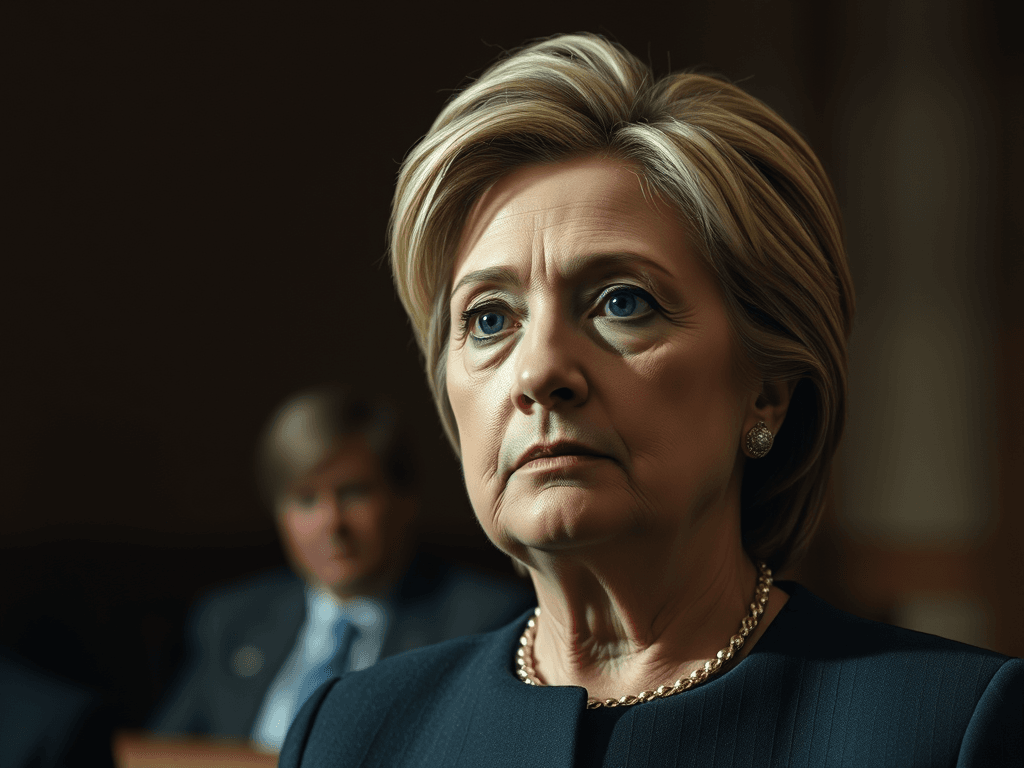
Former Secretary of State Hillary Clinton spent hours Thursday in a closed-door House Oversight Committee deposition tied to Congress’ investigation into Jeffrey Epstein and his network. The substance was straightforward. The optics were not.
By the end of the day, Clinton’s appearance had become less about what she knows—and more about how the investigation is being run, who controls the public record, and why a single leaked photo briefly derailed proceedings.
Clinton’s core message: “I have no information” and “I don’t recall meeting him”
Clinton’s opening stance was blunt:
- She said she had no knowledge of Epstein’s or Ghislaine Maxwell’s crimes.
- She said she does not recall ever encountering Epstein.
- She framed her participation as cooperation—but also suggested the committee’s assumptions about what she can add are misplaced.
Her testimony is part of two days of depositions that also include former President Bill Clinton, and Republicans have made clear they see the Clintons as high-profile figures they want on the record while probing how Epstein built influence among elites.
The deposition got paused—because a photo got leaked from inside
The procedural flashpoint came when Rep. Lauren Boebert shared a photo of Clinton inside the deposition room with a conservative influencer who posted it online.
That’s a direct violation of deposition protocol: these sessions are recorded under committee rules, but they are not meant to be photographed by outsiders or turned into live social media content.
The pause mattered because it reinforced the very argument Clinton has been making for months: if the process is going to be political theater anyway, then make it public.
Clinton’s demand: open it up (or release the record fast)
After the leak, Clinton again pressed for transparency—arguing that the public should be able to see what’s being asked and answered rather than relying on selective leaks, spin, or screenshots.
Democrats on the committee echoed the point and pushed for:
- a full transcript, and
- the video of the deposition,
to be released quickly after the session ends.
Republicans, meanwhile, have said the deposition is being recorded and can be released later—but not before Clinton’s attorneys have a chance to review it.
So the dispute is now bigger than Clinton: it’s about who controls the public record of a politically explosive investigation.
Republicans’ stated rationale: “We’re not accusing her—yet we have questions”
House Oversight Republicans have emphasized they are not, at this stage, accusing the Clintons of wrongdoing. Their public argument is that the committee is trying to understand:
- how Epstein accumulated wealth and access,
- who helped him build credibility in elite circles,
- and how networks around him functioned.
That framing is designed to keep the investigation broad—and to justify why the Clintons were subpoenaed even as Hillary Clinton insists she has nothing to contribute on Epstein’s criminal conduct.
The political crossfire: Democrats want Trump questioned too
Even though your focus is Hillary Clinton, her deposition immediately triggered a predictable partisan escalation:
Democrats argued that if the committee is compelling testimony from the Clintons, then it should also seek testimony from President Donald Trump, given public questions surrounding his past proximity to Epstein.
The committee’s Republican chair has countered that the committee can’t depose a sitting president.
That dispute shapes how Clinton’s testimony is being interpreted: not simply as fact-finding, but as one front in a larger political fight over who gets scrutinized—and who doesn’t.
Why this day mattered (even without new “bombshells”)
Clinton’s deposition may not produce dramatic revelations, but it matters for three reasons:
- It formalizes her denial under oath-like conditions
Closed-door depositions aren’t public trials, but they create an official record—especially when video and transcripts exist. - It exposes the investigation’s credibility problem
When a committee can’t even keep its own rules intact (like banning inside photos), it feeds skepticism that the probe is being run as a spectacle. - It intensifies pressure for transparency
The more the process looks political, the louder the demand becomes to make testimony public—or at least release full materials quickly.
What happens next
Clinton’s appearance is not the end of the story. It’s the beginning of a new phase:
- The committee’s next deposition—especially Bill Clinton’s—will be watched for consistency, contradictions, and any new claims.
- The “public vs. closed-door” battle will likely intensify, particularly if more leaks occur.
- Calls to release more Epstein-related documents and testimony records will grow louder, not quieter.
For now, Hillary Clinton’s day in the deposition room can be summarized simpl