


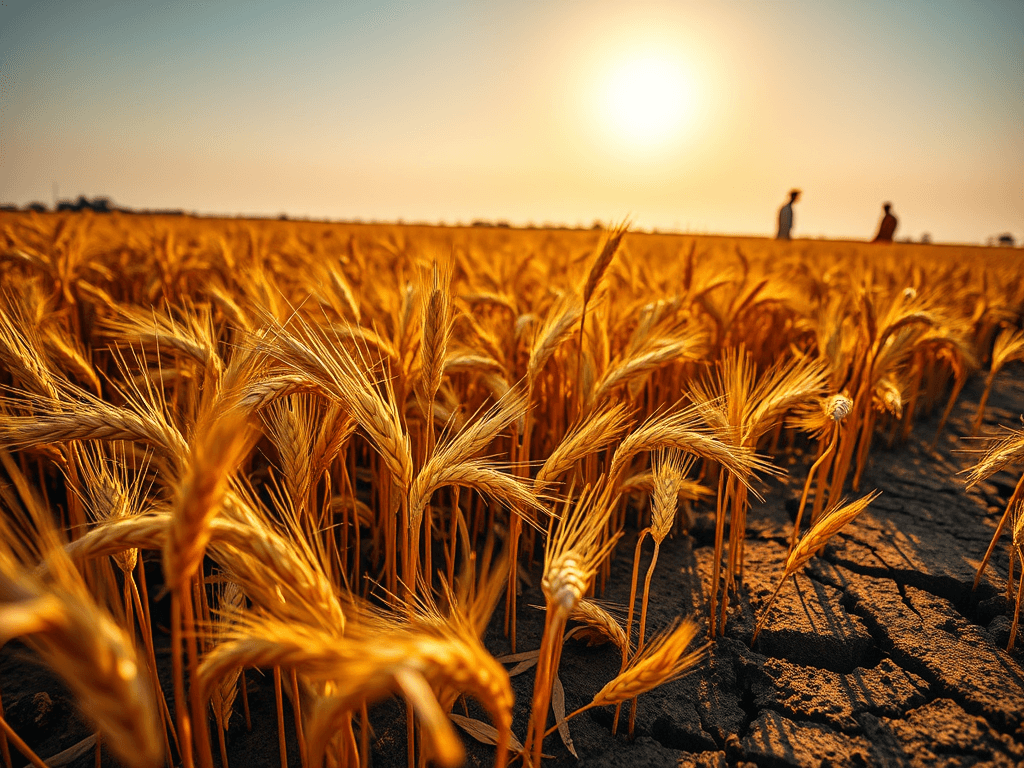
India is heading into a hotter and drier-than-normal February, raising fresh concern for winter crops that depend on mild temperatures and timely moisture as they move through critical growth stages.
This isn’t just a weather headline. It’s an agriculture-and-inflation story—because when heat arrives early, the risk isn’t only lower yields. It’s also higher food prices, tighter rural incomes, and more pressure on policymakers already managing cost-of-living sensitivities.
Why February heat is such a big deal
Winter crops in India—especially wheat and other staples—benefit from a cool, stable season. When temperatures spike earlier than expected:
- plants can mature too quickly (“forced ripening”)
- grain filling can be disrupted, reducing quality and yield
- water demand rises at the worst possible time
- pest and disease pressures can increase
A dry February compounds the issue, stressing soil moisture and increasing dependence on irrigation—something not evenly available across regions.
What’s at risk: yields, prices, and rural confidence
When winter crop output is threatened, the ripple effects can spread fast:
Farm output: Lower yields mean lower farm income and more volatility for producers already exposed to weather risk.
Food inflation: Wheat and other crop shocks can bleed into broader food prices, impacting household budgets and political sentiment.
Policy response: Heat-driven crop concerns often trigger discussion about export policy, buffer stocks, procurement plans, and market interventions.
In a large, price-sensitive economy, food inflation is never “just inflation”—it’s a national pressure point.
The bigger climate pattern: volatility is the new normal
Even a single hot month fits a wider trend: seasonal variability is growing, with more frequent heat spikes, shifting rainfall patterns, and tighter “weather windows” for agriculture.
That forces a long-term adaptation agenda:
- heat-tolerant crop varieties
- better irrigation efficiency and groundwater management
- improved crop insurance and early-warning systems
- changes in planting dates and regional crop mixes
The challenge is that these fixes take years—while heat shocks arrive in days.
What to watch next
If February turns unusually hot and dry, watch for:
- official crop condition updates and yield forecasts
- wheat procurement and buffer-stock policy signals
- food price trends in key staples
- regional stress points (irrigation demand, groundwater strain)
Bottom line
A hotter, drier February in India is a risk multiplier: it threatens winter crops at a sensitive stage and can quickly become a food-price story. In a country where agriculture supports livelihoods for hundreds of millions, weather isn’t background noise—it’s economics, politics, and stability in the same forecast.