


The Middle East is again standing at the edge of a wider war.
Iran’s Mohammad Baqer Qalibaf has warned that U.S. bases and Israeli assets in the region are now legitimate targets because of the U.S. naval blockade of Iran and Washington’s green light for Israel to escalate attacks in Lebanon.
That is not routine rhetoric.
It is a warning that the conflict is expanding beyond Gaza, beyond Lebanon, beyond the Strait of Hormuz, and toward a direct confrontation involving U.S. military assets across the region.
Lebanon Is Becoming the Trigger Point
The latest escalation follows Israeli attacks on the southern suburbs of Beirut, a Hezbollah stronghold.
That matters because Hezbollah is not an isolated Lebanese actor. It is Iran’s most important regional ally, and any major Israeli push into Lebanon immediately risks pulling Tehran deeper into the confrontation. Every strike in Beirut now carries a wider meaning. It is not just about Israel and Hezbollah. It is about whether the entire U.S.-Israel-Iran crisis is about to reignite.
Lebanon is no longer a side front.
It is becoming the fuse.
Iran Is Saying the U.S. Owns the Escalation Too
Qalibaf’s message is aimed not only at Israel, but at Washington.
That is the key point.
Iran is arguing that the U.S. naval blockade and support for Israeli escalation make America a direct participant in the conflict. In Tehran’s view, if Washington enables Israeli action and keeps pressure on Iran’s shipping, then U.S. bases in the region cannot pretend to be neutral infrastructure.
That is a dangerous framing.
Because once U.S. bases are treated as active targets, the possibility of a wider regional war becomes much more real.
The Ceasefire Language Is Collapsing
This is the problem with fragile ceasefires built on unresolved wars.
Everyone keeps using the word “ceasefire,” but the facts on the ground keep moving in the opposite direction. Israel is striking Lebanon. Iran is threatening U.S. targets. The U.S. naval blockade remains a major pressure point. Hezbollah is still in the equation. Gaza remains under devastating pressure. Hormuz is still central to the economic crisis.
That is not peace.
It is a war being temporarily managed until one side decides management is no longer enough.
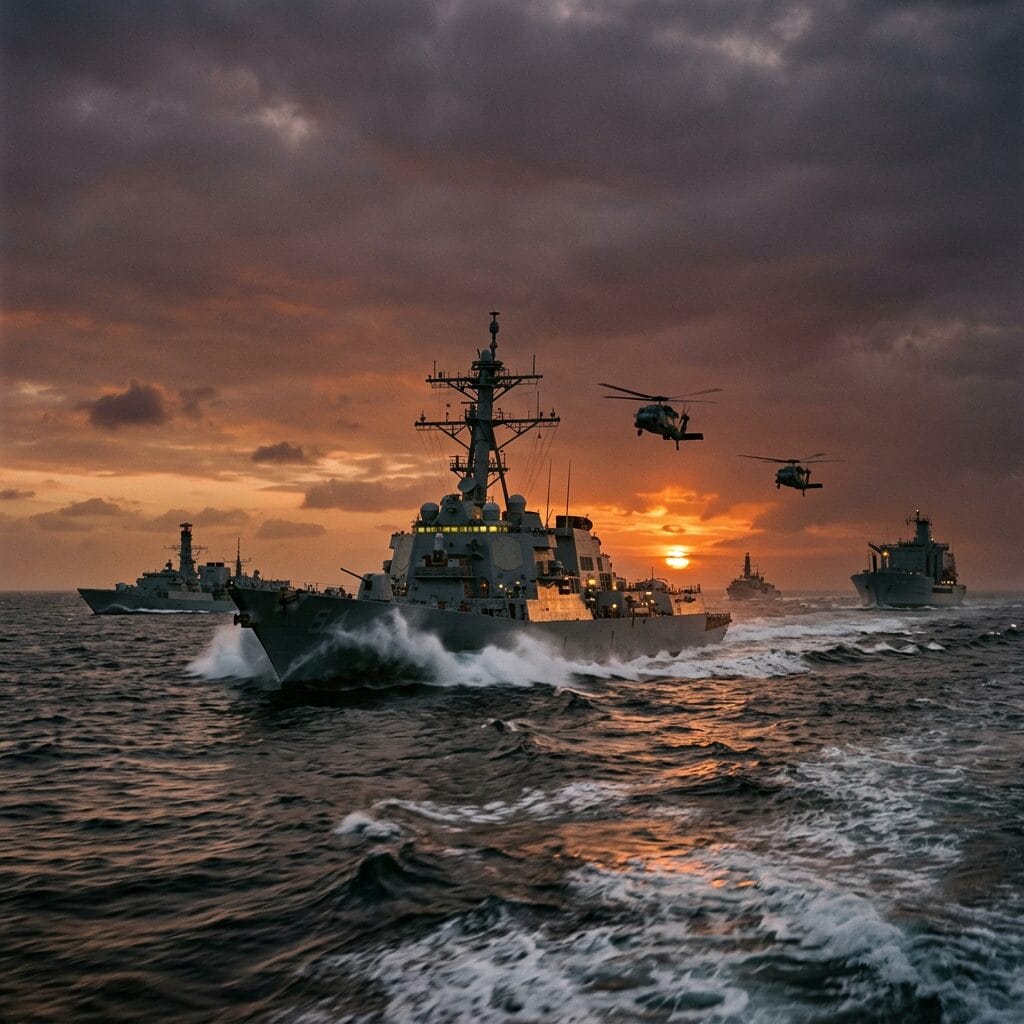
The U.S. Naval Blockade Remains the Core Provocation
For Iran, the naval blockade is not a minor detail.
It is economic warfare. It restricts movement, pressures the regime, and tells Tehran that Washington still intends to use maritime force as leverage. That may give the U.S. bargaining power, but it also keeps the conflict alive.
A blockade is not neutral.
It is coercion.
And coercion always carries the risk of retaliation.
Israel’s Lebanon Escalation Could Break the Regional Balance
Israel may see deeper action in Lebanon as necessary to weaken Hezbollah and prevent future attacks.
But the regional cost is enormous.
Every Israeli strike on Hezbollah-linked areas increases the chance of Iranian retaliation, Hezbollah escalation, and U.S. entanglement. It also risks turning Lebanon into the battlefield where a wider war is either prevented or unleashed.
The danger is not only what Israel does.
It is what Iran believes Israel is being allowed to do by Washington.
U.S. Bases Are Now in the Shadow of Retaliation
The Middle East is full of U.S. military assets.
Bases, naval forces, air operations, logistics hubs, and allied infrastructure are spread across the region. These facilities exist to project power, deter threats, and support U.S. operations. But in moments like this, they also become exposed symbols of American involvement.
That is what makes Qalibaf’s threat so serious.
It does not necessarily mean an attack is imminent. But it does mean Iran is openly expanding the list of possible targets if it believes the U.S. and Israel have crossed the line.
That is how deterrence begins to mutate into escalation.
The Region Is Running Out of Firebreaks
A firebreak is supposed to stop one conflict from spreading into another.
Right now, the firebreaks are weak.
Gaza bleeds into Lebanon. Lebanon bleeds into Iran. Iran bleeds into Hormuz. Hormuz bleeds into global oil markets. U.S. bases become part of the threat picture. Israeli assets become targets. Every front touches every other front.
This is exactly how regional wars become wider wars.
Not necessarily through one grand declaration, but through linked escalations that each side claims are defensive.
The “Language of Power” Is a Dangerous Doctrine
Qalibaf’s statement suggests Iran believes the U.S. and Israel respond only to force.
That is a grim message.
When all sides begin believing that only power matters, diplomacy becomes decorative. Negotiations become cover. Ceasefires become pauses for repositioning. Military pressure becomes the main form of communication.
That is where the region appears to be heading again.
And once power replaces dialogue, miscalculation becomes far more likely.
Diplomacy Is Still Possible, but It Is Being Undermined
The tragedy is that talks and frameworks have been floating around for weeks: ceasefire extensions, Hormuz reopening plans, blockade relief, nuclear negotiations, and regional de-escalation proposals.
But every new strike and every new threat makes those efforts weaker.
Iran will not negotiate seriously if it believes the U.S. is enabling Israeli escalation while maintaining a blockade. Israel will not pull back if it believes Hezbollah remains a serious threat. Washington will not lift pressure if it believes Iran is using threats to force concessions.
Each side has its logic.
Together, those logics are dragging the region toward something worse.
The Meaning of the Moment
Iran’s threat against U.S. targets should be treated as a major warning.
It shows that Lebanon’s escalation is no longer contained. It shows that Tehran views Washington as directly responsible for the pressure it faces. It shows that U.S. bases in the Middle East are now being pulled more openly into the conflict narrative. And it shows that the ceasefire structure is dangerously close to breaking under the weight of unresolved wars.
This is not just rhetoric.
It is the sound of a region losing its remaining guardrails.
If Lebanon keeps escalating, if the blockade continues, and if Washington and Tehran fail to restore a credible diplomatic path, the next phase may not be another warning.
It may be direct confrontation.