


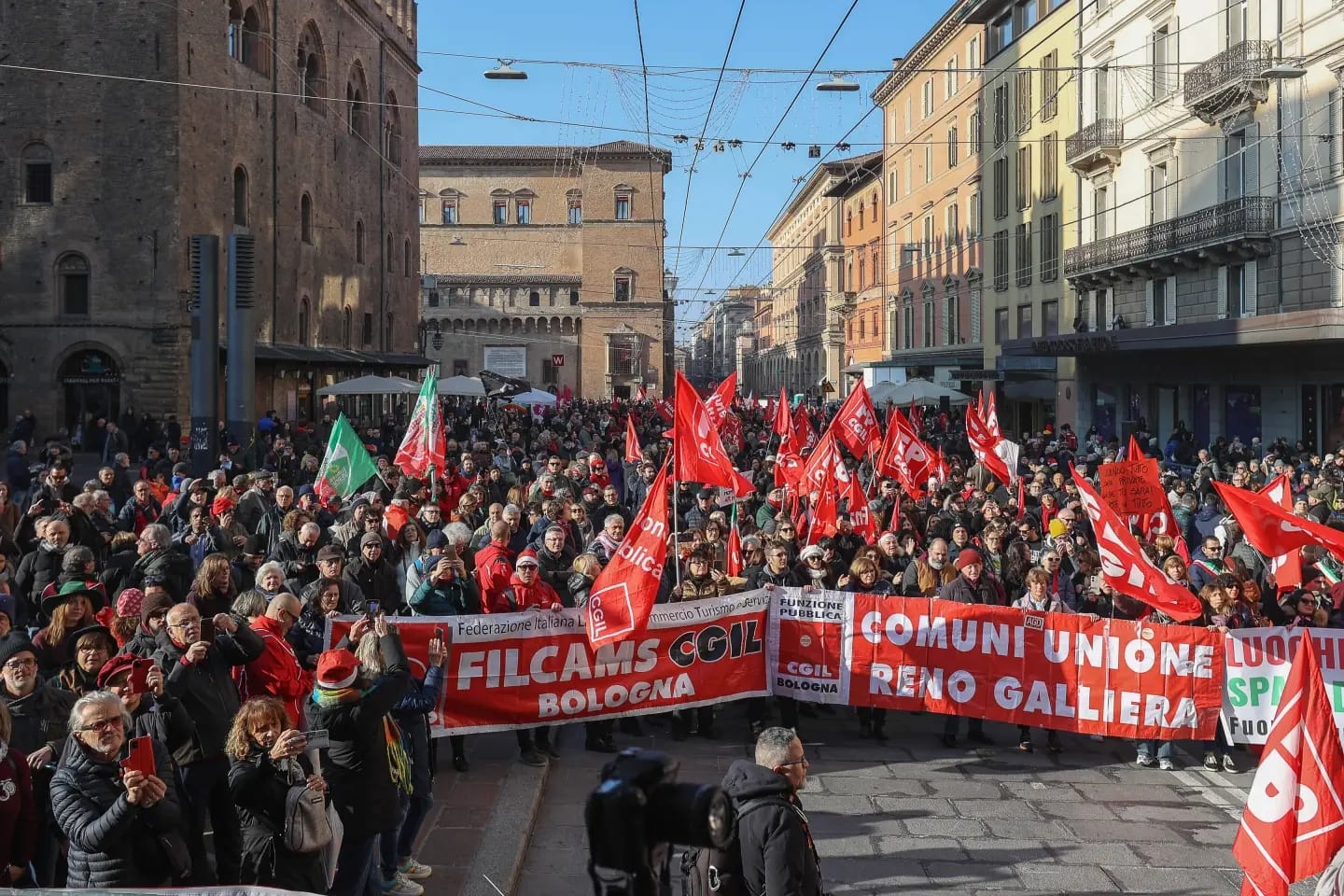
Italy faced widespread disruption as a one-day national strike called by the country’s largest union confederation, CGIL, hit everyday services—especially public transport and schools.
The walkout was directed at Prime Minister Giorgia Meloni’s 2026 budget, with union leaders arguing it doesn’t do enough to address stagnant wages and pressure on public services.
What was disrupted
Rail and local transit were the most visibly affected, with delays and cancellations reported across parts of the country. In major cities, service interruptions created knock-on effects that made commuting unreliable.
Schools were disrupted in a practical way: when transit becomes unpredictable, students and staff can’t get in—so even when schools aren’t formally “on strike,” classes and attendance can still collapse.
What the union is demanding
CGIL’s core message is that the budget’s priorities are misaligned with what households are experiencing. The union has pushed for:
- stronger measures to support wages and pensions
- more protection for public services like healthcare and education
- a budget that reduces economic pressure on working families
Union leadership framed the strike as a response to low pay and rising cost-of-living stress.
The government’s position
The government has defended the budget as fiscally responsible and focused on broad support measures, while also criticizing the strike’s impact on citizens.
Why this matters
This isn’t just about one chaotic day of commuting. It’s a sign of a larger tension: who bears the cost of economic constraints, and how aggressively the government should use the budget to protect wages and public services.
If the budget debate continues to sharpen, more labour actions—and more disruption—are likely to remain part of Italy’s political winter.