



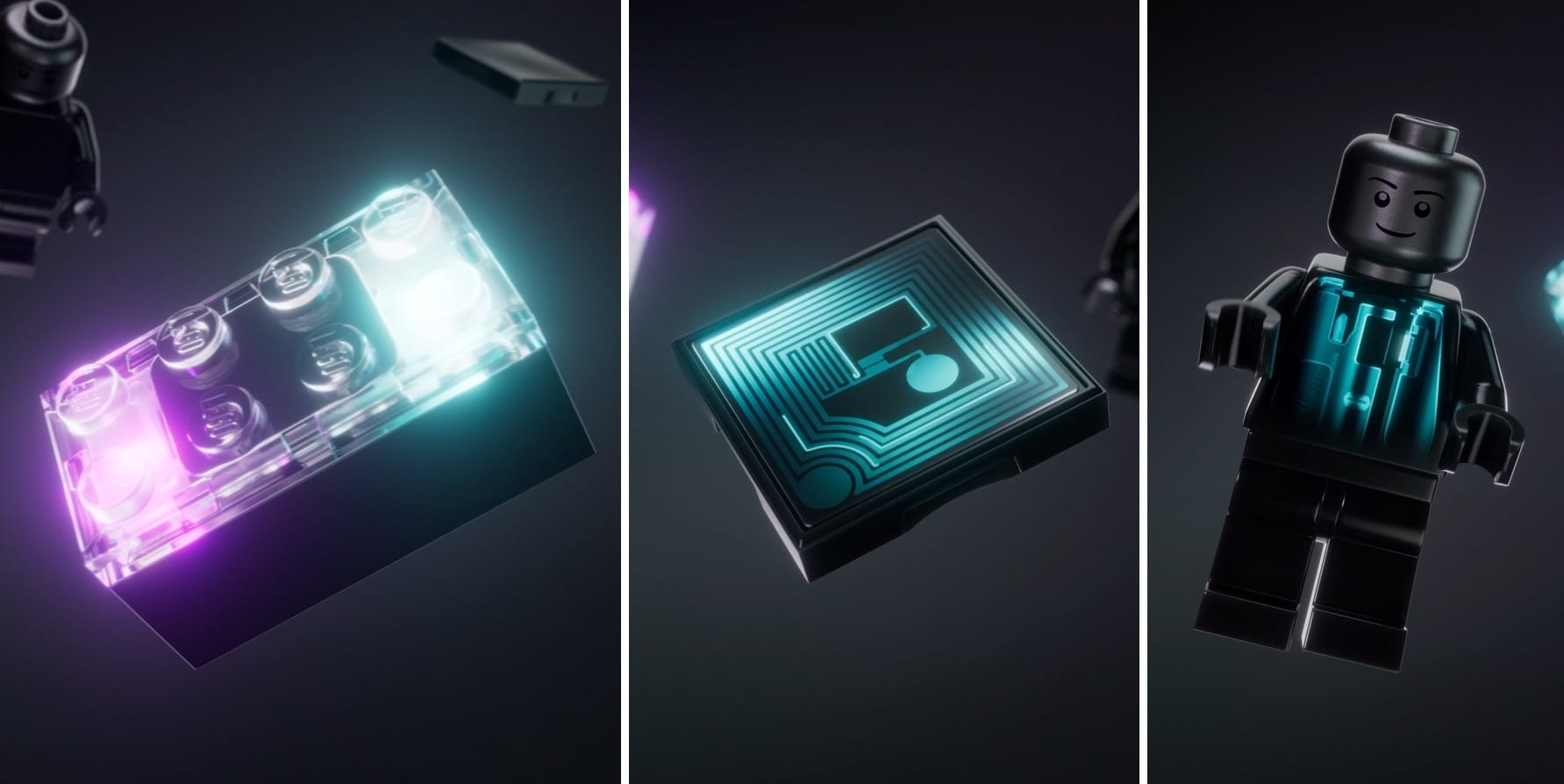
Lego just teased one of its most intriguing ideas in years: a “Smart Brick” concept—essentially a computer-in-a-brick designed to work with NFC-enabled sets and trigger interactive effects.
If that sounds like Lego trying to turn plastic into a platform, that’s exactly the vibe.
What a “computer-in-a-brick” could mean
For decades, Lego’s magic has been purely physical: click, stack, rebuild, repeat. The Smart Brick concept suggests a future where Lego can recognize what you built and respond to it.
NFC (near-field communication) makes that plausible. If certain elements in a set have NFC tags, a Smart Brick could “read” them when they’re attached or brought close. That opens the door to:
- automatic identification of characters, items, or modules
- context-aware play (the build changes the story)
- effects that follow your choices (sound, lights, haptics, or app-driven reactions)
Instead of pressing a button to start a feature, the act of building becomes the input.
Why this is a big shift for Lego
Lego has experimented with digital layers before—games, AR, programmable robotics. The Smart Brick is different because it pushes computation into the core building experience, not just an add-on.
That matters because it keeps Lego’s strongest promise intact: the fun starts with your hands. The tech simply responds.
The best-case version of Smart Brick play
Done right, this could feel like “living sets”:
- Build a spaceship and the brick triggers launch sounds and cockpit lighting.
- Swap a module and the mission changes.
- Combine two sets and unlock a crossover scenario.
- Add “power-up” pieces and see new behaviors emerge.
It could also make play more accessible for kids who love stories but don’t want screens as the main event—if the interactivity lives in the build itself.
The risks: complexity, cost, and screen creep
There are a few obvious questions Lego will have to answer if this moves beyond concept:
- Will it stay intuitive? If it requires constant pairing, charging, or troubleshooting, the magic collapses.
- Will it stay affordable? Tech bricks can quickly turn a set into a premium product.
- Will it become “app-first”? The worst outcome is a toy that’s basically a controller for a phone.
And because NFC implies identification, there’s also the modern baseline concern: data and privacy, especially if any part of the experience is connected.
Bottom line
Lego’s Smart Brick concept is exciting because it doesn’t replace Lego—it tries to amplify it. The promise is simple: the more creatively you build, the more the world reacts.
If Lego can keep the experience tactile, durable, and delightfully low-friction, Smart Brick could become the next evolution of what Lego has always been: not just a toy you play with, but a system that invites you to invent.


