

CES season always brings at least one product that makes you do the same thing: squint, lean in, and ask, “Wait… how is that even real?” This year, LG’s answer is its latest OLED evo W6 “Wallpaper” TV, which the company is calling the world’s thinnest “true wireless” OLED.
And the headline feature really is that simple: it’s about 9mm thick—roughly “ballpoint pen” territory. Less TV, more floating sheet of light.
How LG got it that thin (spoiler: the TV moved out of the TV)
The trick is architectural: LG removed most of the traditional TV guts from the panel and shoved them into a separate hub called the Zero Connect box. That box can sit up to 10 meters away, and it wirelessly transmits the image back to the screen.
The result:
- the panel is light enough to mount almost flush to the wall
- the usual “bulge” behind the display is minimized
- you get the aesthetics of a wall-hugging OLED without cramming all the electronics behind it
It’s a clever approach because “thin TV” isn’t just about measurements—it’s about how the thing looks once it’s actually installed in a living room.
Sizes, timing, and the not-so-small question of price
LG’s W6 Wallpaper TV is expected in 73-inch and 83-inch versions, with talk of a mid-to-late 2026 arrival (at least for Australia). And yes: if you’re hoping for “thin equals affordable,” temper expectations. Wallpaper-style TVs historically land in the premium bracket—think north of $5,000 rather than impulse-buy territory.
Under the hood, LG is pairing the panel with its α11 AI Processor Gen3, positioning it around the usual OLED promises: bold contrast, deep blacks, and rich color.
CES 2026: AI everywhere, but TV tech still wants the crown
Even with AI being stapled onto everything at CES (from televisions to literal appliances), the display war is still one of the most aggressive categories in consumer tech—because TVs are now where computing, entertainment, and living-room identity collide.
Alongside the W6, LG is also pushing a broader premium narrative:
Micro RGB is the new buzz battle
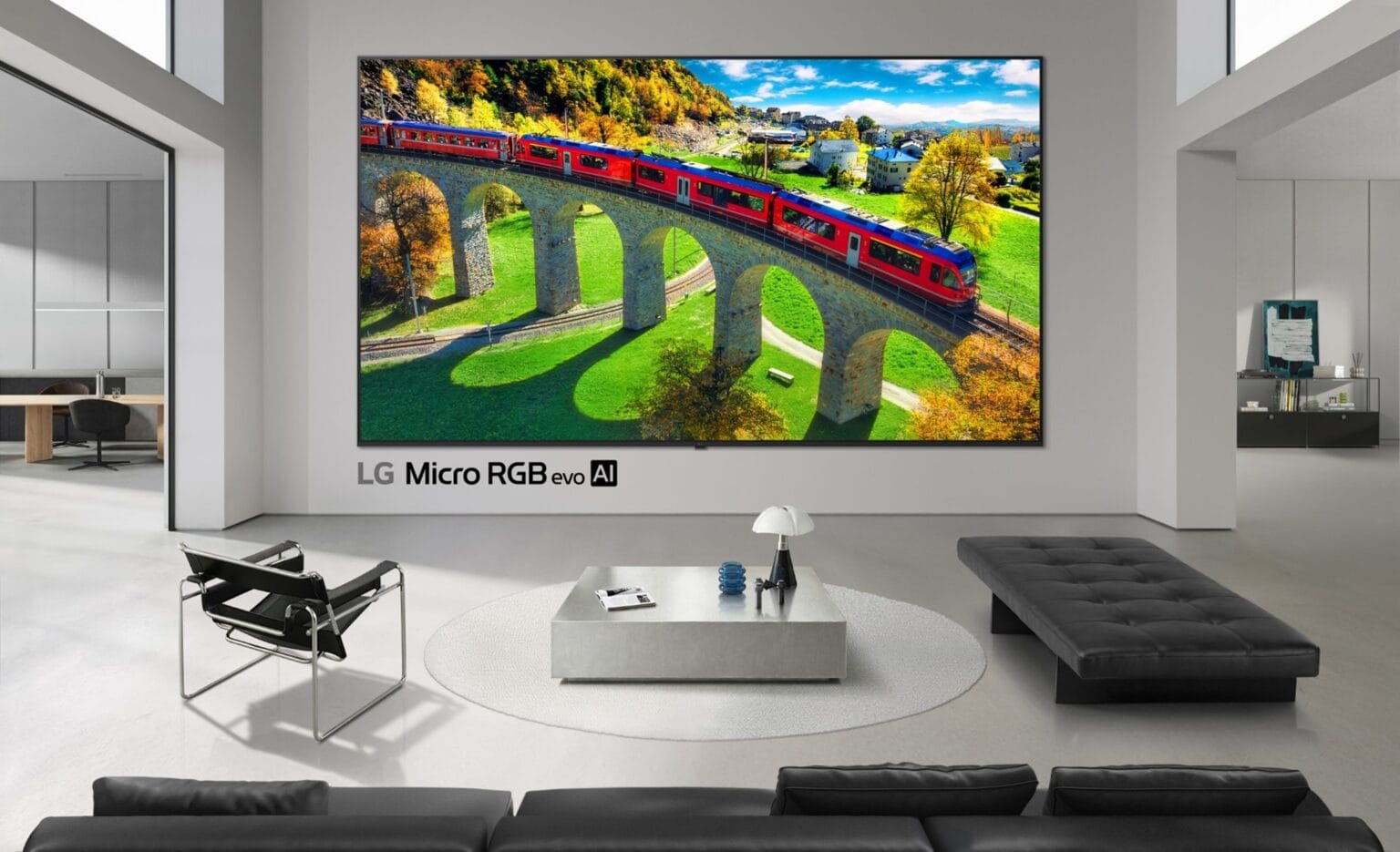
LG and Samsung are both leaning into Micro RGB TV tech—aimed at richer, more vibrant color compared to standard LED backlighting setups. LG is bringing Micro RGB evo screens in 100-, 86-, and 75-inch sizes, while Samsung is flexing with an enormous 130-inch model.
Translation: 2026 isn’t just “bigger screens.” It’s “bigger screens with better color science,” sold as a visible leap rather than a spec-sheet upgrade.
The “TV as décor” trend keeps growing
LG’s Gallery TV is also part of the same living-room strategy: when the screen is off, it can display art and look more like a framed canvas than a black rectangle. With customizable frame options (and room for DIY personalization), it’s clearly aimed at people who want their TV to disappear into their interior design—until movie night.
The takeaway: the TV is becoming a piece of architecture
The most interesting part of LG’s new ultra-thin push isn’t just the number (9mm). It’s what that number represents: TVs are no longer treated like electronics you place on furniture. They’re becoming architectural objects—mounted like art, styled like décor, and engineered to look less like a device and more like part of the home.
If LG nails real-world performance—wireless reliability, latency, durability, and day-to-day convenience—the Wallpaper TV idea could be one of the cleanest answers yet to a modern living-room question:

