

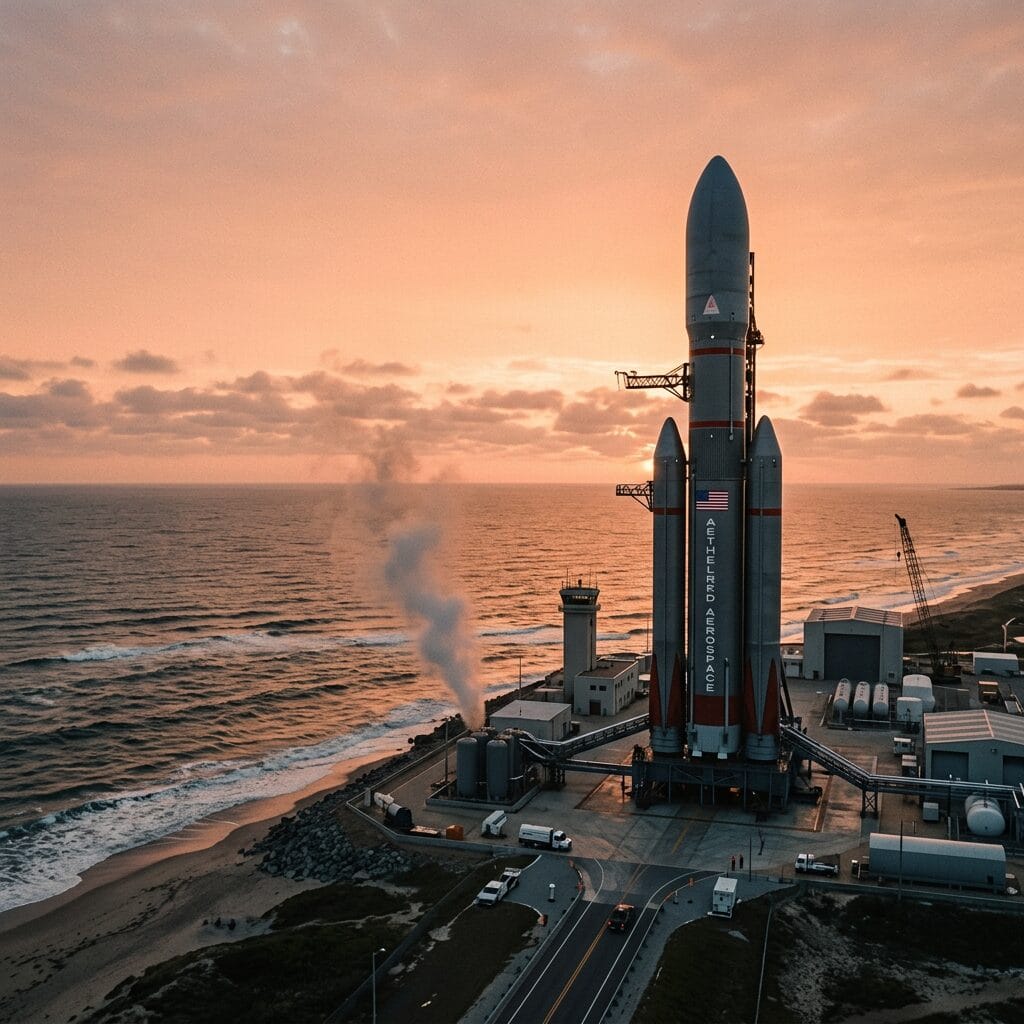
SpaceX got within half a minute of launching its newest and biggest Starship.
Then the future stopped because a piece of launch hardware did not cooperate.
That is the beauty and brutality of spaceflight. The vision may be Mars, moon landings, satellite networks, and a company powerful enough to reshape global infrastructure. But at the launchpad, all that ambition still depends on machinery working perfectly at the exact second it needs to work. One hydraulic pin fails to retract, and the whole show stops.
That is not failure in the dramatic sense.
It is the reality of building something this hard.
Starship Is Still an Experiment, Not a Finished Machine
SpaceX has trained the public to think of rocket launches as routine.
Falcon 9 made reusability look almost normal. Starlink launches became so frequent that many people stopped paying attention. But Starship is different. It is larger, newer, more ambitious, and still deep inside the test-flight phase. Every attempt is partly a launch and partly an engineering lesson.
That is why this delay matters.
It reminds everyone that Starship has not crossed from experimental monster to dependable transportation system yet. It is still being learned, adjusted, tested, and humbled by details that only reveal themselves under real launch conditions.
The Launch Tower Is Part of the Rocket Now
One of the most important truths about Starship is that the vehicle is only part of the system.
The tower, pad, arms, fueling infrastructure, ground software, safety systems, and mechanical locks are all part of the launch machine. If one part of that ground system misbehaves, the rocket might as well be welded to Earth.
That is exactly what makes this delay revealing.
SpaceX is not merely testing a bigger rocket. It is testing a full launch architecture, including the ground hardware needed to support rapid reuse and future high-frequency launches. If Starship is ever going to become the backbone of lunar missions, Mars dreams, and large satellite deployment, the pad has to become as reliable as the rocket.
Bigger Ambition Means Bigger Fragility
The 407-foot Starship-Super Heavy stack is not just tall. It is an enormous mechanical promise.
It promises to carry more, fly farther, land differently, and eventually change the economics of space access. But size creates complexity. More systems. More forces. More failure points. More ways for a launch attempt to go sideways before the rocket even leaves the ground.
That is the tradeoff SpaceX has chosen.
It is chasing revolutionary capability, and revolutionary capability rarely arrives neatly.
The Timing Could Not Be More Awkward
The delayed attempt came just after Elon Musk announced that SpaceX would go public.
That timing matters because Starship is not only a technical project anymore. It is part of the investor story. If SpaceX is heading toward public markets, the company’s grandest ambitions will face a different kind of scrutiny. Investors will not only ask whether the dream is inspiring. They will ask whether the system works, whether timelines are realistic, whether NASA milestones are safe, and whether Starship can become a reliable revenue engine rather than an expensive engineering marathon.
A last-minute scrub does not destroy that story.
But it does remind markets that rocket science still refuses to obey hype cycles.
NASA Is Watching Closely
Starship is not just SpaceX’s private moonshot.
NASA is depending on it for future astronaut landings on the moon. That raises the stakes enormously. Every delay, every pad issue, every test-flight problem becomes part of a larger question: can this system mature fast enough for America’s lunar plans?
That does not mean NASA should panic over one scrub.
Launch delays happen. Problems are expected in test programs. But the broader pressure is real. Starship has to become more than spectacular. It has to become dependable.
That is a much harder standard.
The Mock Starlink Payload Shows the Business Logic
The planned flight carried 20 mock Starlink satellites, which points to the commercial heart of the program.
Starship is not only about astronauts and Mars. It is also about deployment scale. A working Starship could transform how SpaceX builds out Starlink and other large orbital infrastructure. That is where the business case gets serious. Bigger payloads, lower costs, faster deployment, and more control over the space-based internet economy.
That is why the company keeps pushing through delays.
The payoff, if Starship works, is enormous.
SpaceX’s Strength Is Its Tolerance for Imperfection
Most traditional aerospace companies fear public failure.
SpaceX has built a different culture. It tests in public, fails in public, learns in public, and then moves again. That approach can look reckless to critics, but it is also why SpaceX has moved faster than much of the industry. The company accepts that the path to operational reliability runs through messy test campaigns.
A launch scrub caused by ground-system trouble is frustrating.
But for SpaceX, it is also data.
The Myth of Effortless Progress Is Dead
This is the real lesson.
The public often sees technology as a smooth staircase upward: bigger rockets, better systems, more power, more control. In reality, progress looks more like this: countdowns halted, parts refusing to move, engineers troubleshooting under pressure, and a company trying again the next day if the fix holds.
That is not the opposite of progress.
That is what progress actually looks like.
The Meaning of the Moment
SpaceX’s delayed Starship launch is not a sign that the dream is dead.
It is a sign that the dream is still under construction.
A rocket this large, tied to ambitions this enormous, will not become routine just because the company wants it badly or investors love the story. It has to earn reliability one problem at a time. The pad has to work. The tower has to work. The vehicle has to work. The whole system has to work together.
That is the hard road between spectacle and infrastructure.
SpaceX is still on that road.
And this time, the road was blocked by a launch tower pin that refused to move.