



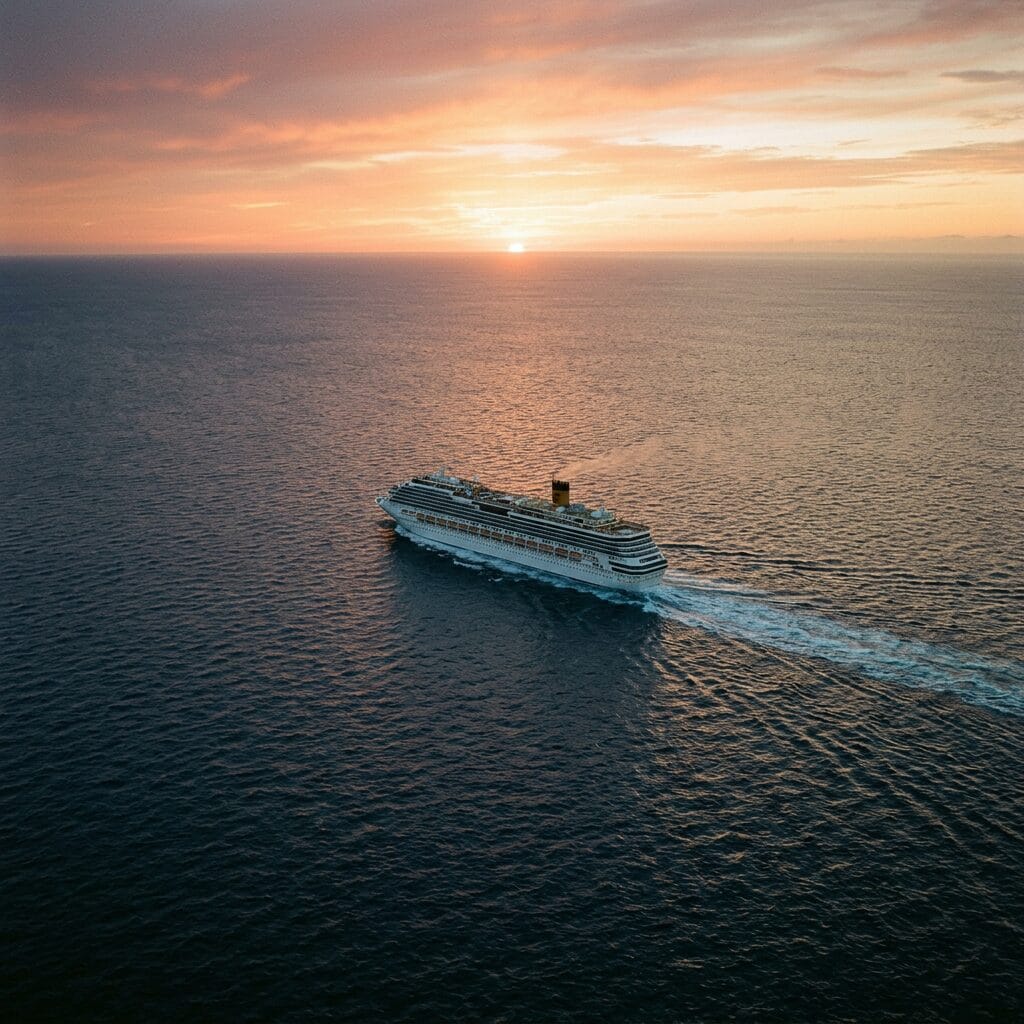
Cruise ships are built to sell escape.
Sunrise over open water. Elegant dining rooms. Carefully managed adventure. The fantasy is simple: you step aboard and leave the world’s anxieties behind. That is why a hantavirus-linked outbreak on a cruise ship feels so unsettling. It punctures the illusion in the most immediate way possible. Suddenly the ship is no longer a vessel of leisure. It becomes a floating symbol of vulnerability, uncertainty, and public fear.
And once that happens, the crisis is no longer only medical. It is psychological.
The Real Battle Is Against Panic as Much as Pathogen
One of the hardest parts of any outbreak is not just containing illness. It is containing imagination.
People hear “virus,” “ship,” and “evacuation,” and their minds immediately begin filling in the worst possibilities. That is especially true after the global trauma of the pandemic years. A public already conditioned by lockdown memories, quarantine images, and institutional mistrust does not hear about an infected ship with calm neutrality. It hears an echo.
That is what makes official reassurance so difficult now. Health authorities are not speaking into a blank space. They are speaking into a population already trained to fear that every containment effort may be the start of something larger.
This Is What Post-Pandemic Anxiety Looks Like
The deeper story here is that the world has changed emotionally.
Before COVID, a health scare on a ship might have been treated as an unusual but manageable incident. Now every outbreak carries the weight of historical memory. People do not just ask what this disease is. They ask whether authorities are telling the whole truth, whether systems are moving fast enough, and whether “low risk” really means low risk.
That is the legacy of a world that learned, painfully, that delay and denial can be catastrophic.
Even when officials are right to urge calm, they are working against a deep reservoir of public suspicion.
Cruise Ships Are Perfect Symbols of Modern Fragility
There is also something uniquely revealing about the setting.
A cruise ship is like globalization in miniature. Different nationalities, enclosed space, shared air, tight logistics, layered authority, and a constant dependence on trust. When illness appears there, it exposes how fragile all those systems really are. A ship may seem luxurious, but in a crisis it becomes what it always was underneath the branding: an isolated environment where every decision suddenly matters more.
That makes cruise outbreaks politically and emotionally charged in ways that ordinary land-based cases often are not.
Public Health Communication Is Now a Test of Credibility
That may be the most important lesson.
In moments like this, health authorities are not judged only by what they know. They are judged by whether people believe them. That is a much harder standard. Scientific reassurance can be accurate and still fail if the public no longer trusts the voice delivering it. And once fear outruns credibility, even sensible containment measures can start looking suspicious, delayed, or inadequate.
This is why outbreaks today are as much about trust as medicine.
The public does not simply want facts. It wants confidence that the institutions speaking those facts have earned the right to be believed.
The Human Reality Must Not Get Lost
Behind all the headlines are people living through a deeply strange ordeal.
Passengers who expected exploration and routine are now navigating uncertainty. Crew members are stuck inside a crisis they did not create. Families onshore are waiting for updates while wondering what comes next. Local communities near the ship’s destination are trying to balance sympathy with fear. All of it unfolds under the glare of global attention, where every delay and every precaution can be interpreted in two opposite ways at once: either responsible or alarming.
That is the human texture of modern outbreak news. It is never just about infection. It is also about isolation, waiting, rumor, and the emotional strain of not knowing whether the danger is shrinking or merely being managed more carefully.
The Bigger Meaning of the Moment
The Hondius story matters because it reveals how fragile public calm has become.
A relatively contained health event can still trigger outsized anxiety because the world is now primed to read outbreaks through the lens of recent collective trauma. That does not mean the fear is irrational. It means the baseline has changed. People have learned that invisible threats can travel fast, institutions can stumble, and reassurance can arrive too late.
So when authorities say this is not another global emergency, they are doing more than offering medical guidance. They are trying to rebuild public steadiness in a world that no longer gives steadiness easily.
And that may be the hardest task of all.


