


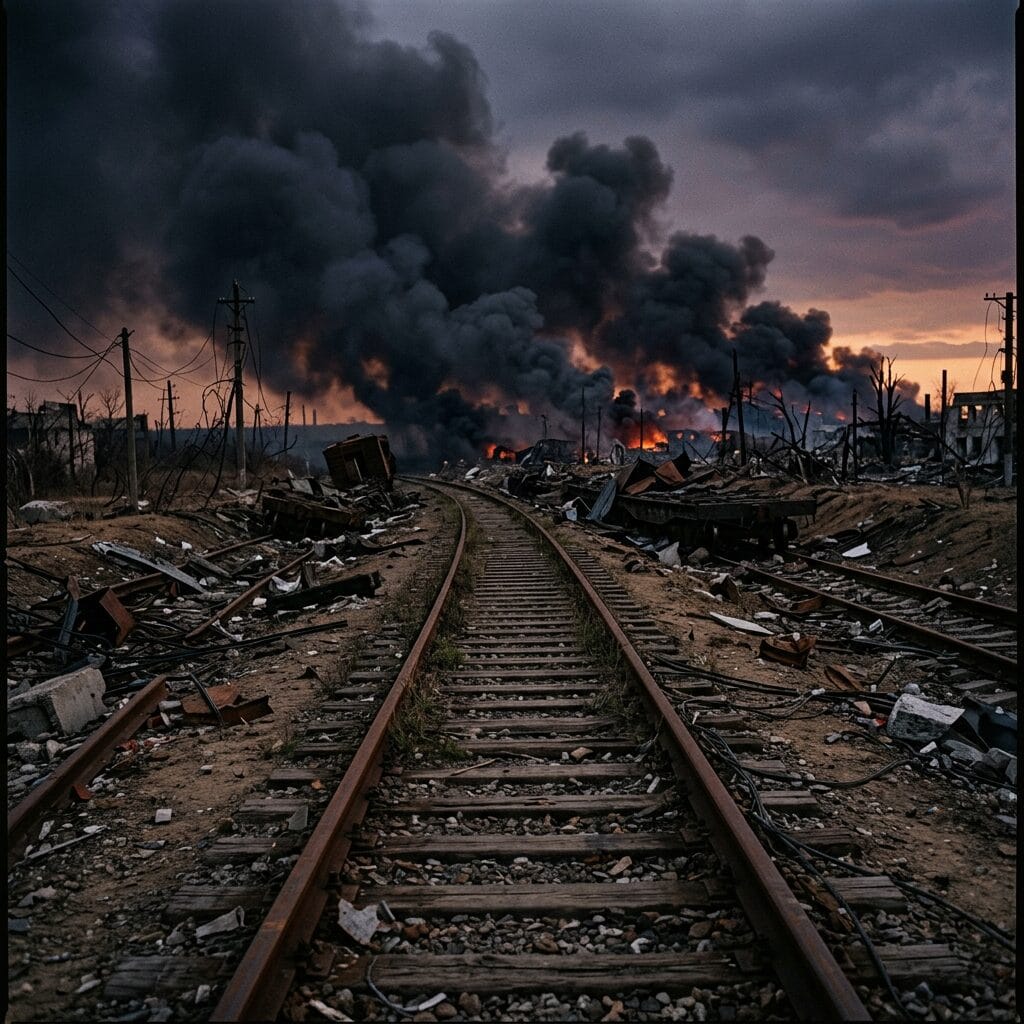
A train is supposed to mean movement.
Families traveling. Workers heading home. Children looking out windows. Vendors, luggage, noise, routine. That is what makes the bombing in Quetta so horrifying. A passenger train passing through southwest Pakistan became the target of a suicide attack, leaving at least 23 people dead and more than 70 wounded.
This was not only an attack on a train.
It was an attack on ordinary life.
Terrorism Works by Destroying the Normal
The cruelty of this kind of attack is not only in the death toll.
It is in the message.
A railway track is not a battlefield. A passenger train is not a military base. Yet the attackers turned a public transport route into a scene of fire, overturned coaches, smoke, shattered vehicles, damaged buildings, and families searching for the injured and dead.
That is how terrorism spreads fear beyond the blast itself.
It tells people that no ordinary space is safe. Not a road. Not a station. Not a train. Not a journey home.
The Balochistan Conflict Keeps Bleeding Into Civilian Life
The outlawed Baloch Liberation Army claimed responsibility, saying it targeted a train carrying security personnel.
But the reality on the ground was uglier and broader. Officials said civilians, including women and children, were among those targeted or affected. That is the recurring tragedy of insurgency and counterinsurgency in Balochistan: whatever the stated political cause, ordinary people are repeatedly forced to absorb the violence.
Balochistan has long been caught in conflict over power, resources, identity, and control. It is rich in oil and minerals, yet deeply unstable and politically alienated. Militants claim they are fighting the state. The state responds with force. Civilians end up trapped in the middle.
That is not liberation.
That is a cycle of blood.
Railways Are Symbolic Targets
Railways matter because they connect a country.
They move people, goods, soldiers, workers, families, and commerce. They are arteries of state presence and public life. That is why militant groups often target them. Blow up a train, and the attack becomes more than physical destruction. It becomes a message against movement, connectivity, and government control.
But symbolic targets still carry human bodies.
That is what militants always try to blur. They speak in political language, but the result is burned coaches, hospital emergencies, critical injuries, grieving families, and communities left traumatized.
The State’s Security Challenge Is Real
Pakistan’s security challenge in Balochistan is serious.
The province has seen repeated attacks on security forces, government installations, infrastructure projects, and civilians. Quetta, as the provincial capital, carries both political and strategic weight. Every attack there sends a message that the state’s control remains contested.
But a security problem cannot be solved by statements alone.
After every bombing, officials condemn the attackers, promise investigations, and declare that militants will be hunted down. Those words may be necessary, but they are not enough. The deeper question is why the violence keeps regenerating, why intelligence gaps remain, and why ordinary people remain so exposed.
There Is No Justification for Targeting Civilians
No grievance justifies this.
Political alienation does not justify murdering passengers. State abuse does not justify bombing public transport. Economic exploitation does not justify turning a train into a death trap. A movement that claims to fight for dignity destroys its own moral claim when it kills the innocent.
That line must stay clear.
The suffering of Balochistan deserves serious political attention. But terrorism against civilians only deepens suffering and gives the state more reason to respond with heavier force.
Hospitals Became the Second Front
After the explosion, Quetta’s hospitals were placed under medical emergency.
That detail matters because every attack creates a second crisis after the first one. Doctors, nurses, paramedics, and volunteers suddenly become the line between life and death. Families flood hospitals. Blood is needed. Critical patients arrive at once. The health system is forced to absorb the shock in real time.
This is another hidden cost of terrorism.
It does not only kill at the scene. It overwhelms everything around the scene.
The Human Cost Must Stay at the Center
The danger with repeated violence is that it becomes a category.
“Another attack in Balochistan.”
“Another bombing in Pakistan.”
“Another militant claim.”
“Another condemnation.”
That language numbs the horror.
But every number in this attack was a person. Every wounded passenger had a family. Every overturned coach carried lives that were moving somewhere before violence interrupted them. Every survivor will carry the sound and smoke of that blast long after the headlines move on.
The dead deserve more than being folded into another security update.
The Meaning of the Moment
The Quetta train bombing is a reminder that Pakistan’s internal conflicts are not contained inside political speeches, militant statements, or security operations.
They spill onto railway tracks. They enter passenger coaches. They reach hospitals. They break families.
And that is why the attack should be understood not just as another act of violence, but as a warning about the cost of a conflict that keeps turning civilians into collateral.
A country cannot build peace if ordinary people cannot even board a train without fear.