


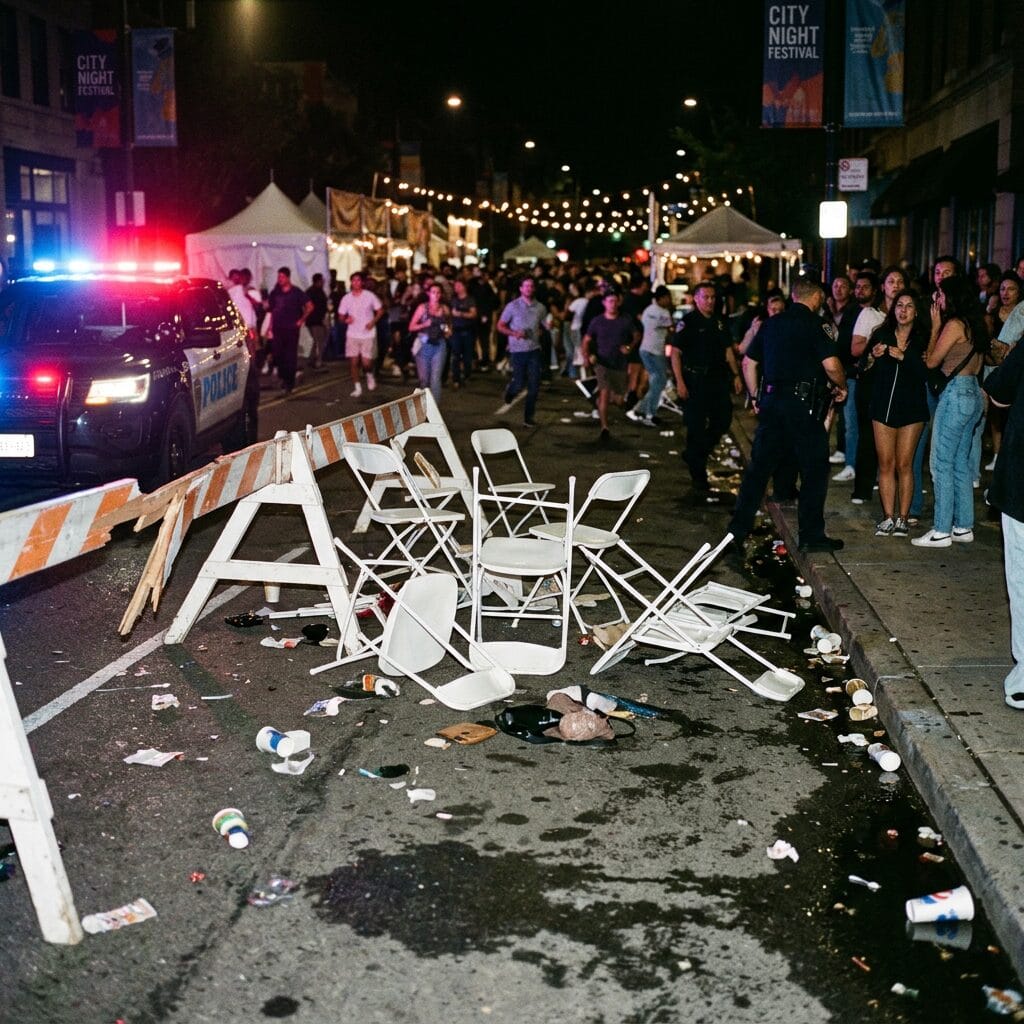
A summer festival should be ordinary.
Music. Food. Families. Home tours. Friends sitting in the grass. A neighborhood showing off its history, beauty, and community pride.
Then gunfire cuts through it.
At least 12 people were shot near Toledo’s Old West End Festival, sending people running for cover, forcing first responders into chaos, and turning one of the city’s most iconic community events into another American crime scene.
This was not just a shooting near a festival.
It was another theft of public life.
Festivals Are Supposed to Be Safe Spaces
The Old West End Festival is not a war zone.
It is a neighborhood celebration. A place for music, vendors, history, walking tours, and ordinary civic joy. That is what makes the shooting so sickening. Violence did not erupt in some hidden corner of society. It erupted in a public gathering meant to bring people together.
That is the larger damage of gun violence.
It does not only injure bodies. It poisons the spaces where communities are supposed to feel alive.
Public Joy Is Becoming Fragile
America has reached a point where almost any public gathering carries a shadow.
A parade. A school event. A nightclub. A church. A mosque. A shopping center. A street festival. People still show up, still dance, still eat, still gather, still try to live normally. But somewhere in the back of the national mind sits the same fear: what if gunfire starts here too?
That is not freedom.
That is a society learning to celebrate with one eye on the exits.
The Victims Were Not Abstract Numbers
The wounded ranged from teenagers to older adults.
That detail matters. It means the violence cut across generations. A 14-year-old should not have to learn that a festival can become a shooting scene. A 61-year-old should not have to wonder whether a neighborhood tradition might end with emergency sirens.
Every wounded person had a day that was supposed to look different.
Every family waiting for hospital updates had their life interrupted by violence that should not have been there.
“Probably Shooting at Each Other” Does Not Make It Less Serious
Police said it appeared at least two people fired weapons and were likely shooting at each other.
That does not soften the story.
It makes it worse.
Because when people fire guns in a crowded public space, they are not only fighting each other. They are firing into the shared life of everyone around them. Bystanders become targets by proximity. Families become collateral. A festival becomes the backdrop for reckless violence.
There is no private gunfight in a crowd.
Once bullets fly near civilians, everyone is dragged into the danger.
First Responders Had to Fight the Crowd and the Chaos
Emergency crews had to move through closed roads, traffic, panic, and festival crowds to reach and transport the wounded.
That is the second crisis after every mass shooting: not only the bullets, but the scramble afterward. Who is hit? Where are they? How many shooters? Is it still active? Can ambulances get through? Can police secure the area? Can victims be moved fast enough?
That is what gun violence does to cities.
It turns ordinary logistics into emergency survival.
The Search for Suspects Shows the Fear Is Not Over
Hours after the shooting, no suspects were in custody.
That detail deepens the fear. People want closure quickly after violence. They want to know who did it, why it happened, and whether the danger is over. When suspects are still being sought, the community is left suspended between shock and uncertainty.
That uncertainty spreads.
People who were there check their videos. Witnesses replay what they saw. Parents wonder whether to let their children attend future events. Organizers ask whether the festival can continue. A whole city absorbs the aftershock.
This Is How Community Traditions Get Damaged
The Old West End Festival is more than a weekend event.
It is part of Toledo’s civic identity. It helps mark the beginning of the summer festival season. It brings people into a historic neighborhood and gives the city a chance to celebrate itself.
A shooting does not erase that tradition, but it wounds it.
Now, for many people, the festival will carry another memory. Not only music and food, but gunfire. Not only neighbors and visitors, but first responders and police tape.
That is what violence steals.
It rewrites memory.
America Keeps Accepting the Unacceptable
There will be statements. There will be prayers. There will be promises of investigation. There will be calls for witnesses to submit photos and videos. There may be arrests. There may be charges.
All of that matters.
But it does not answer the deeper question: why does this keep happening in the first place?
Why are public spaces so vulnerable? Why are guns so easily brought into everyday conflict? Why do community events keep becoming scenes of mass injury? Why does the country keep treating each shooting as separate when the pattern is impossible to ignore?
At some point, repetition becomes a verdict.
The Meaning of the Moment
The Toledo festival shooting should not be treated as another passing headline.
It is part of a larger national failure: the failure to protect ordinary life from gun violence. People should be able to attend a street festival without calculating escape routes. Teenagers should be able to hear music without hearing gunshots. First responders should not have to turn a neighborhood celebration into a mass-casualty operation.
A city festival is supposed to remind people what community feels like.
In Toledo, that feeling was shattered by bullets.
And the country should be ashamed that this now feels familiar.