


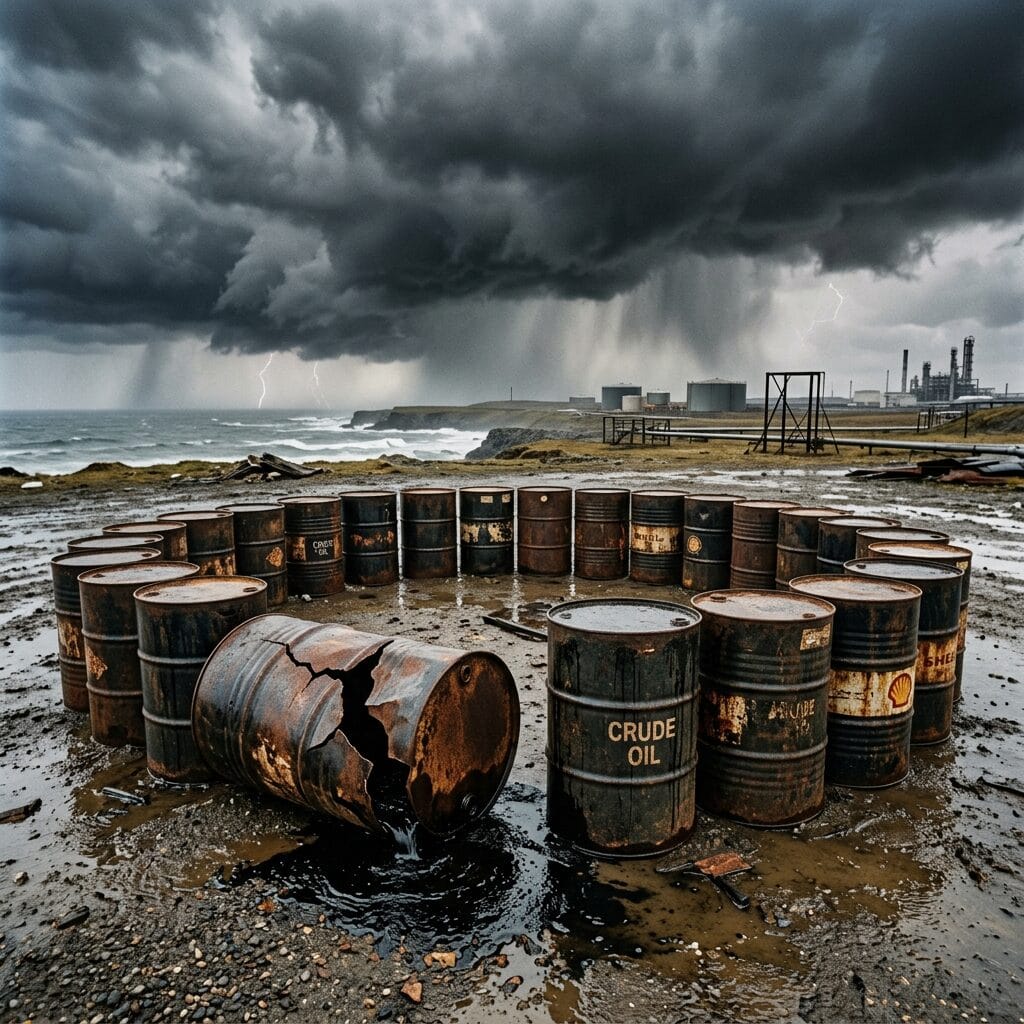
OPEC was built on one central idea: that major oil producers could wield more power together than apart.
The United Arab Emirates’ decision to leave the group strikes directly at that idea. This is not just another policy disagreement inside a cartel long known for internal tension. It is a sign that even among the Gulf’s biggest producers, the old discipline is fraying under the pressure of war, disrupted exports, and diverging national ambitions.
That is why this matters far beyond one announcement in Abu Dhabi.
This Is a Crack in the Core
The UAE is not some marginal player drifting off the edge of the oil map.
It is one of the group’s major producers, one of the few with meaningful spare capacity, and one of the Gulf states most capable of expanding output when conditions allow. When a country like that walks away, the message is bigger than procedural frustration. It says the internal bargain holding OPEC together is no longer as convincing as it once was.
That should worry anyone who still imagines OPEC as a tightly disciplined machine.
The Old Saudi-Led Formula Is Under Pressure
For years, Saudi Arabia has acted as the center of gravity inside OPEC, carrying the burden of cuts, price management, and market signaling. The arrangement worked because enough members accepted the tradeoff: less individual freedom in exchange for more collective influence.
But that model becomes harder to sustain when national ambitions begin pulling in different directions.
The UAE has spent years building itself as a hub of finance, trade, energy, and geopolitical influence. A country with that level of ambition does not necessarily want to remain boxed in by quotas forever, especially if it believes future demand and its own production strategy require more freedom.
That is where this starts to look less like a technical split and more like a challenge to Saudi leadership.
War Has Exposed the Limits of the Old Order
The timing is not accidental.
The Iran war has already shaken shipping routes, disrupted Gulf exports, and thrown global energy markets into a state of prolonged stress. In moments like that, alliances are tested not only by military pressure but by economic self-interest. Once producers start recalculating what best serves them in a more unstable market, the collective language of unity can weaken very quickly.
That appears to be exactly what is happening here.
OPEC’s purpose has always been strongest when members believe cooperation gives them leverage. But if a key producer starts deciding that independence offers more upside than membership, then the group’s authority is no longer unquestioned.
Consumers May Cheer. Producers May Not.
There is an obvious reason many outside the Gulf will read this as good news.
If the UAE is freer to raise production in the future, that could mean more oil on the market and less pricing power concentrated inside the cartel. For consumers and import-dependent economies, that sounds attractive. Lower prices or even the possibility of looser supply control is hard to dislike when energy costs are already politically painful.
But for producers, this is a more unsettling development.
Because once one major member leaves and gains flexibility, others may begin asking their own questions about whether the old structure still serves them as well as it once did.
This Is Also About Power Between Abu Dhabi and Riyadh
It would be naïve to treat this purely as an energy policy adjustment.
The UAE and Saudi Arabia remain close in many ways, but they are also increasingly rivals in influence, investment, business attraction, and regional strategy. The relationship is no longer simple Gulf alignment. It is partnership mixed with competition.
In that context, leaving OPEC carries symbolic force. It says Abu Dhabi is prepared to make major strategic choices without automatically staying inside a framework long dominated by Riyadh.
That is a powerful signal in a region where symbolism and power are rarely separate.
OPEC Can Survive This. But It Looks Weaker.
The group is not vanishing tomorrow.
Saudi Arabia remains enormously influential. OPEC still matters. OPEC+ still has weight. But survival is not the same thing as strength. A cartel built on unity looks less commanding when one of its biggest members decides it prefers freedom over discipline.
That matters because oil markets respond not only to barrels, but to credibility.
If traders begin to suspect that the organization is becoming less cohesive, then every future production target, policy signal, and market intervention carries less force than before.
The Bigger Meaning of the Moment
The UAE’s departure is important because it marks a shift in how power is being calculated in the Gulf.
The old model said collective control was the best path to influence. The new model may be saying something else: that in a fragmented, war-shaken energy world, agility and national freedom can matter more than cartel solidarity.
If that is true, then this is not just a blow to OPEC.
It is a warning that the political architecture of oil is changing, and that even the producers who once moved most closely together are starting to imagine different futures.