

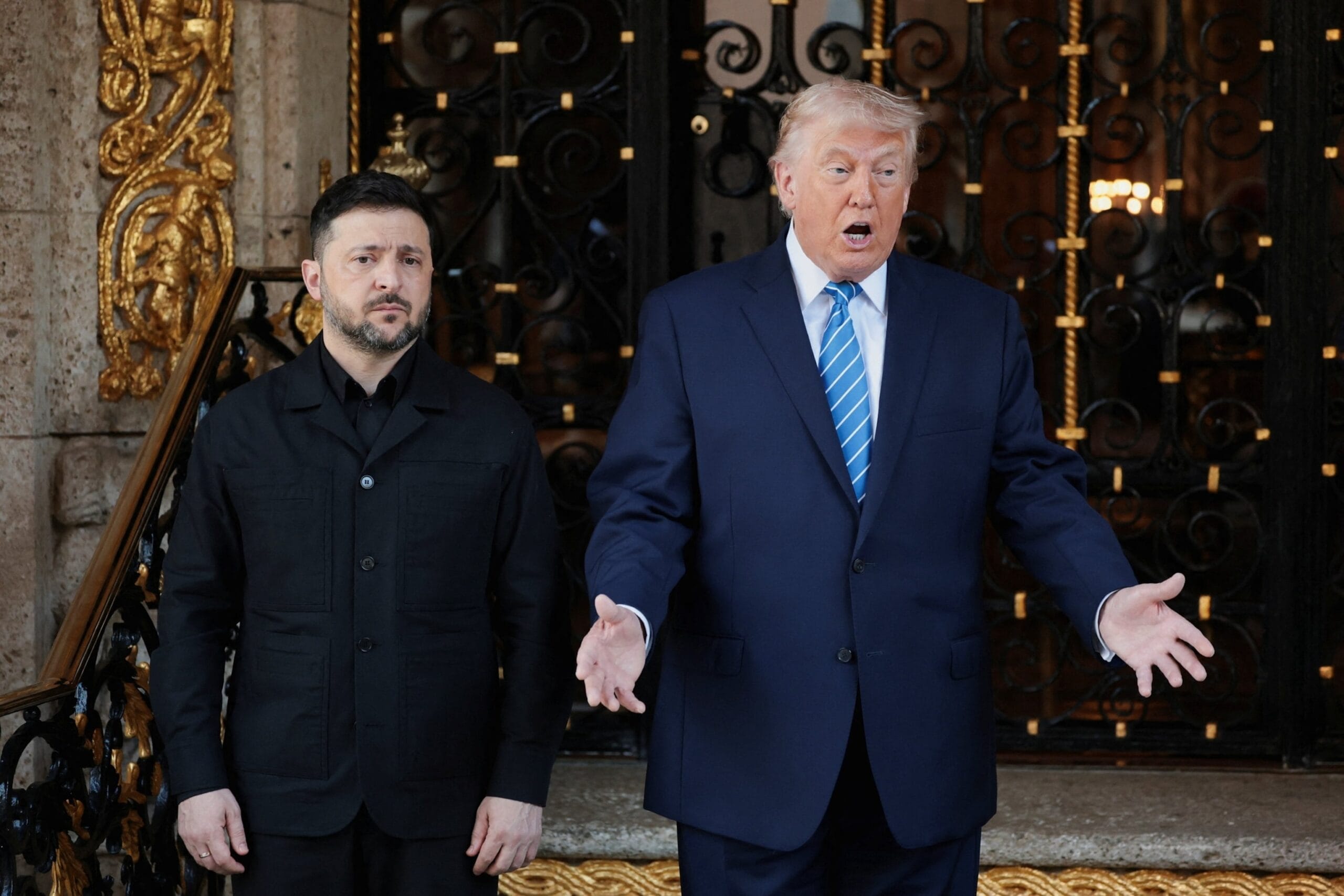
Donald Trump met Ukrainian President Volodymyr Zelenskyy in Florida and said a Russia–Ukraine peace deal is “closer than ever,” coming after a prior call with Russian President Vladimir Putin. The headline is momentum. The reality is that the war’s biggest knots are the same ones that have defined it from the start: territory and security guarantees.
Why “peace” can feel close and still be far
Diplomatically, it’s easy to create the impression of progress. You can agree on broad goals—ending bloodshed, stabilizing borders, reopening trade, rebuilding cities. You can even draft language that sounds historic. But peace isn’t poetry. It’s enforcement. And enforcement depends on the two issues nobody wants to compromise on.
The territorial problem: land is leverage
Territory is not just a map dispute; it’s the core bargaining chip.
For Ukraine, conceding land risks legitimizing conquest and setting a precedent that invasion pays. For Russia, giving up territory it occupies or claims can be framed domestically as defeat. That’s why territorial negotiations often become a battle over sequencing: ceasefire first, status later; or status first, ceasefire after. Each sequence favors one side’s leverage.
The security problem: a ceasefire isn’t safety
Security guarantees are the difference between “a deal” and “a pause.”
Ukraine’s fear is simple: a ceasefire without strong guarantees could become a breather for Russia to rearm and return. Russia’s fear is also simple: strong guarantees can look like Ukraine becoming permanently protected by the West—an outcome Moscow has long opposed. So negotiators end up trapped between two extremes:
- Weak guarantees: easier to sign, easier to break
- Strong guarantees: harder to sign, more likely to hold
The middle ground—credible but politically acceptable—is where talks either succeed or collapse.
What this meeting signals
The Florida meeting signals a push to position diplomacy as moving—especially in public. But public optimism doesn’t resolve the engineering of peace: where lines are drawn, who monitors them, what violations trigger, and who has the authority (and will) to respond.
The bottom line
Saying a deal is “closer than ever” may be true in the sense that more people are talking, more channels are active, and more proposals are circulating. But as long as territory and security guarantees remain unresolved, the distance to a real settlement isn’t measured in meetings. It’s measured in whether either side is willing to give up something it still believes it can win.