

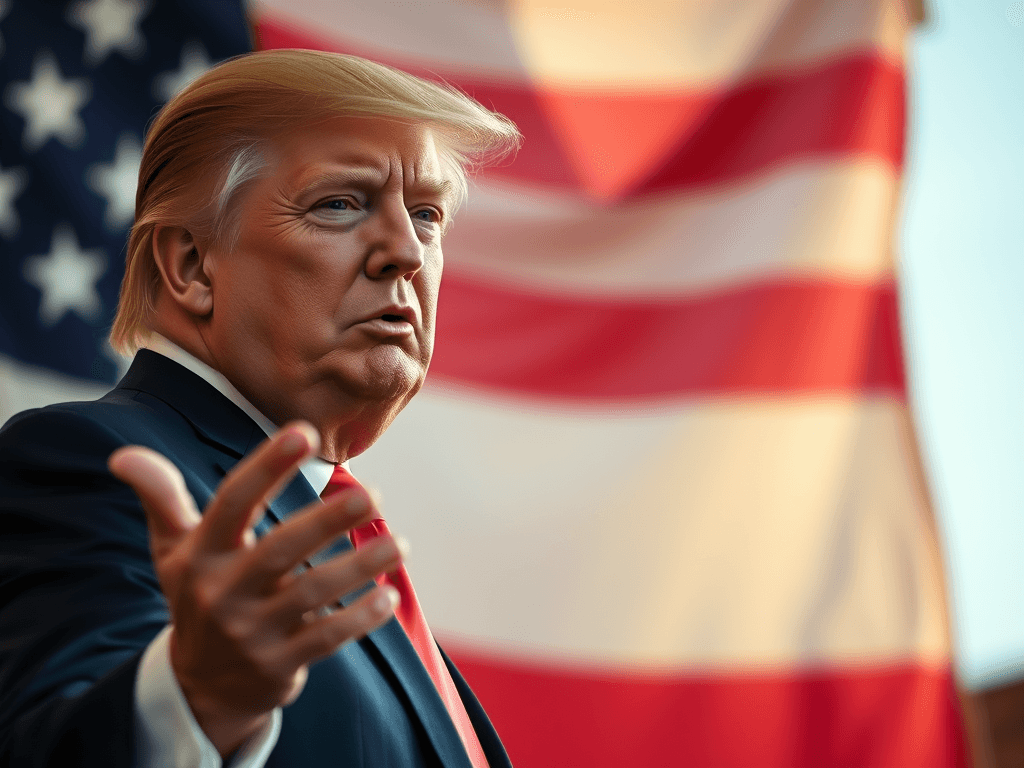
Just a day after the U.S. Supreme Court struck down his earlier tariff program, President Donald Trump says he will raise a temporary “worldwide” tariff on imports from 10% to 15%, the maximum allowed under a little-used legal authority.
The move is a sharp escalation in tone and rate—and it underlines the new reality of 2026 trade policy: even when courts slam a door shut, the tariff strategy looks for the next door immediately.
What Trump is doing now: 15% across the board (temporarily)
Trump says the new tariff will apply to imports from all countries, lifting the rate from 10% to 15%. The legal hook this time is Section 122 of the 1974 Trade Act, a provision that allows temporary import surcharges up to 15%—but only for a limited time.
The key constraint: Section 122 tariffs expire after 150 days unless Congress approves an extension. In other words, this isn’t a permanent rewrite of U.S. tariff policy (at least not on this authority). It’s a clock-starting maneuver that buys time for the administration to pursue other, longer-lasting routes.
Why this happened: the Supreme Court cut off the original tool
Trump’s previous tariff program leaned heavily on an economic emergency law—the International Emergency Economic Powers Act (IEEPA)—to justify broad tariffs and higher rates. The Supreme Court ruled that the law did not grant the sweeping tariff powers the administration claimed.
So the administration’s response is not to retreat, but to swap legal bases:
- IEEPA (rejected by the Court for tariff authority) out
- Section 122 (rare, time-limited, largely untested in this use) in
A “maximum rate” move — and a “maximum uncertainty” message
Trade officials and analysts are already questioning whether Congress would extend the Section 122 tariffs—especially with public frustration rising over higher prices. But even if the 15% rate lasts only 150 days, it still injects immediate uncertainty into:
- pricing and inventory plans for importers
- supply-chain contracts and delivery schedules
- corporate earnings guidance
- inflation expectations
Businesses can adapt to almost any rule—what they can’t price is rules that change every 24 hours.
Exemptions and carve-outs: the fine print matters
Even a “worldwide” tariff isn’t perfectly universal. The White House has said the Section 122 tariffs include exemptions for certain products—such as critical minerals, metals, and energy products—a reminder that “across the board” often becomes “across the board, except the parts we can’t afford to disrupt.”
The next play: use the 150-day window to build new tariffs that stick
Trump has said he intends to use the 150-day period to pursue other “legally permissible” tariffs. That likely means leaning on more traditional tariff pathways that require investigations and findings—such as:
- national security-based import actions
- unfair trade practice investigations targeting specific countries or sectors
Those routes are slower and more bureaucratic, but they’re also harder to knock down because they come with procedural scaffolding.
Trade deals don’t vanish — and that’s where things get messy
One underappreciated wrinkle: the U.S. has been striking tariff “deals” that set negotiated rates above the new worldwide baseline. The administration’s stance is that these negotiated rates still apply, even if the global baseline is lower.
That creates a two-speed tariff world:
- A 15% general surcharge
- Higher negotiated rates in certain bilateral arrangements
For exporters and importers, that’s not just confusing—it’s a compliance headache.
Global reaction: applause for the Court, nerves about the tariffs
Some foreign leaders praised the Supreme Court ruling as a sign that checks and balances still matter. But the applause comes with a grim addendum: the new tariff plan shows the trade conflict isn’t “over,” it’s just rerouted.
Bottom line
Trump’s 15% global tariff move is less about a single number and more about a strategy: tariffs remain the primary lever, even when legal constraints force the White House to change mechanisms.
The bigger takeaway for markets and businesses is blunt:
- The tariff ceiling may be temporary under Section 122,
- but the policy direction isn’t.
The next 150 days will be a race between two forces: legal durability and economic backlash—and the outcome will determine whether this is a short shock or the start of a new, more entrenched tariff regime.