


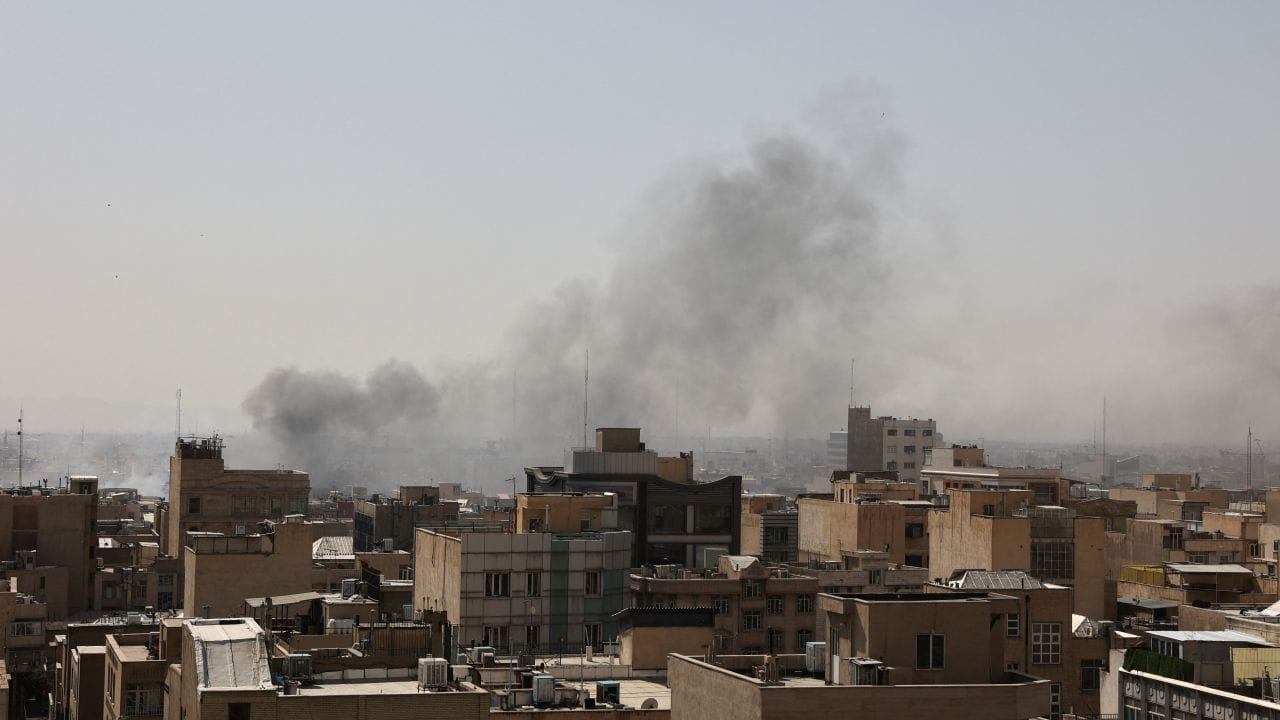
A dramatic new chapter in Middle East tensions opened Saturday after the United States and Israel launched a major coordinated attack on Iran, with explosions reported across Tehran and other locations nationwide. In a video message posted online, President Donald Trump called on Iranians to rise up against the Islamic Republic’s leadership, telling the public to “seize control of your destiny” and “take over your government.”
The strikes mark a sharp escalation: a direct, large-scale U.S. intervention against Iran during a period when Washington had been pressing for a deal to constrain Iran’s nuclear program.
What was hit — and why it’s significant
Early reports indicated some of the first strikes in Tehran appeared to land near key government areas, including the vicinity of offices associated with Iran’s leadership. U.S. officials described targets that included:
- Revolutionary Guard-related command facilities
- Air defense systems
- Missile and drone launch sites
- Military airfields
The stated rationale from Washington: neutralize capabilities the U.S. views as threats and pressure Iran’s leadership amid broader regional hostilities.
Iran says the attack was “unprovoked” — and claims leaders are alive
Iran’s foreign minister condemned the strikes as illegal and illegitimate and said that, to his knowledge, Supreme Leader Ayatollah Ali Khamenei and President Masoud Pezeshkian were alive.
Even so, uncertainty around leadership and damage assessments remains high in the immediate aftermath of such a broad operation, especially as information becomes contested quickly during active conflict.
Iran’s response: missiles and drones
Iran retaliated with missile and drone attacks aimed at Israel and at U.S. positions in the region, according to U.S. and regional reporting. The U.S. military said it saw hundreds of incoming Iranian projectiles, but reported no U.S. casualties and described the impact on U.S. bases as minimal.
That doesn’t mean the risk is contained. Once both sides are trading strikes, escalation can become rapid—and harder to reverse.
Why the timing matters
The attacks came:
- During Ramadan, adding to the political and public sensitivity across the region
- After weeks of heightened military posture, including increased U.S. presence in the region
- Following an already unstable period shaped by overlapping conflicts and proxy tensions
This also reportedly marks the second time in eight months the Trump administration has used direct military force against Iran—underscoring how quickly the confrontation has intensified.
The wider impact: disruption across the region
As news of the strikes spread, the region saw immediate ripple effects—airspace disruptions, heightened security alerts, and renewed fears about wider instability. Any sustained escalation raises concerns about shipping routes, energy markets, and the safety of civilians caught between military targets and retaliation.
Bottom line
This is no longer a background standoff. With the U.S. and Israel striking Iran directly—and Iran retaliating—the situation has shifted into a high-risk phase where miscalculation is dangerous and diplomacy becomes harder, not easier.
If you want, paste the specific paragraphs you want emphasized (Trump’s remarks, the Tehran strikes, or the retaliation details) and I’ll tailor the blog post to your preferred angle and tone.