


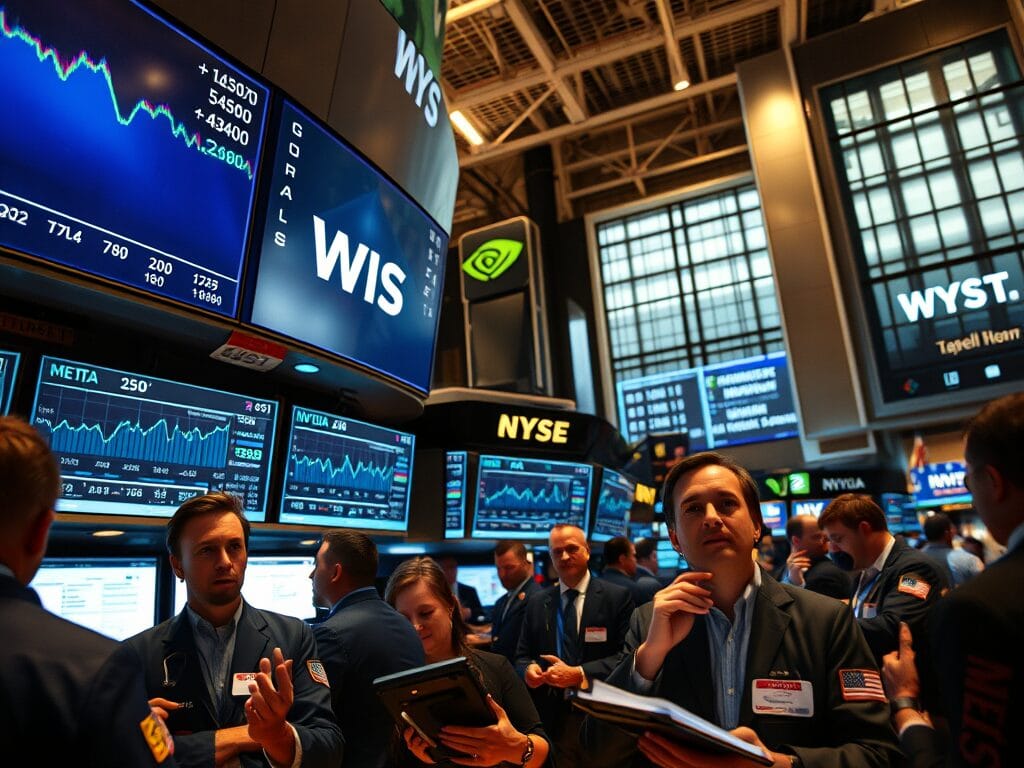
Wall Street snapped higher on Monday as investors rotated back into AI-linked megacaps, even while the Middle East conflict remained the headline risk hanging over energy prices and inflation expectations. The day’s tone was “risk-on, but cautiously”: stocks rallied, volatility cooled, and crude eased just enough to give traders room to breathe.
AI stocks led the charge
The rally had a familiar engine:
- Meta jumped after a report said the company is preparing sweeping layoffs—potentially 20%+—as AI infrastructure costs rise and management pushes for “AI-assisted” efficiency.
- Nvidia gained after CEO Jensen Huang unveiled new components and updates at the company’s annual developer conference—another confidence boost for the “AI buildout isn’t over” narrative.
- Tesla rose after Elon Musk said its “Terafab” project to make AI chips would launch in seven days. Micron climbed on plans for a second manufacturing facility in Taiwan.
In short: even in a war-driven macro tape, traders still default to the biggest “AI winners” when they want exposure with liquidity.
Oil eased — and that mattered more than almost anything else
Crude prices pulled back after U.S. messaging suggested it would be “fine” with some Iranian, Indian, and Chinese ships moving through the Strait of Hormuz, reducing immediate panic about supply getting fully choked off. That helped lift travel and consumer names that are sensitive to fuel costs.
The scoreboard: broad-based gains, volatility down
The rally was wide:
- S&P 500 +1.01%
- Nasdaq +1.22%
- Dow +0.83%
All 11 S&P sectors finished higher, led by information technology and consumer discretionary. The VIX “fear gauge” dropped sharply as the market calmed.
The Fed is watching oil… and traders are pushing rate-cut bets out
Even with stocks up, the macro warning light is still energy-driven inflation. With central banks meeting this week, traders have pushed expectations for the next Fed cut further out (beyond earlier summer expectations), reflecting how quickly oil swings can change the inflation picture—and the Fed’s stance.
What to watch next
If this rally holds, it’ll depend on three things:
- Oil direction (the market’s master switch right now)
- Any real change in Hormuz shipping conditions (not just rhetoric)
- Central bank messaging on how much energy-driven inflation they’re willing to tolerate