

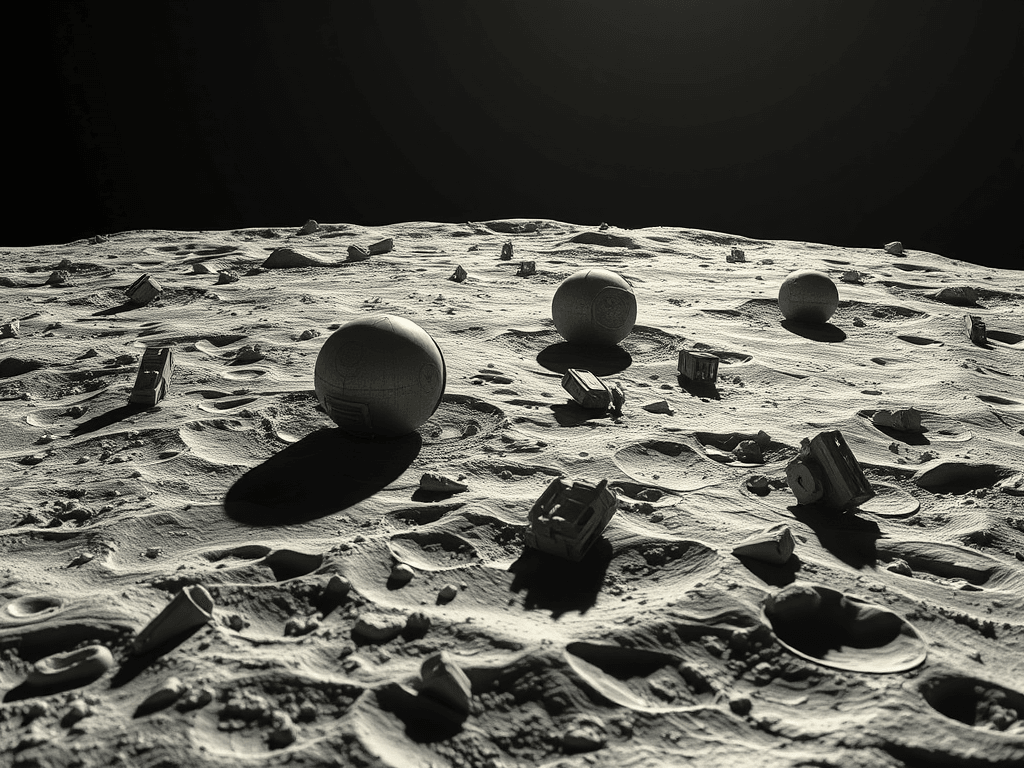
As more missions aim for the Moon—landers, orbiters, relay satellites, even future stations—researchers have floated a practical concept: designated lunar “impact zones” where end-of-life spacecraft can be deliberately crashed as traffic grows.
Think of it as the Moon’s version of a controlled landfill. Not glamorous, but increasingly necessary.
Why this is even a conversation now
Spacecraft don’t last forever. Fuel runs out. Batteries degrade. Software ages. And when a mission ends, you’re left with a choice:
- leave hardware drifting in risky orbits
- abandon it where it stops (which could be near future sites)
- or dispose of it deliberately in a predictable way
On Earth orbit, we already do versions of this—deorbiting into remote ocean regions or parking satellites in graveyard orbits. The Moon is the next frontier where “just wing it” stops being an acceptable end-of-mission plan.
What “impact zones” would solve
A controlled crash site could help by:
- reducing collision and contamination risk near high-value areas
- protecting scientifically sensitive locations (like permanently shadowed regions)
- making mission planning cleaner with clear disposal expectations
- preventing a patchwork of random debris from building up over decades
And importantly: it creates predictability. Future missions won’t have to guess whether a dead spacecraft is lurking near their trajectory or sitting near a landing corridor.
The catch: the Moon isn’t empty politically
Designating “impact zones” sounds simple until you ask: Who decides where they are? Which agencies or companies get priority access? How do you avoid turning someone’s research target into someone else’s crash site?
That’s why this proposal matters. It forces the bigger conversation: lunar exploration needs traffic rules, not just rocket engines.
If we’re serious about living and working beyond Earth, space sustainability can’t start after the mess happens. It has to start now—before the Moon gets crowded enough that we regret not setting aside a place to responsibly put things down for good.