

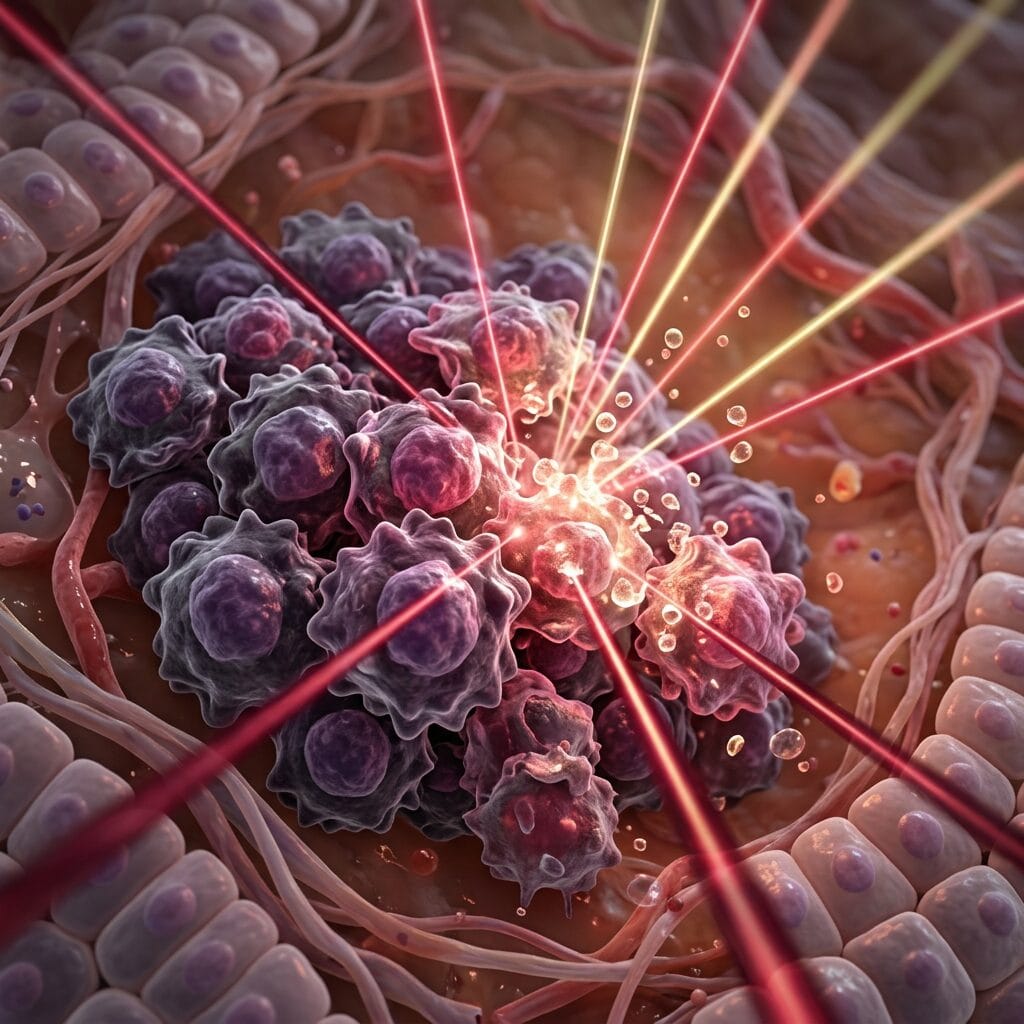
For many men with high-risk prostate cancer, treatment has long followed a familiar path.
Surgery. Radiation. Hormone therapy. Waiting. Monitoring. Then, too often, recurrence.
Johnson & Johnson’s new Erleada data challenges that old rhythm. In a late-stage study, the company’s prostate cancer drug, used with hormone-blocking therapy before and after surgery, significantly improved key outcomes for men with high-risk localized or locally advanced prostate cancer.
That matters because this is not just about treating cancer after it spreads.
It is about hitting aggressive prostate cancer earlier, harder, and more intelligently.
The Big Shift Is Timing
Cancer treatment is often transformed not only by new drugs, but by when those drugs are used.
Erleada is already used in prostate cancer, but this study pushes the drug into an earlier and potentially more strategic position: before and after surgery, when doctors are trying to prevent the disease from returning or spreading.
That is the important change.
Instead of waiting for cancer to prove it is dangerous again, the treatment strategy becomes more proactive. Attack the biology earlier. Suppress the fuel source. Reduce the chance that hidden disease survives and returns later.
That is why researchers are calling the data “paradigm changing.”
Prostate Cancer Needs Better Front-Line Strategy
Prostate cancer is common, but high-risk prostate cancer is a different problem.
These are the cases where the disease is more likely to come back, spread, and eventually require additional treatment. For patients, that means the initial treatment decision carries enormous weight. Surgery may remove the prostate, but it does not always end the story. Radiation may help, but recurrence remains a serious concern.
J&J says nearly half of patients treated with the current standard approach eventually see their cancer return and need further therapy.
That is the gap Erleada is trying to fill.
The Trial Results Are Hard to Ignore
The study found that patients receiving Erleada with hormone-blocking therapy were far more likely to have little to no detectable cancer in the prostate at the time of surgery than patients receiving hormone therapy alone.
That is a striking signal.
The company also said the combination reduced the risk of cancer spreading or death. A longer treatment regimen showed even stronger benefit, extending the average time before patients needed subsequent treatment and reducing the risk of recurrence and death.
In cancer medicine, those are not minor endpoints.
They are the outcomes patients and doctors actually care about.
This Is About Blocking Prostate Cancer’s Fuel
Erleada, also known as apalutamide, belongs to a class of drugs called androgen receptor pathway inhibitors.
In plain language, it interferes with the signals that help prostate cancer grow. Prostate cancer is often driven by testosterone and related hormonal pathways. Hormone-blocking therapy reduces that fuel. Erleada adds another layer by blocking the cancer’s ability to use those growth signals.
That combination is the logic behind the study.
Cut off the fuel. Block the signal. Hit the cancer before surgery and keep pressure on it afterward.
Earlier Use Could Expand the Market
For J&J, this is not only a medical story.
It is also a commercial one.
If regulators approve Erleada for earlier-stage high-risk prostate cancer, the drug’s potential market could expand significantly. J&J says about 40% of U.S. prostate cancer diagnoses are considered high-risk. That is a large patient group, and one with a clear need for better ways to prevent recurrence and spread.
This is exactly where pharmaceutical companies want to be: an existing drug, new data, earlier use, larger patient population, and a strong case for expanded approval.
The Standard of Care May Be Heading for a Rewrite
Currently, surgery and radiation remain core treatments for high-risk localized disease.
But if doctors become convinced that adding an androgen receptor pathway inhibitor before and after surgery improves long-term outcomes, the treatment model could shift. This would mean high-risk patients may increasingly receive more intensive systemic therapy earlier, rather than relying mainly on local treatment first.
That is a meaningful change.
It reflects a broader trend in oncology: do not wait for aggressive cancer to become metastatic before using powerful systemic drugs. Use them earlier when the chance of changing the disease course may be greater.
Side Effects Still Matter
No cancer advance should be treated as free.
The Erleada combination had a safety profile consistent with previous studies, but common side effects included hot flushes, urinary incontinence, and erectile dysfunction. Those are not small issues for patients. Prostate cancer treatment already carries major quality-of-life concerns, especially around urinary and sexual function.
That means the real-world question will not be only whether the regimen works.
It will also be which patients benefit enough to justify the added treatment burden.
Doctors Will Want the Full Picture
The headline results are strong, but oncologists will still look closely at details.
Which patients benefited most? How durable were the gains? How did quality of life compare? What was the side-effect burden over a full year of treatment? How should doctors balance surgery, radiation, hormone therapy, and Erleada in individual cases?
That is how major cancer data moves from conference excitement into clinical practice.
The trial may point toward a new standard, but the medical community will still want to understand exactly how to use it.
The Competition Is Watching
Erleada is not alone in this drug class.
Other widely used androgen receptor pathway inhibitors include Pfizer’s Xtandi and Bayer’s Nubeqa. If J&J succeeds in moving Erleada deeper into earlier-stage prostate cancer treatment, competitors will almost certainly look for similar opportunities.
That could accelerate a larger shift in prostate cancer care.
Earlier use of stronger hormonal pathway drugs may become one of the next major battlegrounds in the field.
The Meaning of the Moment
J&J’s Erleada data matters because it points toward a more aggressive strategy for high-risk prostate cancer.
Instead of treating surgery as the main event and waiting to see what happens later, the study suggests doctors may be able to improve outcomes by surrounding surgery with stronger systemic therapy. That could reduce recurrence, delay further treatment, and lower the risk of spread or death for some patients.
That is why this is important.
Not because one drug had a good conference headline.
Because it may change the timing, intensity, and ambition of prostate cancer treatment itself.

