

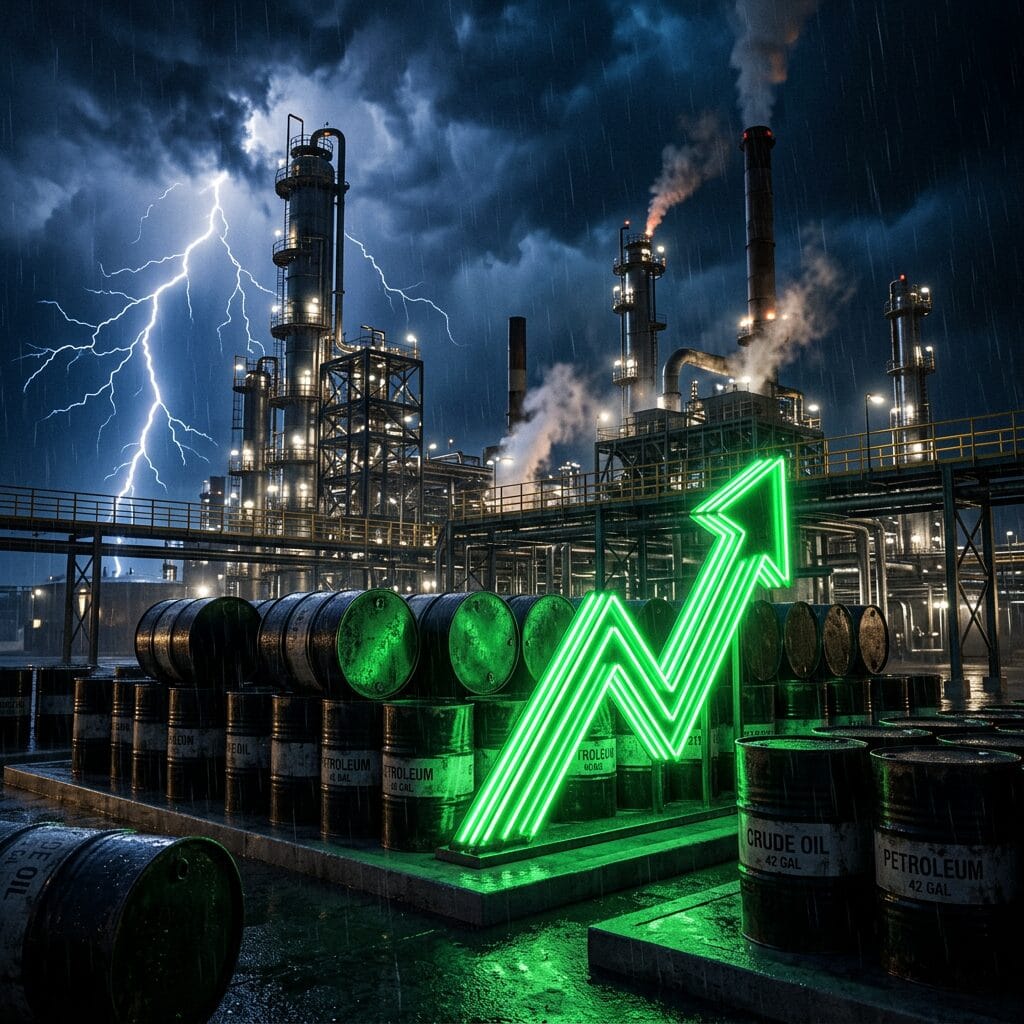
Oil markets do not believe speeches.
They believe risk.
That is why crude prices jumped more than 2% after Israel ordered its forces to move deeper into Lebanon, despite a ceasefire announced more than six weeks ago. The message from the market is blunt: the war may be contained in diplomatic language, but it is not contained on the ground.
And once Lebanon heats up again, the entire energy market starts listening.
Lebanon Is Now the Spillover Everyone Feared
The Israel-Lebanon front has become the broadest spillover of the Iran war.
That matters because this is not a side issue anymore. Hezbollah is backed by Iran. Israel is central to any regional settlement. The United States is trying to extend a ceasefire with Tehran. And every escalation on the Lebanese front makes that wider diplomatic effort harder.
Oil prices rose because traders understood the obvious.
If fighting expands in Lebanon, the chance of a clean U.S.-Iran ceasefire extension weakens. If that weakens, the path to reopening Hormuz and stabilizing energy flows gets harder. That is why one military move in Lebanon can hit oil markets almost immediately.
The Ceasefire Is Not Holding in Any Meaningful Way
A ceasefire that still allows continued exchanges of fire is not peace.
It is a pause in name only.
Israel and Hezbollah reportedly reached a ceasefire in mid-April, but both sides have continued trading fire. Now Israel is moving further into Lebanon. That means the arrangement is either collapsing, being stretched beyond recognition, or never had enough enforcement behind it in the first place.
Markets do not care which explanation sounds nicer.
They care that the risk is rising.
Oil Is Pricing the Risk of Regional Re-escalation
Brent and U.S. crude both rose sharply because traders are not only reacting to immediate supply loss.
They are pricing the possibility of wider instability.
The Middle East energy system is already under pressure from the Iran war, the effective closure of Hormuz, uncertainty around mines, and slow progress toward any durable agreement. Add deeper Israeli operations in Lebanon, and the market sees another layer of risk.
That is how oil works in a crisis.
It does not wait for the worst-case scenario to happen. It prices the possibility that it might.
Hormuz Is Still the Real Pressure Point
Everything keeps circling back to the Strait of Hormuz.
Hormuz carries around a fifth of global oil and gas flows. Since the conflict began, the strait has been effectively closed or severely constrained. That alone is enough to keep energy markets tense. But now there are also concerns that mines could slow reopening even if a political agreement is reached.
That is a brutal reminder.
A deal on paper may not instantly reopen the water. Mines, military risk, insurance fears, and shipping hesitation can delay relief even after leaders announce progress.
In other words, even good news may not bring supply back quickly.
“No Flood of Supply” Is the Key Warning
The most important market warning is simple: even if an agreement is reached, it will not deliver an immediate flood of supply.
That matters because many investors and politicians have been treating a possible ceasefire extension as if it would quickly calm the oil market. But energy flows do not restart like a light switch. Ships need confidence. Insurers need certainty. Crews need safety. Ports need coordination. Military threats need to recede.
If mines are present or suspected, the process slows even more.
That means oil prices can stay elevated even after the headlines improve.
Weak Chinese Data Could Not Stop the Rally
Normally, weak factory data from China would weigh on oil.
China is the world’s second-largest economy, and signs of slowing manufacturing activity usually raise concern about energy demand. But this time, supply fears outweighed demand weakness. That is important.
It shows how dominant geopolitical risk has become.
The market saw softer Chinese factory activity and still pushed oil higher because the supply-side fear was stronger. That is not a healthy sign. It means traders are more worried about disruption than they are reassured by weaker demand.
The U.S.-Iran Deal Now Depends on More Than Tehran
Trump says he will soon decide on a proposed ceasefire extension with Iran.
But Israel is key to any deal, and Iran has repeatedly said Hezbollah must be included. That makes the diplomacy far more complicated than a simple Washington-Tehran negotiation.
A regional war cannot be settled by pretending its fronts are separate.
Lebanon matters. Gaza matters. Hormuz matters. Iran’s nuclear program matters. Israeli security demands matter. Hezbollah’s role matters. And each of these pieces can disrupt the others.
That is why the oil market is reacting so sharply.
The diplomatic puzzle has too many moving parts.
Energy Markets Are Becoming Hostage to Military Timelines
The deeper problem is that oil prices are now being shaped by troop movements, drone attacks, mine fears, naval warnings, and ceasefire rumors.
That is not stability.
That is an energy market living from escalation to escalation.
Every headline from Lebanon, Iran, Israel, or Hormuz can move prices because the underlying system is fragile. The world is not dealing with normal volatility. It is dealing with a market where geopolitical risk has become the main driver.
That means consumers, businesses, airlines, shipping firms, and central banks are all exposed to decisions made on battlefields they do not control.
The Inflation Threat Is Still Alive
Higher oil prices do not stay in the oil market.
They move into gasoline, diesel, jet fuel, shipping costs, food prices, business margins, and inflation expectations. That creates pressure on households and complicates the work of central banks already worried about sticky inflation.
This is why the Middle East escalation matters beyond foreign policy.
It can show up in grocery bills, travel costs, delivery fees, manufacturing expenses, and political anger. A war that begins as a regional conflict becomes a household-budget problem very quickly when oil keeps rising.
The Meaning of the Moment
Oil’s jump is not just a market move.
It is a verdict.
The market is saying the ceasefire structure is fragile, Lebanon is becoming a wider danger point, Hormuz remains unresolved, and even a U.S.-Iran agreement may not bring fast relief. That is the reality beneath the numbers.
A real de-escalation would mean stable borders, a credible ceasefire, safe shipping, no mine threat, and a clear path to restoring energy flows.
That is not what the market sees right now.
What it sees is a region where every supposed pause keeps producing the next escalation.
And that is why oil is rising.