

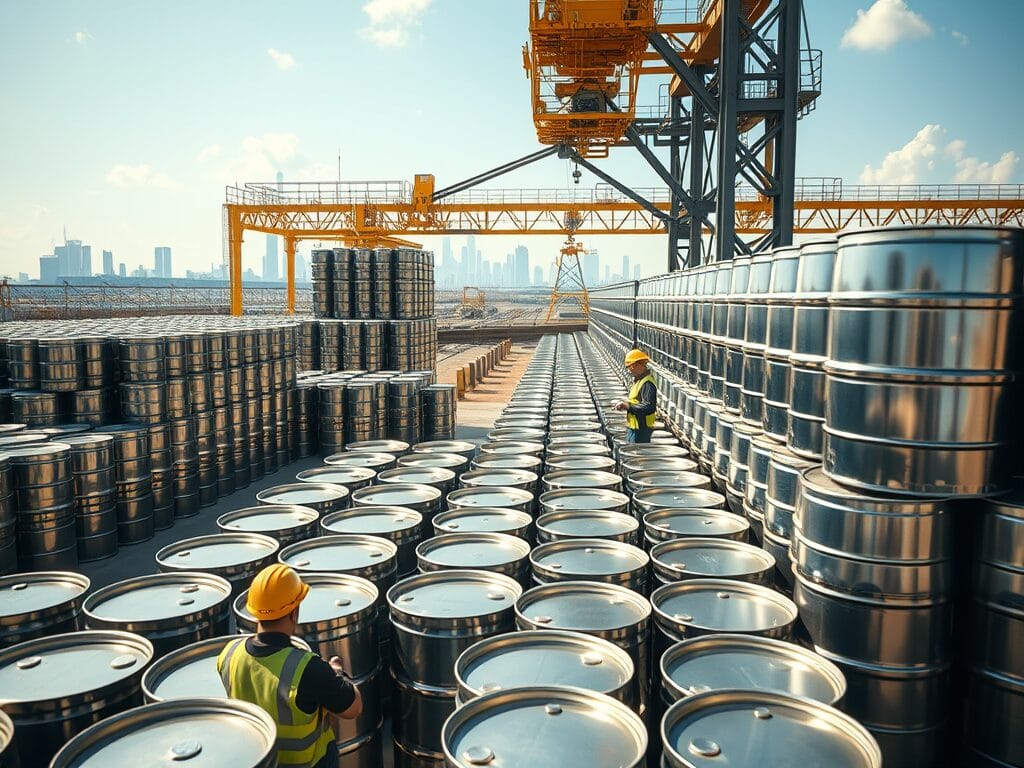
The U.S. has officially moved from “we might release emergency oil” to “the barrels are now allocated.” The Energy Department has awarded contracts to loan out 45.2 million barrels of crude from the Strategic Petroleum Reserve (SPR) — the first big tranche of oil aimed at cooling a market rattled by war-driven supply fears and soaring prices.
This isn’t a normal sale, and it isn’t a quiet move. It’s a coordinated, high-volume stabilization play meant to hit the market quickly and reset expectations.
What just happened
The government awarded contracts covering 45.2 million barrels — a little over half of the first 86 million barrels it sought bids for. The broader plan is much larger: the U.S. intends to exchange up to 172 million barrels from the SPR over time as part of a wider international effort to increase available supply and calm volatility.
The list of companies receiving contracts reads like a who’s-who of global oil trading and refining, including major names such as:
- BP (U.S. products arm)
- Shell (trading unit)
- Marathon Petroleum
- Gunvor
…and other large commodity and trading firms.
Why the U.S. is doing it now
When oil markets spike during a geopolitical crisis, the damage spreads fast:
- higher gasoline and diesel costs
- higher shipping and logistics costs
- inflation pressure that complicates interest-rate policy
- panic behavior in freight and insurance markets
The government’s goal is to push real physical supply into the system and break the “scarcity psychology” that can drive prices higher even before barrels are truly lost.
This release is also aligned with a broader coordinated move among multiple countries to tap emergency stockpiles — a signal that governments want to act together, not one-by-one.
The key detail: this is structured as a “loan,” not a straight sale
The U.S. is releasing crude through oil loans (swaps) rather than a permanent drawdown. Here’s the mechanism in plain language:
- Companies take crude from the SPR now.
- They return the oil later — and they return more than they borrowed as a premium.
That premium is steep (reported in the high teens to low twenties, depending on the crude type), and it’s intentional: the government is trying to stabilize markets now while ensuring the reserve is eventually replenished with additional barrels on top.
In theory, the swap structure lets officials argue the release helps the market without permanently draining the SPR.
What happens next: timing, logistics, and market impact
The oil still has to move through the real world — pipelines, terminals, shipping schedules, refinery intake — so the impact isn’t instantaneous like a headline. But the allocation itself matters because it tells the market:
- buyers will have near-term supply options
- refiners can plan runs and blends
- traders can stop pricing pure worst-case scarcity
- governments are willing to intervene again if needed
If prices remain elevated or supply risks worsen, policymakers can expand the program. If conditions stabilize, the swap structure shifts the focus toward the later “payback” period, when oil flows back into the SPR with a premium.
The bigger question: what does this mean for the SPR long-term?
The SPR is a safety buffer — not a bottomless barrel bank.
Even with a loan structure, large emergency exchanges raise long-term questions:
- How quickly can the SPR be refilled?
- At what cost, if prices remain high?
- How much emergency capacity should remain unused in case the crisis worsens?
The government is betting that the “return with premium” structure protects the reserve over time. But the effectiveness will depend on how long the crisis lasts and whether market conditions allow for smooth repayment later.
Bottom line
The U.S. has started the physical phase of its emergency oil response: 45.2 million barrels have been awarded, with a much larger release plan on deck. The structure is designed to calm prices now and rebuild reserves later — but the real outcome will hinge on whether the crisis-driven supply shock fades, or hardens into a longer disruption that keeps the market under stress.