

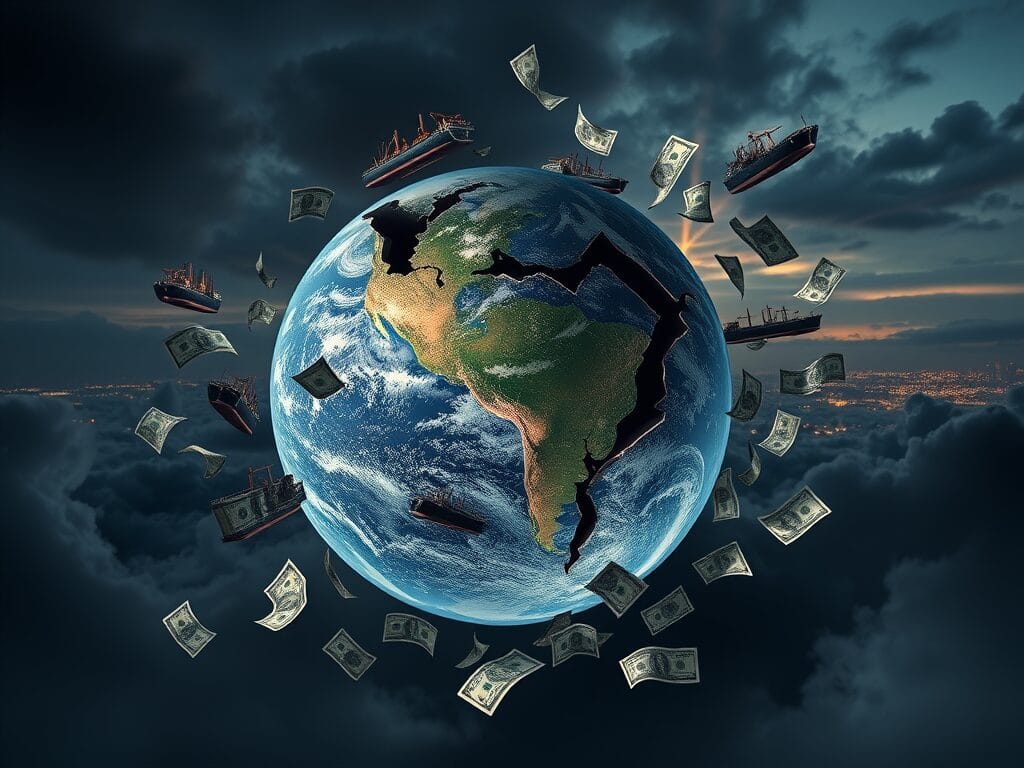
The economic damage from the Iran war is no longer a warning on the horizon. It is here.
What began as a military and geopolitical crisis is now spreading through oil markets, trade routes, inflation, food systems, and national growth prospects. The battlefield may be in the Middle East, but the consequences are no longer regional. They are global, uneven, and increasingly difficult to contain.
This is what modern war looks like when it collides with an already fragile world economy.
The Shock Is No Longer Local
For a while, governments and markets like to pretend that conflicts can be geographically contained even when the consequences clearly cannot. That illusion is now falling apart.
The war has hit major infrastructure, destabilized vital energy corridors, tightened financial conditions, and injected fresh uncertainty into economies that were only beginning to recover from earlier crises. In other words, this is not just another overseas conflict that the rest of the world can watch from a distance. It is a shock wave moving through the arteries of the global system.
And like most shock waves, it does not hit everyone equally.
Some Countries Will Bleed More Than Others
This is where the economic story gets harsher.
Energy importers are taking the hit from one side, watching fuel bills climb and production costs rise. Poorer countries are being squeezed from another side, facing more expensive food, fertilizer, and basic supplies. Wealthier economies may absorb the shock more easily, but even they will not escape the pressure of inflation, supply disruption, and slower growth.
That is the ugly truth of global crises: the people least equipped to absorb the blow are often the ones hit first and hardest.
For low-income countries already dealing with debt pressure, fragile currencies, and reduced external support, this kind of conflict is not an inconvenience. It is a threat multiplier.
Higher Prices, Slower Growth, Same Old Pain
There is a brutal simplicity to what war does to an interconnected economy.
It pushes prices higher and growth lower.
Energy costs rise. Shipping becomes riskier. Food becomes more expensive. Inflation proves harder to control. Central banks face a worse tradeoff. Businesses delay investment. Governments get squeezed. Consumers pay more. And the global economy starts moving with a limp.
This is why the economic fallout matters as much as the military one. War is not only measured in strikes and casualties. It is also measured in shrinking growth forecasts, rising household costs, and the quiet spread of financial stress across countries that never fired a shot.
The Strait Problem Is Really a World Problem
One of the clearest signs of how serious this has become is the pressure on the world’s most sensitive energy chokepoints.
When a conflict disrupts routes that handle massive shares of oil and gas, the effect is immediate. Markets react before governments finish their statements. Traders price risk faster than diplomats can calm nerves. And every new disruption sends the same message: the global economy remains dangerously dependent on a few narrow passages that can turn into economic weapons overnight.
That dependence is now being exposed again in the harshest possible way.
Food Insecurity Is the Quiet Emergency
Oil prices get the headlines. Food insecurity gets the consequences.
As energy and fertilizer prices rise, poorer countries face a double blow. It becomes more expensive to import what they need, harder to finance it, and more dangerous to assume markets will stabilize quickly. That puts pressure on food access, social stability, and already strained public budgets.
This is the part of the story richer countries often notice too late.
By the time the economic shock fully reaches poorer populations, it is no longer just a market story. It becomes a humanitarian one.
Governments Cannot Pretend This Is Temporary Noise
One of the most dangerous habits in global policymaking is treating each crisis like a short-term disturbance. That mindset no longer works.
If the war drags on, the economic effects will deepen. If it spreads, they will multiply. If governments respond too slowly or too narrowly, they risk letting a geopolitical conflict harden into a broader era of higher inflation, weaker growth, and chronic instability.
That means the challenge is not just military containment. It is economic resilience.
Countries will need more than rhetoric. They will need coordinated energy responses, targeted relief for vulnerable populations, smarter inflation management, and real support for lower-income economies that do not have the fiscal strength to absorb another major shock.
The World Was Already Weak
That is what makes this moment especially dangerous.
The global economy was not entering this war from a position of strength. Many countries were still recovering from earlier crises, still wrestling with debt, still battling inflation, still dealing with fragile supply chains and political strain at home. This war did not strike a healthy system. It struck a tired one.
And tired systems break faster.
The Meaning of the Moment
The most important thing to understand is this: the Iran war is no longer just a foreign policy story. It is now an economic story for nearly everyone.
Whether through fuel prices, food bills, financial stress, trade disruption, or slower growth, the conflict is reaching far beyond the region where it began. That is why dismissing it as a distant crisis is no longer credible.
The world economy has entered the blast radius.
And unless the conflict is contained quickly, the damage will not be limited to one region, one sector, or one quarter of bad numbers. It will settle into something more corrosive: a prolonged global slowdown shaped by war, fragility, and the failure to stop either in time.