

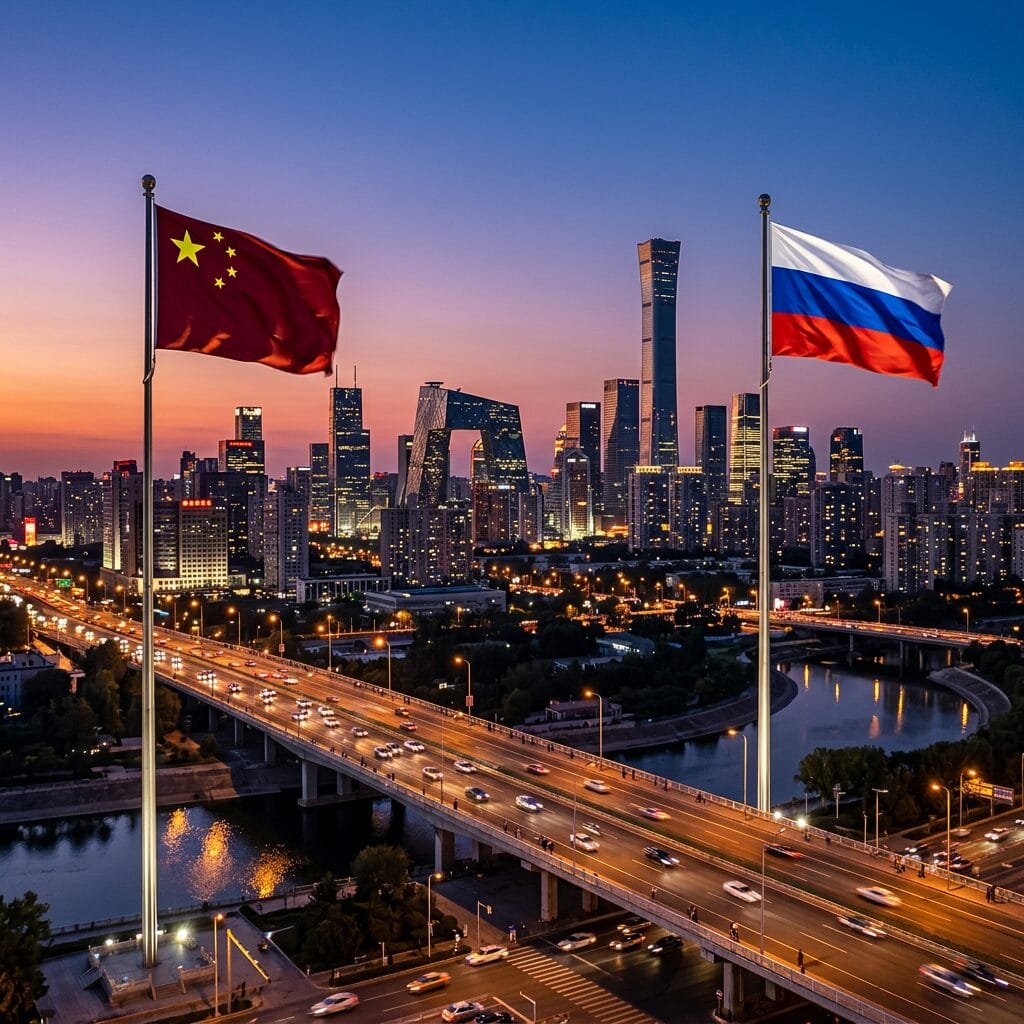
Vladimir Putin’s arrival in Beijing is not just another diplomatic visit.
It is a reminder that China is trying to perform one of the hardest balancing acts in global politics: stabilize relations with the United States while keeping Russia close. Less than a week after Donald Trump left Beijing, Xi Jinping is now receiving Putin, sending a message that is impossible to miss.
China wants peace with Washington.
But it is not abandoning Moscow.
Xi Wants Options, Not Camps
China’s strategy is not emotional. It is cold, practical, and disciplined.
Beijing wants access to Western markets, stable relations with the United States, and enough economic calm to keep its own growth engine moving. But it also wants Russia as a strategic partner, energy supplier, military counterweight, and diplomatic ally against Western pressure.
That is the game.
China is not choosing between Washington and Moscow in a simple way. It is trying to keep both tracks open while maximizing its own leverage.
Putin Needs China More Than China Needs Putin
That is the uncomfortable truth behind all the ceremony.
Russia’s war in Ukraine and Western sanctions have pushed Moscow deeper into China’s orbit. China is Russia’s top trading partner, a major buyer of Russian oil and gas, and one of the few powers large enough to give Moscow economic breathing room. For Putin, the relationship is no longer just useful. It is essential.
For Xi, Russia is valuable — but not irreplaceable in the same way.
That imbalance gives Beijing quiet power.
The “Friendship” Language Is Doing Political Work
Putin and Xi calling each other friends is not just personal warmth.
It is strategic theater.
The language of friendship tells the world that Russia is not isolated, that China is not intimidated by Western pressure, and that the two countries still see value in presenting themselves as a balancing force against U.S.-led power. In diplomacy, words like “old friend” and “dear friend” are not casual. They are signals.
This is how great powers speak when they want everyone else to notice the relationship.
Trump’s Visit Made Putin’s Visit More Important
The timing matters.
Trump’s Beijing summit was about stabilizing the world’s most important bilateral relationship: the United States and China. Putin’s visit is about reminding everyone that China’s diplomacy does not end with Washington. Xi can host Trump, talk about strategic stability, and still welcome Putin days later.
That is the point.
China is presenting itself as the major power that can speak to everyone: Washington, Moscow, the Global South, sanctioned states, trading partners, and rivals. That is not neutrality in the pure sense. It is positioning.
Energy Is the Backbone of the Russia-China Relationship
The partnership is not built only on ideology or shared resentment of the West.
It is built on oil, gas, trade, and strategic necessity.
Russia needs buyers. China needs secure energy. The Iran war and instability around global shipping make Russian energy even more valuable to Beijing. While much of the world worries about chokepoints and energy disruptions, Russia can present itself as a reliable overland supplier.
That makes the relationship more than diplomatic.
It is economic insulation.
China Benefits From Russia’s Weakness
This is the part Moscow will not say out loud.
A weakened Russia is still useful to China. It gives Beijing a partner against Western dominance without becoming strong enough to rival China’s own ambitions. Russia brings resources, military experience, diplomatic weight, and geographic depth. But its dependence on China gives Xi more room to shape the terms.
That is not an equal partnership.
It is a partnership where one side increasingly holds the stronger hand.
The West Should Not Misread Beijing’s Balancing Act
There is a temptation in Washington to believe that China’s desire for stable U.S. relations means Beijing may distance itself from Moscow.
That is wishful thinking.
China may avoid openly reckless moves that trigger harsher Western retaliation. But it is unlikely to throw Russia overboard just to please the United States. Moscow remains too useful in the larger contest over global power. Beijing wants stability with Washington, not submission to Washington’s preferences.
That distinction matters.
Putin Is Also Watching Trump
Putin’s trip is not only about Xi. It is also about Trump.
Moscow wants to understand where U.S.-China talks are heading, what Trump offered, what Xi accepted, and how the balance of global power may shift after the summit. If Washington and Beijing stabilize their relationship, Russia wants to make sure it is not left exposed. If tensions return, Russia wants to stay useful to China.
Either way, Putin needs to stay close to the conversation.
The Real Message From Beijing
The message is simple: China intends to be the central player in a multipolar world.
It will talk to Trump. It will host Putin. It will buy Russian energy. It will court Western investment. It will criticize U.S. pressure. It will present itself as responsible, neutral, and stabilizing while still defending its own strategic interests.
That is not contradiction.
That is Chinese statecraft.
The Meaning of the Moment
Putin’s Beijing visit shows that the China-Russia relationship remains strong, but it also shows who has more room to maneuver.
Russia needs China as a lifeline.
China uses Russia as leverage.
Xi is not choosing loyalty over strategy. He is using loyalty as strategy. By keeping Putin close while reopening dialogue with Trump, China is telling the world that it wants to sit at the center of every major conversation — not as a follower, not as a junior partner, but as a power that others must court.
That is the real story.
Putin came to Beijing to reaffirm a partnership.
Xi used the visit to remind everyone that China is the one with options.